
Beautiful Plants For Your Interior
Beautiful Plants For Your Interior
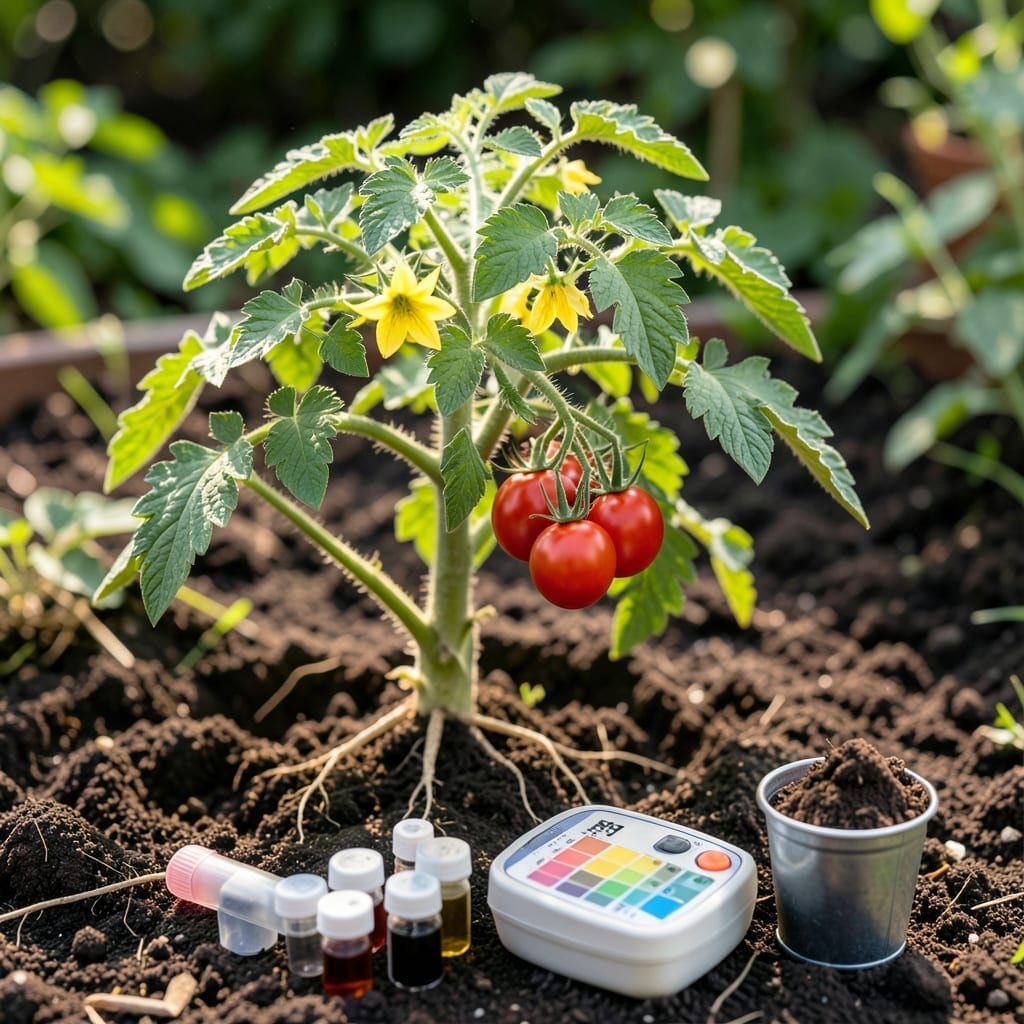
Tomatoes thrive in slightly acidic to neutral soil with an optimal pH range of 6.0 to 6.8 for maximum nutrient uptake and robust growth.
I’ve noticed that tomatoes struggle outside this range because extreme acidity or alkalinity locks out essential nutrients like phosphorus and iron. Maintaining the right balance ensures your plants access what they need without waste. 🔥
This sweet spot also promotes beneficial microbial activity in the soil, which further supports healthy root development. ✨
💡 In This Article
The pH level directly controls which nutrients your tomatoes can absorb. At 6.0-6.8, phosphorus remains soluble and available, while nitrogen-converting bacteria thrive. Below 5.5, phosphorus binds with iron and aluminum, becoming inaccessible to roots. Above 7.5, iron and manganese precipitate out of solution. 🔥
Here’s what’s happening at the molecular level: hydrogen ion concentration (pH) changes the chemical form of nutrients. Phosphorus transforms into phosphoric acid in acidic soils, which plants can’t use. Meanwhile, iron becomes ferric hydroxide in alkaline conditions, locking it away from tomato roots. The 6.0-6.8 range keeps these elements in their most absorbable states.
Tomatoes particularly struggle with iron deficiency in high-pH soils, showing yellowing between leaf veins (interveinal chlorosis). This occurs because iron becomes insoluble at pH above 7.0. Conversely, in very acidic soils below 5.0, calcium and magnesium become less available, leading to blossom end rot. ✨
Beneficial soil microbes also prefer this slightly acidic to neutral range. Mycorrhizal fungi, which form symbiotic relationships with tomato roots, function optimally between 6.0-7.0. These microbes help break down organic matter and make nutrients more available to your plants.
The sweet spot of 6.2-6.5 offers the best balance for most tomato varieties. At this pH, all major nutrients (N-P-K) remain available, while micronutrients like zinc, copper, and boron stay accessible. This explains why commercial tomato growers often aim for this precise range in their soil management. 💫
This range keeps essential nutrients like phosphorus and iron in soluble forms that roots can absorb. Below 5.5 or above 7.5, these nutrients lock up and become unavailable to your plants.
Test annually in early spring before planting. For new gardens, check every 3-4 months after amending soil. Container gardens may need more frequent testing since pH can change faster in confined spaces.
Vinegar gives only a rough idea (fizzing means alkaline). For accurate results, use a dedicated soil test kit or digital meter. These provide precise readings and recommendations for adjustments.
Tomatoes may show yellowing leaves, stunted growth, or blossom end rot. These symptoms appear because the plant can’t access critical nutrients, even if they’re present in the soil.