
Beautiful Plants For Your Interior
Beautiful Plants For Your Interior
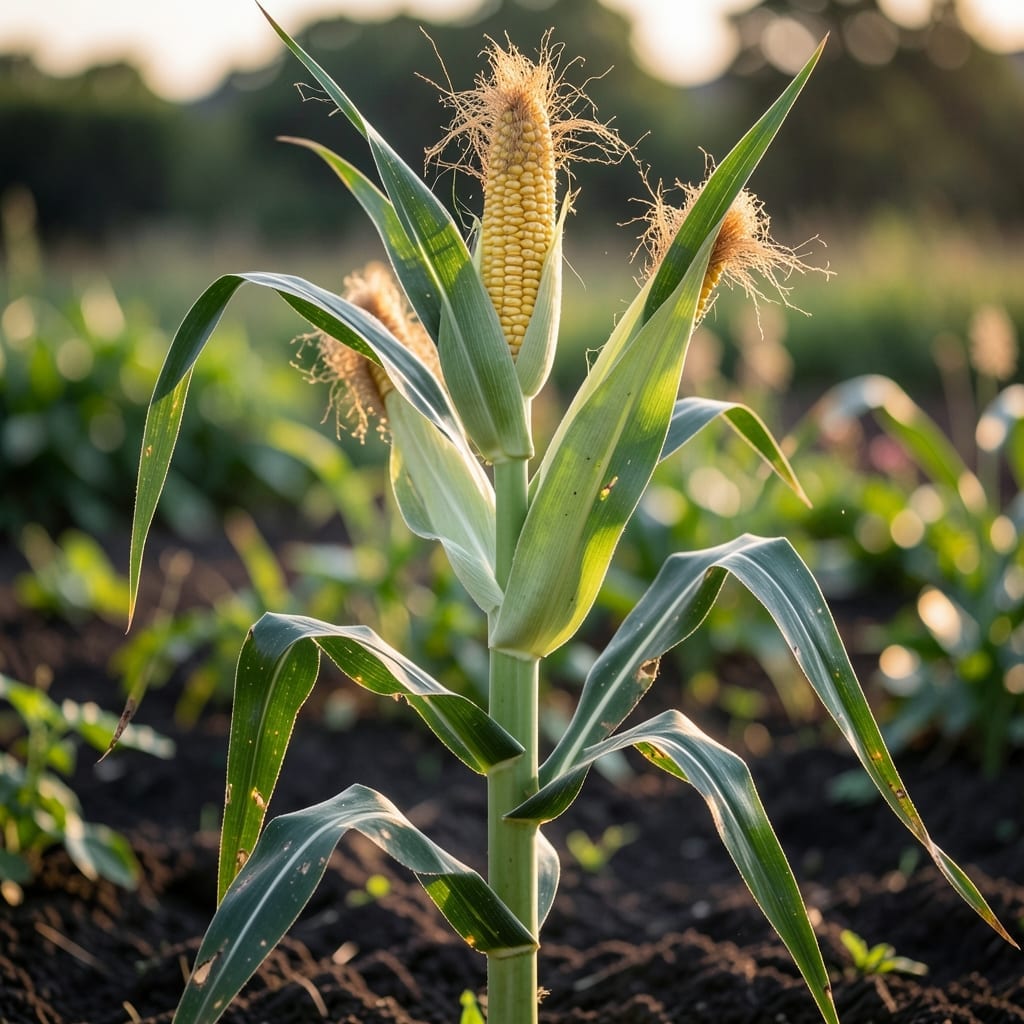
Corn undergoes dramatic changes from planting to harvest, starting as a small seedling with slender leaves and developing into tall stalks with mature, plump kernels ready for picking.
The transformation begins underground, where seeds sprout roots and shoots before emerging as delicate green shoots. 🔥 Above ground, the plant rapidly grows leaves and a sturdy stalk, eventually forming tassels at the top. The most striking change happens in the ears, where silks appear first, followed by kernels that swell with sweet juice as they mature.
💡 In This Article
The journey begins with germination, where the seed absorbs water and swells, sending a primary root downward while a shoot pushes upward through the soil. This process takes 5-12 days depending on soil temperature—optimal at 60-70°F. The shoot emerges as a slender, grass-like sprout, quickly developing its first true leaves. 🔥
Next comes the vegetative stage, where the plant focuses on leaf and stalk growth. Corn enters its rapid growth phase at 6-8 weeks, adding 1-2 inches per day under ideal conditions. The stalk thickens and strengthens to support future ears, while leaves grow wider and longer to maximize photosynthesis.
This stage is critical for establishing the plant’s framework.
Tasseling marks the transition to reproductive growth, typically occurring at 8-10 weeks. The male flower (tassel) emerges at the top, releasing pollen that falls onto the silks—the female flowers. Each silk connects to a potential kernel, and successful pollination causes the kernels to begin forming.
The plant now directs all energy toward developing ears rather than additional height. ✨
Kernel development progresses through several stages: the blister stage (kernels appear as clear, water-filled blisters), milk stage (kernels exude a milky liquid when punctured), and finally the dough stage (kernels take on a paste-like consistency). These transformations happen over 20-25 days after pollination, with visual changes including swelling, color deepening, and silk browning.
Environmental factors like temperature, water, and sunlight dramatically influence these stages. Drought can stunt growth, while excessive rain may delay pollination. The ideal growing season spans 60-100 days depending on the variety, with sweet corn typically maturing faster than field corn. Proper spacing (12-18 inches apart) ensures each plant receives adequate resources. 💫
Most sweet corn varieties mature in 60-100 days from planting. The timeline depends on the specific type and growing conditions. Dwarf varieties may be ready in 60 days, while larger types can take up to 4 months.
You’ll see slender green shoots emerging from the soil within 5-12 days after planting. These quickly develop into small seedlings with narrow leaves. The first true leaves appear shortly after germination.
Check for firm, damp husks and plump kernels that release a milky liquid when pierced. The silks should be brown but not completely dry. Harvest in the morning for peak sweetness.
This usually indicates incomplete pollination. Each silk must be fertilized for a kernel to form. Poor pollination can result from dry conditions or planting in single rows.