
Beautiful Plants For Your Interior
Beautiful Plants For Your Interior
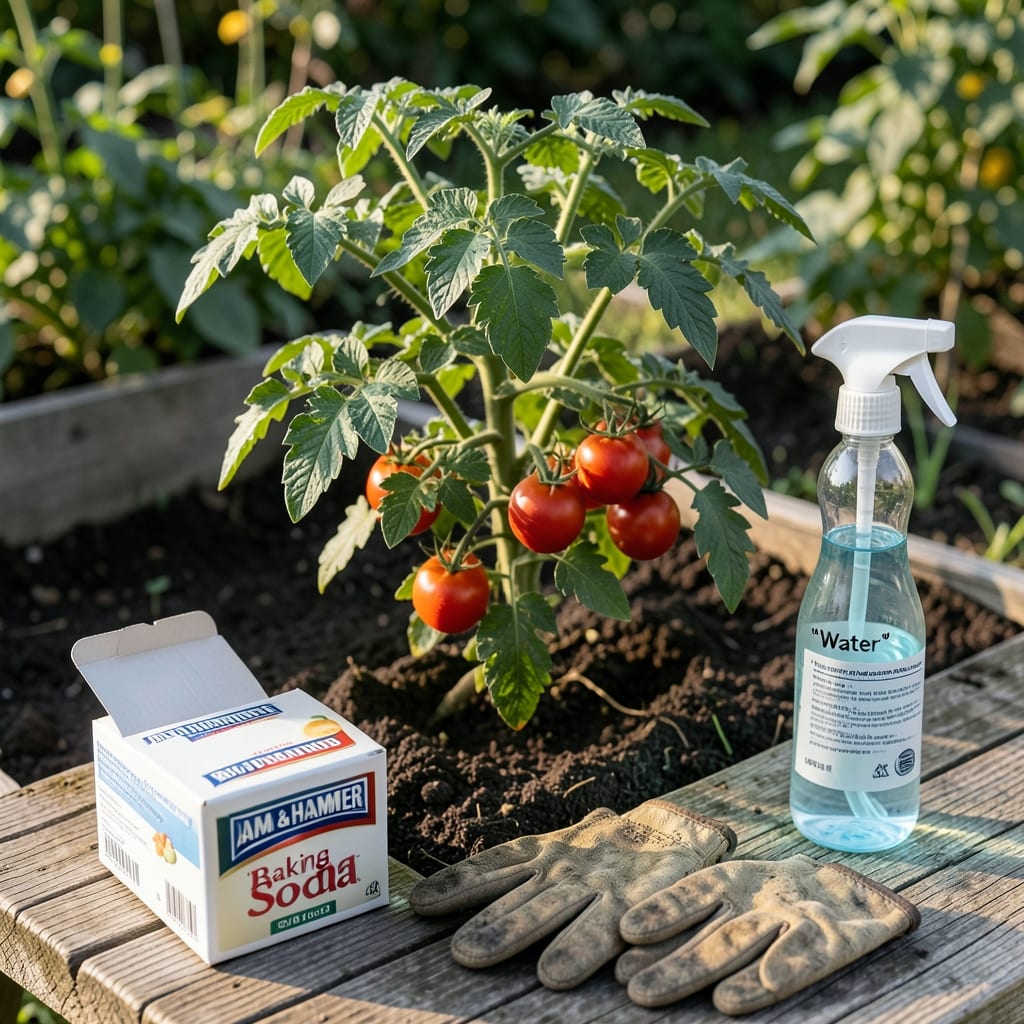
Baking soda can help vegetables by adjusting soil pH, preventing fungal diseases, and deterring pests when used as a spray or soil amendment in moderation.
I’ve seen baking soda transform gardens by creating a less acidic environment that some plants thrive in. 🌟 Its natural antifungal properties make it a go-to for treating powdery mildew on leafy greens, while a light spray can keep aphids away without harsh chemicals. Just remember, a little goes a long way to avoid harming your crops.
💡 In This Article
Baking soda works as a gentle base to neutralize acidic soil conditions. When dissolved in water, sodium bicarbonate breaks down into sodium, hydrogen, carbon, and oxygen ions.
The carbon and oxygen combine to form carbonic acid, which then dissociates into water and carbon dioxide, leaving behind sodium ions that react with hydrogen ions in the soil to reduce acidity.
For pH adjustment, a light sprinkling of 1 tablespoon per gallon of water can raise soil pH by 0.5-1.0 units over 2-3 weeks. This creates a more alkaline environment that benefits vegetables like cabbage, spinach, and beans, which prefer pH levels between 6.5-7.5. The change is gradual, allowing plants to adapt without shock. 🔥
The antifungal action comes from baking soda’s ability to disrupt fungal cell membranes. When sprayed on leaves at a concentration of 1 teaspoon per quart of water, it creates an alkaline surface that inhibits spore germination.
This is particularly effective against powdery mildew on cucumbers and squash, where the white fungal growth disappears within 3-5 days of treatment. ✨
As a pest deterrent, baking soda’s sodium content creates an uncomfortable environment for soft-bodied insects. A foliar spray of 2 tablespoons per gallon can discourage aphids and whiteflies without harming beneficial insects like bees. The alkaline residue on leaves also makes it harder for pests to feed, though it requires reapplication after rain. 💫
What makes this method so practical is its dual action. While adjusting soil pH, the same solution can be used as a foliar spray for immediate pest and disease control. Unlike chemical treatments, baking soda leaves no harmful residues and breaks down completely within 1-2 weeks in the environment.
For soil pH adjustment, apply once in early spring or fall. As a foliar spray for pests or disease, reapply every 7-10 days or after rain. Always spot-test first to check plant sensitivity.
Yes, excessive use can raise soil pH too much, making it difficult for plants to absorb nutrients. Stick to recommended amounts: 1 tablespoon per gallon for soil, 1 teaspoon per quart for sprays.
Leafy greens like spinach and cabbage thrive with soil pH adjustment. Cucumbers and squash benefit most from antifungal sprays. Avoid overusing on acid-loving plants like tomatoes.
Baking soda is a natural compound that breaks down completely within 1-2 weeks. It leaves no harmful residues and is approved for organic gardening practices.