
Beautiful Plants For Your Interior
Beautiful Plants For Your Interior
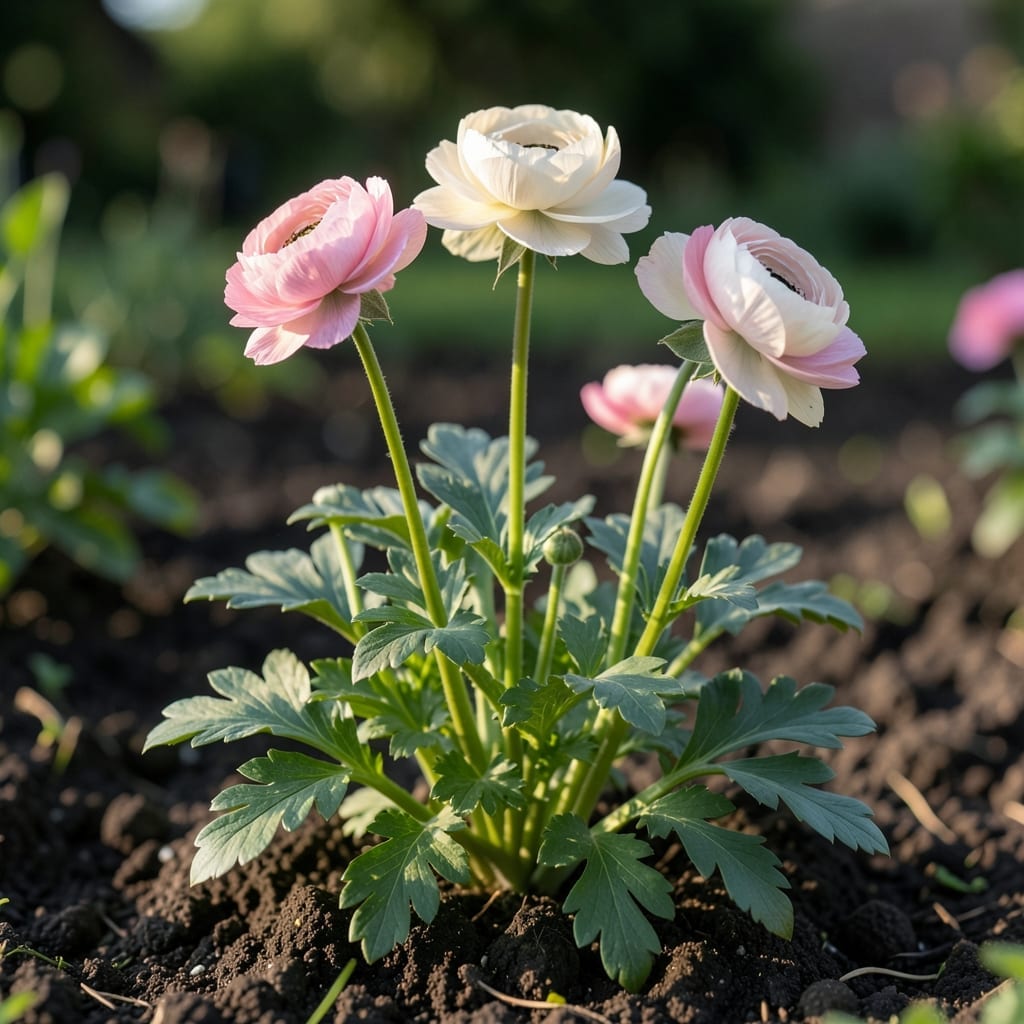
Ranunculus are technically corms, not true bulbs, and act as tender perennials in warm climates but are often grown as annuals in colder zones where they won’t survive frost.
This classification surprises many gardeners because corms store energy differently than bulbs. In zones 8-10, they can return year after year with proper care, while colder areas require digging and storing them over winter. I’ve found they thrive when planted in well-draining soil with full sun exposure. ✨
💡 In This Article
The key difference lies in their underground storage structure. True bulbs have layered fleshy scales, while corms are solid, flattened stems that store energy. Ranunculus corms contain all the nutrients needed for the next growing season, but they’re particularly sensitive to temperature fluctuations below 25°F.
This cold intolerance is what limits their perennial status to warmer climates.
In USDA hardiness zones 8-11, these corms can remain in the ground year-round. They enter dormancy during summer heat, then regrow when temperatures drop in fall. The corms multiply naturally during this cycle, creating dense clusters over time. Gardeners in these regions often see their ranunculus return with even more blooms each spring.
North of zone 7, the story changes dramatically. Even a light frost can damage or kill the corms. Here, they’re treated as annuals, with gardeners planting fresh corms each spring after the last frost date. This explains why northern gardeners might pay slightly more for ranunculus, as they need to purchase new stock annually.
The dormancy pattern also affects their care. Unlike true bulbs that can handle dry periods, ranunculus corms need consistent moisture during their active growth. They prefer well-draining soil to prevent rot, with a pH between 6.0-7.0. This balance of moisture and drainage is crucial for their survival in any climate. ✨
What makes ranunculus particularly interesting is their ability to adapt. In marginal zones like 7-8, gardeners can experiment with protecting the corms through winter using thick mulch. This extra insulation can sometimes coax them into returning for a second year, though it’s not guaranteed.
Only in USDA zones 8-11. In these areas, they act as perennials and will regrow each year. In colder zones, they must be dug up before frost and stored indoors.
Plant them 2-3 inches deep with their “claws” facing downward. Space them 4-6 inches apart to allow for proper growth and air circulation.
This usually happens in poorly draining soil. Ranunculus corms need well-draining conditions to prevent rot. Mix in compost or sand to improve drainage.
After the foliage turns yellow, usually in late spring or early summer. Let them dry for 1-2 weeks in a shaded area before storing.