
Beautiful Plants For Your Interior
Beautiful Plants For Your Interior
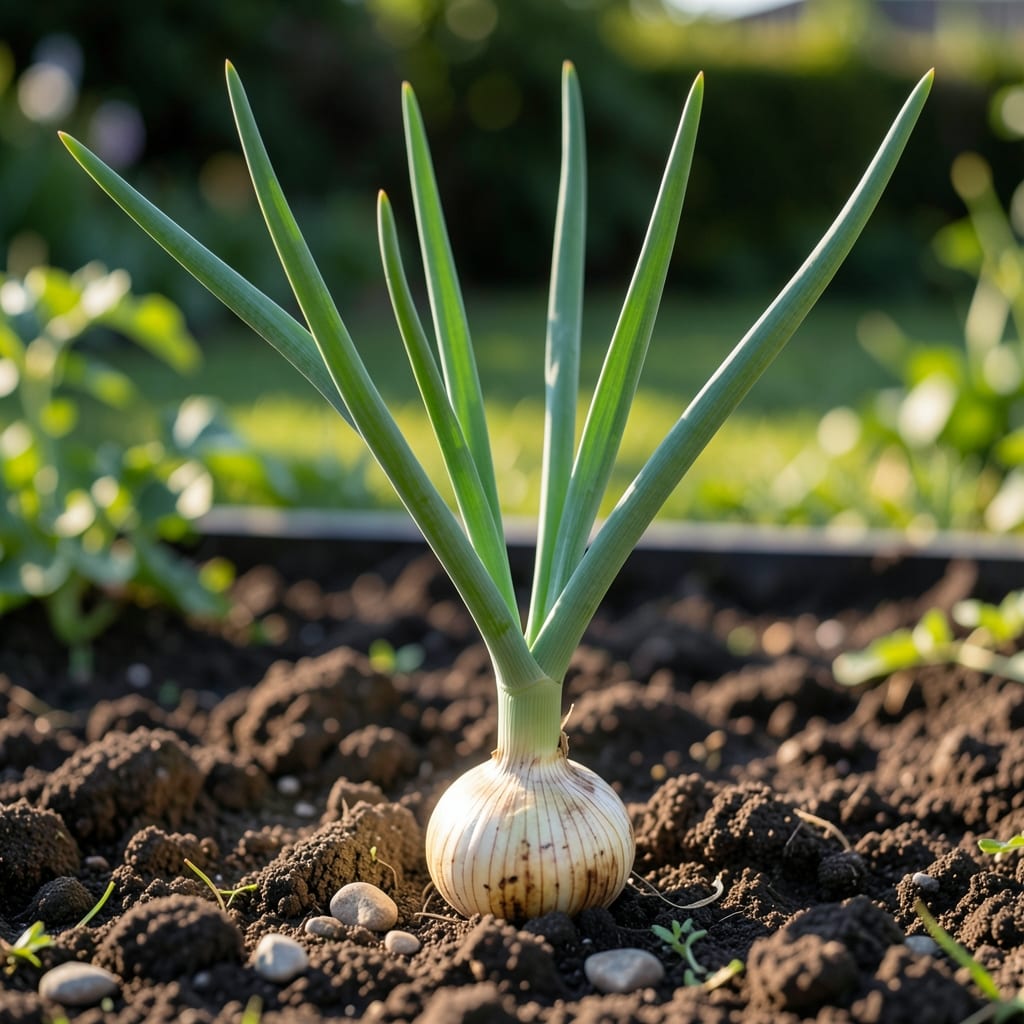
Onions are moderately frost hardy, tolerating light frosts down to 20°F. However, hard freezes can damage foliage or kill young plants. Mature bulbs handle cold better than seedlings.
I’ve seen mature onion bulbs shrug off light frosts that would wipe out less hardy plants, thanks to their natural resilience. 🔥 Young seedlings and tender green onions, though, need extra protection when temperatures dip below 20°F. The key difference lies in the plant’s maturity—established bulbs store energy that helps them survive brief cold snaps, while new growth lacks that buffer.
💡 In This Article
The secret lies in their cellular biology. Onion bulbs contain high concentrations of soluble sugars and water, which act as natural antifreeze. When temperatures drop to 20-28°F, these compounds lower the freezing point of water inside plant cells, preventing ice crystal formation that would rupture cell walls.
This mechanism is more developed in mature bulbs than in young plants. 🔥
Green onions and seedlings lack this sugar reserve, making them vulnerable to frost damage at 28°F or below. The foliage of mature onions may wilt or turn brown after a light frost, but the bulb itself often survives. In contrast, a hard freeze at 15°F or lower can kill the entire plant, regardless of age.
The difference is like comparing a well-insulated house to a tent in winter.
Varieties matter too. Sweet onions like Vidalias have thinner skins and higher water content, making them less frost-tolerant than storage onions like Yellow Globes. I’ve observed that pungent varieties often handle cold snaps better due to their higher sulfur compound content, which may contribute to cellular protection.
These chemical differences explain why some onions bounce back while others don’t after the same frost event. ✨
Soil temperature plays a crucial role as well. While air temperature might dip to 25°F, the soil 2 inches down may stay at 32°F or above, providing some insulation. This is why mulched onion beds often survive light frosts better than exposed plants.
The mulch acts like a blanket, trapping heat from the earth and buffering temperature swings.
Timing is everything in cold climates. Onions planted in fall can develop the root systems and bulb size needed to withstand winter temperatures. In my experience, sets planted 4-6 weeks before the first expected frost have the best chance of survival.
This gives them time to establish before cold weather sets in, while avoiding the tender growth stage during the harshest months.
Mature onion bulbs tolerate light frosts down to 20°F. Below this, foliage may wilt or turn brown, but bulbs often survive. Hard freezes at 15°F or lower can kill the plant entirely.
Green onions are less frost-tolerant than mature bulbs. They can suffer damage at 28°F or below. Move potted green onions indoors or use row covers for protection during cold snaps.
Apply 4-6 inches of mulch like straw around plants. For extra security, cover rows with frost blankets or old bedsheets, securing edges with bricks.
Yes, plant sets 6-8 weeks before the first expected frost. This allows time to establish roots and build bulb size before cold weather arrives.