
Beautiful Plants For Your Interior
Beautiful Plants For Your Interior
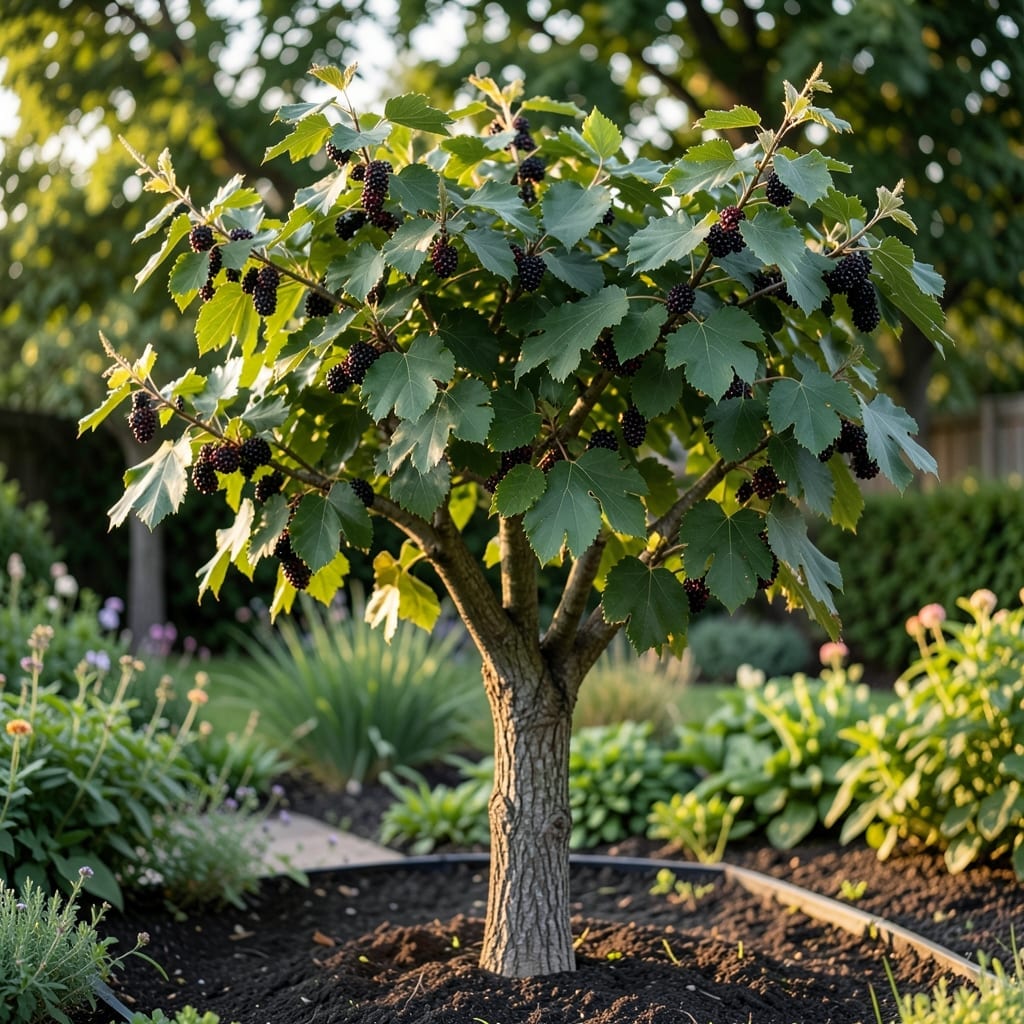
Mulberry trees are not poisonous to humans. Their ripe berries are edible and nutritious, though unripe berries and some species may cause mild stomach upset in sensitive individuals.
I’ve safely enjoyed fresh mulberries straight from the tree for years, and their sweet-tart flavor is a summer highlight. 🔥 What many don’t realize is that white and black species differ in compounds, with unripe fruit containing higher concentrations of latex that can irritate digestion. The leaves and sap, while harmless to humans, can be problematic for pets like dogs or cats if ingested in large quantities.
💡 In This Article
White and black mulberries contain different chemical profiles that affect their edibility. Black mulberries (Morus nigra) have higher sugar content (around 12-15% when ripe) and lower latex concentrations, making them sweeter and generally safer. White mulberries (Morus alba), while also edible, produce more latex in unripe fruit, which can cause gastrointestinal irritation in sensitive people.
🔥
The key irritant is the milky sap, rich in 1-deoxynojirimycin (DNJ), a compound that can slow carbohydrate digestion. In unripe berries, DNJ levels may reach 0.1-0.3% by weight—enough to trigger bloating or mild nausea in some individuals.
This compound diminishes as the fruit matures, which is why color change (from white/red to deep purple/black) signals safer consumption.
For pets, the story changes. Dogs and cats lack enzymes to process DNJ efficiently, and mulberry leaves contain morusin, a flavonoid that can cause vomiting or diarrhea if consumed in large quantities. A 50-pound dog would need to eat roughly 1-2 cups of leaves to show symptoms, but smaller animals are more vulnerable.
Always monitor pets around these trees. ✨
Interestingly, white mulberry leaves are a primary food source for silkworms, proving non-toxic to some species. The difference lies in specialized digestive systems. Humans and most mammals, however, should stick to ripe berries and avoid excessive leaf or sap contact. The berries’ deep color indicates anthocyanin development, which coincides with reduced latex content.
Gardeners should note that mulberry sap can also cause skin irritation in sensitive individuals due to its alkaloid content. Wearing gloves when pruning is advisable. The trees themselves are hardy in USDA zones 4-8, thriving in well-drained soil with full sun exposure, which may affect berry ripeness timing.
Yes, ripe mulberries are safe and delicious to eat fresh. Look for deep purple or black berries that detach easily from the stem. Avoid unripe white or red berries, as they may cause mild stomach upset.
No, mulberry leaves contain compounds like morusin that can cause vomiting or diarrhea in dogs and cats. A 50-pound dog eating 1-2 cups of leaves may show symptoms. Keep pets away from fallen leaves and fruit.
Unripe berries contain higher levels of 1-deoxynojirimycin (DNJ), a compound that can slow digestion. As berries ripen, DNJ diminishes, making them safer to eat.
Yes, the milky sap contains alkaloids that may cause skin irritation in sensitive individuals. Always wear gloves when pruning or handling the tree to avoid contact.