
Beautiful Plants For Your Interior
Beautiful Plants For Your Interior
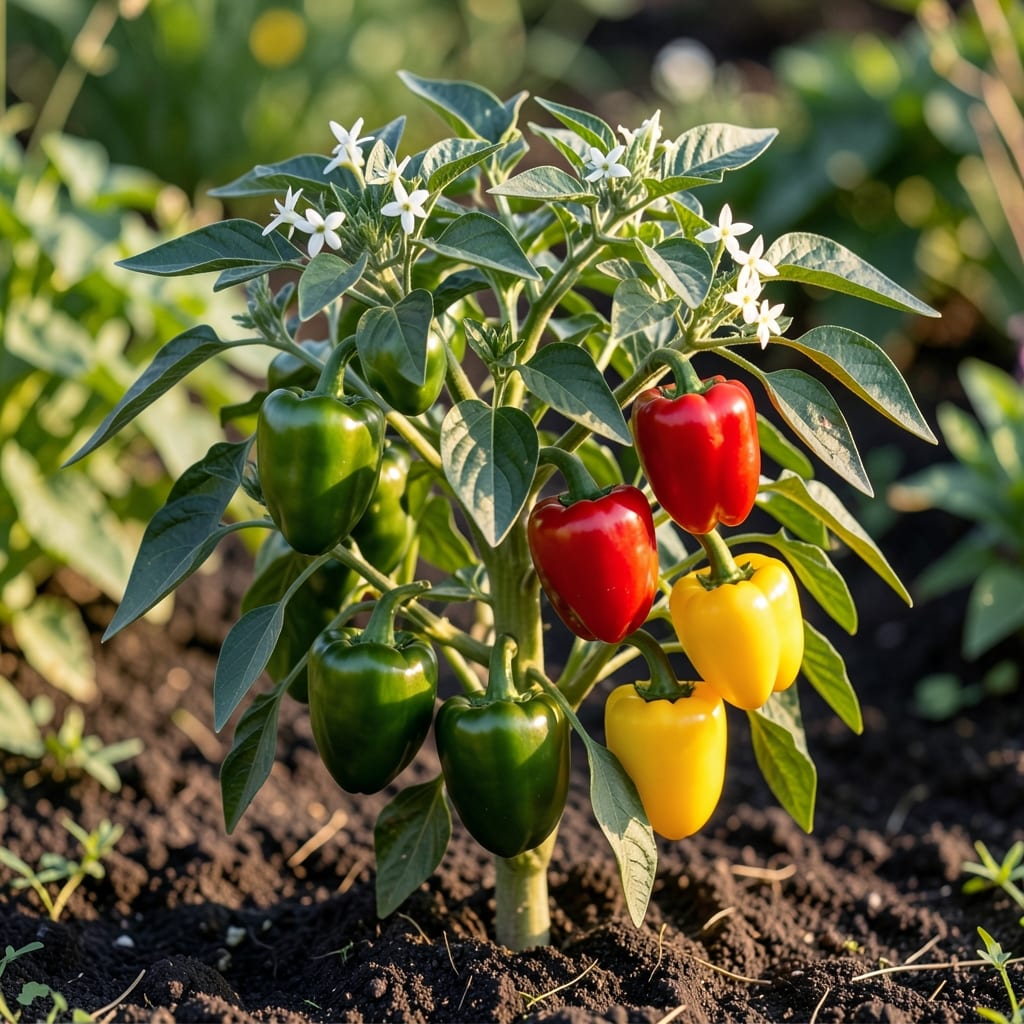
Bell pepper leaves are technically edible but often bitter and tough. While not toxic in small amounts, they belong to the nightshade family, so excessive consumption may cause mild digestive discomfort.
I’ve found these leaves contain trace solanine like other nightshades, which is why moderation matters. In some cultures, they’re used sparingly in soups or teas to add depth, but the texture can be unappealing raw. For safety, I’d limit intake to 1-2 small leaves at most and avoid them if sensitive to nightshades. ✨
💡 In This Article
Bell pepper leaves contain solanine and tomatine, alkaloids common in the nightshade family. These compounds act as natural pesticides, concentrated in leaves to protect the plant. Solanine levels in bell pepper leaves are typically 2-5 mg per gram, far below the 200-400 mg needed to cause toxicity in humans.
When consumed in small amounts, these alkaloids pass through the digestive system with minimal absorption. However, in larger quantities, they may trigger mild symptoms like nausea or stomach cramps. The body processes solanine slowly, with a half-life of about 1-2 hours, which is why moderation is key.
The bitterness you taste comes from these same compounds. They bind to taste receptors on your tongue, signaling potential danger. This evolutionary mechanism explains why many find the leaves unpalatable. The concentration is highest in mature leaves, with younger leaves containing about 30-40% less solanine.
Heat can reduce these compounds slightly. Studies show boiling bell pepper leaves for 10-15 minutes can decrease solanine content by up to 25%. However, this doesn’t eliminate the compounds entirely, so portion control remains important. 🔥
For comparison, green tomato leaves contain about 3-4 times more solanine than bell pepper leaves. This puts bell pepper foliage on the milder end of the nightshade spectrum. Still, individuals with nightshade sensitivities should avoid them altogether.
What most people don’t realize is these compounds are part of the plant’s immune system. They increase when the plant is stressed by drought or pests, which is why homegrown leaves might taste more bitter than commercial ones. ✨
It’s best to avoid eating them raw due to their tough texture and strong bitterness. The compounds that make them bitter can also cause mild stomach upset in sensitive individuals.
Blanching in boiling water for 2-3 minutes helps soften the texture and reduce bitterness. You can also use them in cooked dishes like soups or stews where other flavors can balance their taste.
No, it’s not recommended. Pets may have different tolerances to nightshade compounds. Even small amounts could cause digestive issues for dogs or cats.
Yes, you can dry young leaves and steep 1-2 in hot water for 5-7 minutes. Start with small amounts to test your tolerance, as the flavor can be strong.