
Beautiful Plants For Your Interior
Beautiful Plants For Your Interior
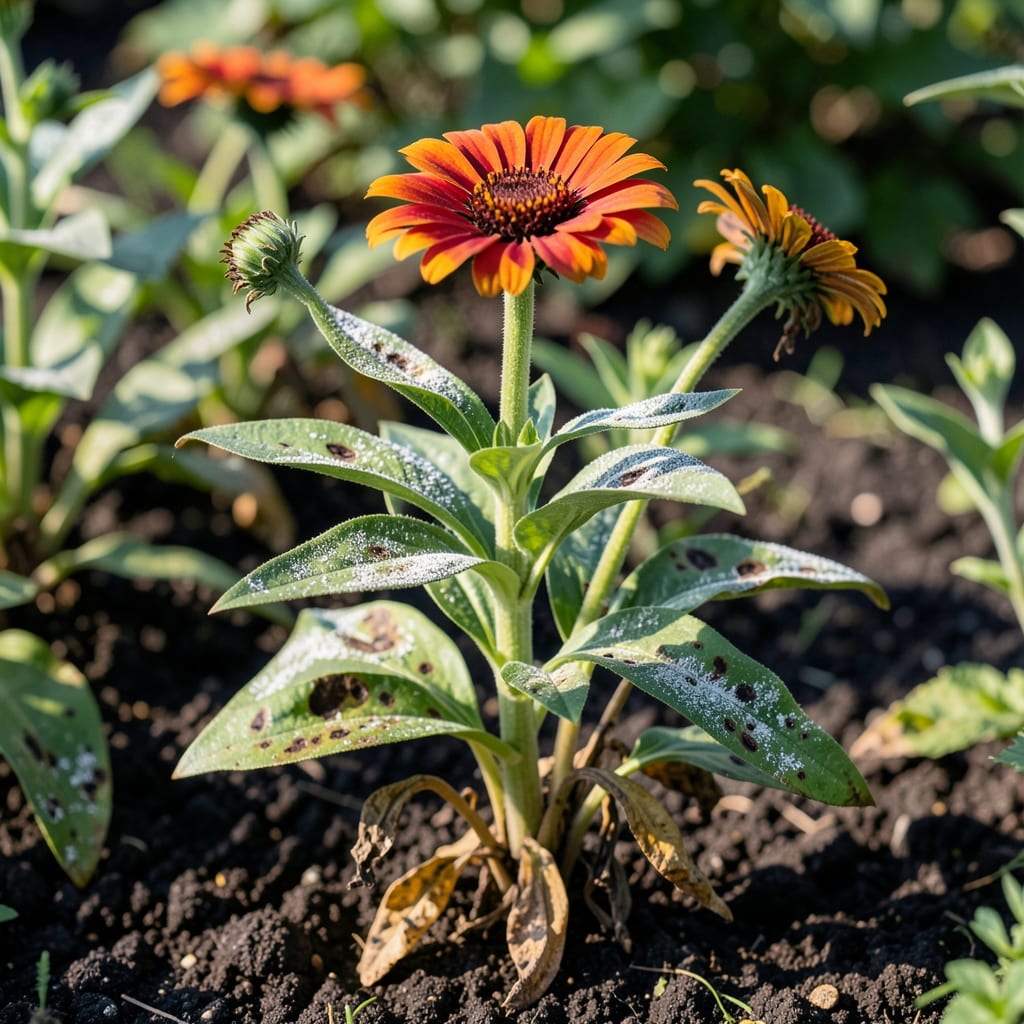
Nothing ruins a vibrant zinnia bed faster than disease. I’ve lost entire patches overnight to issues I didn’t catch soon enough.
Spotted leaves, wilting stems, or powdery coatings often signal trouble. The good news is most problems are preventable with proper spacing, airflow, and morning watering habits.
Organic treatments like neem oil, baking soda sprays, or copper fungicides can stop early infections in their tracks. Caught quickly, your zinnias can rebound within a week.
Regular inspections and quick action make all the difference. Healthy zinnias reward you with non-stop blooms all season long.
Understanding why zinnia plants fall prey to diseases helps you prevent problems before they start. Here are the primary causes, broken down by category:
Zinnias thrive in well-draining soil and full sunlight (6–8 hours daily). When exposed to excess moisture—from overwatering, poor drainage, or humid climates—their leaves stay wet, creating a breeding ground for fungal pathogens like Alternaria or Phytophthora. Similarly, crowded plantings restrict airflow, trapping humidity and accelerating spore spread. Drought stress, on the other hand, weakens zinnias, making them more susceptible to bacterial wilt.
Zinnias are vulnerable to airborne and soil-borne pathogens. Powdery mildew (Erysiphe cichoracearum) thrives in high humidity + cool nights, coating leaves in white fungal growth. Bacterial leaf spot (Xanthomonas spp.) spreads via splashing water or contaminated tools, causing blackened, water-soaked lesions. Root rot (e.g., Fusarium) invades when roots sit in soggy soil, cutting off nutrient uptake.
Insects like aphids, whiteflies, and thrips don’t just damage zinnias—they transmit viral diseases such as Zinnia yellow mottle virus. These pests pierce plant cells to feed, injecting viruses that distort growth, yellow leaves, or stunt blooms. Nematodes in the soil can also attack roots, reducing vigor and inviting secondary infections.
Poor gardening habits often trigger disease outbreaks. Reusing infected soil or failing to rotate crops allows pathogens to persist. Over-fertilizing with nitrogen promotes lush, weak growth that’s more prone to mildew. Improper sanitation—like not sterilizing pruners or leaving dead foliage—gives diseases a foothold. Even watering late in the day keeps foliage damp overnight, encouraging fungal spores to germinate.
Keeping your zinnias healthy starts with quick action and smart habits. Below are targeted fixes for common issues, plus tips to stop problems before they start.
Remove infected leaves and space plants 18–24 inches apart to boost circulation. Water at the base in the morning so foliage dries fast. Prevention: Choose resistant varieties like ‘Profusion’ or ‘Crystal’ series. Pro tip: A weekly spray of 1 part milk to 9 parts water can suppress spores organically.
Prune affected leaves with sterilized shears and destroy them (don’t compost). Avoid overhead watering. Prevention: Rotate planting spots yearly and use drip irrigation. Mulch with straw to prevent soil splashing onto leaves.
Spray pests off with a strong stream of water early in the day. Introduce beneficial insects like ladybugs or lacewings. Prevention: Plant companion flowers such as marigolds or alyssum to attract predators. Neem oil spray (1 tbsp per gallon of water) works weekly as a deterrent.
If the soil is soggy, stop watering immediately and improve drainage by amending with compost or sand. For potted zinnias, ensure containers have drainage holes. Prevention: Water only when the top inch of soil is dry. Raised beds can help in heavy clay soils.
Remove infected plants and clean up garden debris. Thin seedlings to prevent crowding. Prevention: Avoid wet foliage by watering early. Solarize soil before planting by covering with clear plastic for 4–6 weeks to kill fungi.
Look for white, powdery spots on leaves, often starting on lower foliage. It spreads quickly in humid conditions. Treat early with neem oil or a milk-water spray to prevent damage.
Yes, soggy soil leads to root rot and fungal growth. Always water at the base in the morning and ensure good drainage. Drip irrigation helps prevent wet foliage.
Avoid overhead watering and space plants 18–24 inches apart. Remove infected leaves immediately and sterilize tools. Crop rotation also reduces recurrence.
Yes, ‘Profusion’ and ‘Crystal’ series are bred for resistance. These varieties handle humidity better and are less prone to powdery mildew.