
Beautiful Plants For Your Interior
Beautiful Plants For Your Interior
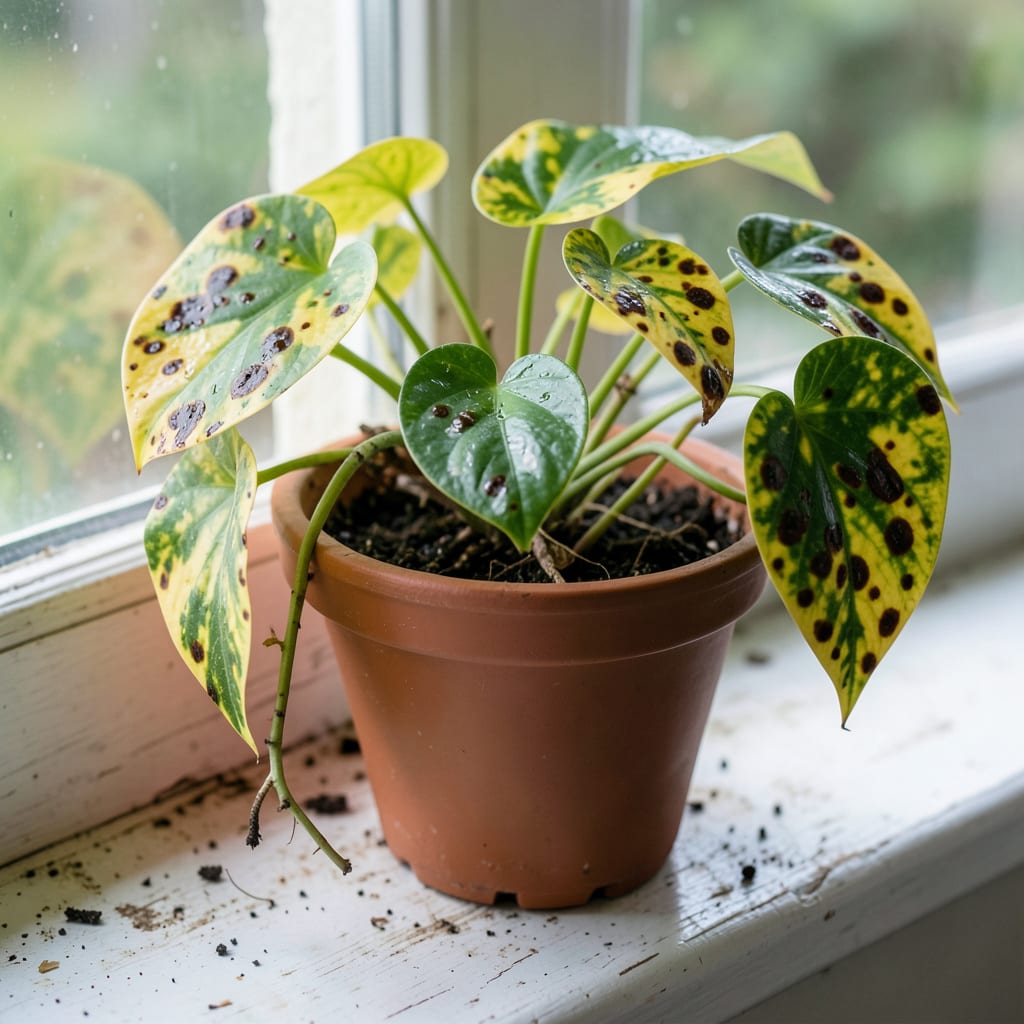
Yellow halos around brown spots on your pothos leaves are screaming for help. I ignored these warning signs once and lost half my plant within 2 weeks.
Overwatering creates the perfect swampy conditions for bacterial leaf spot to spread. The fix starts with your watering can—less frequency, better drainage, and letting the top inch of soil dry out between waterings.
Prune the damaged leaves first to stop the spread, then adjust your care routine. Your pothos can bounce back with new growth in just a few weeks if you act fast.
This isn’t just about saving one plant—it’s about preventing the same heartbreak with your entire collection. Here’s how to turn it around.
Bacterial leaf spot in Epipremnum aureum (pothos) often flares up when excess moisture meets vulnerable foliage. Overwatering creates the perfect storm for bacterial pathogens like Xanthomonas or Pseudomonas to invade. Below are the key causes, explained with actionable insights.
Pothos thrives in well-draining soil, but soggy conditions suffocate roots and slow water uptake. Stagnant moisture raises humidity around the leaves, giving bacteria a wet, nutrient-rich surface to multiply. Root rot from overwatering further stresses the plant, lowering its defenses against infections.
Stagnant air traps moisture on leaf surfaces, prolonging the dampness bacteria need to establish colonies. Dense foliage or crowded growing spaces (like terrariums) limit airflow, creating microclimates where pathogens spread unchecked. Splashing water from overhead irrigation can also disperse bacteria between leaves.
Bacteria hitch rides on unsterilized pruning shears, pots, or even tap water. Reusing tools without disinfection (e.g., with 70% isopropyl alcohol) risks transferring pathogens to healthy tissue. Similarly, water sitting in saucers or reused for multiple plants can harbor bacterial spores.
Pothos prefers stable environments (65–85°F, 40–60% humidity). Sudden drops in temperature or spikes in humidity (e.g., from misting) stress the plant, making it more susceptible to infection. Bacteria reproduce rapidly in warm, humid conditions—ideal for leaf spot outbreaks.
Reviving your pothos starts with addressing the root causes of bacterial leaf spot and overwatering. Below are targeted solutions for each issue, along with prevention tips to keep your plant thriving. 🌿
Consistency is key! With these steps, your pothos should bounce back in a few weeks. ✨
Water only when the top 1-2 inches of soil feel dry. This usually means every 7-10 days, but always check the soil first. Overwatering is the leading cause of leaf spot.
Yes, if you act quickly. Remove all infected leaves, repot in fresh soil, and stop watering for 1 week. Treat with copper fungicide and isolate the plant to prevent spreading.
Bacteria can linger on tools, pots, or nearby plants. Sterilize everything with 70% isopropyl alcohol, improve airflow, and avoid overhead watering. It may take 2-3 weeks to see improvement.
