
Beautiful Plants For Your Interior
Beautiful Plants For Your Interior
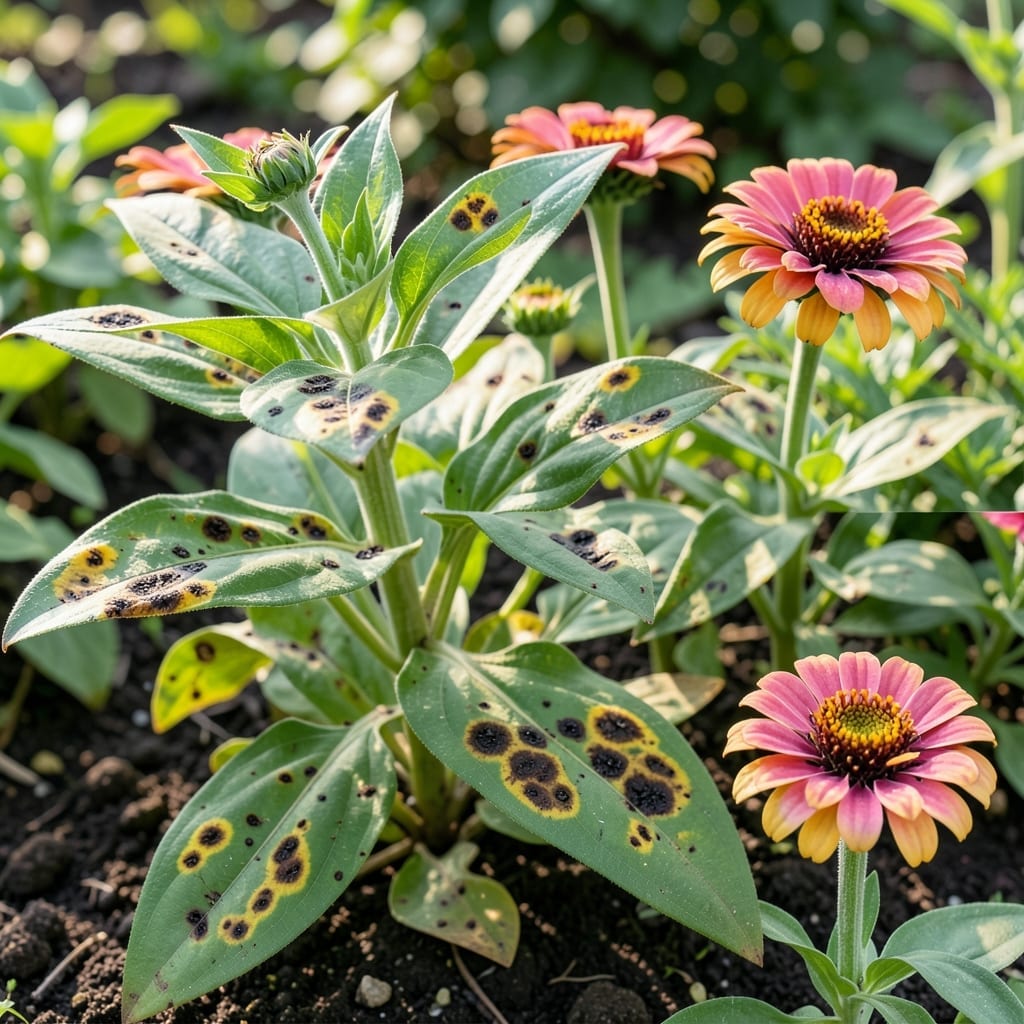
Spotted yellow leaves or powdery white coatings on your zinnias mean trouble. I’ve lost entire beds to diseases that started with subtle signs—catching them early is everything.
This visual guide shows you exactly what to look for: dark spots, wilting stems, or strange growths that don’t belong. Most problems spread fast in humid weather, so quick action saves your flowers.
You’ll learn to tell fungal issues from bacterial ones just by appearance. The treatments are simple—remove affected parts, improve airflow, or use organic sprays when needed.
Works for all zinnia varieties, from dwarf to giant. Spot the warning signs before they take over.
Zinnia diseases often stem from environmental, fungal, or bacterial factors. Understanding the root causes helps prevent outbreaks and keeps your garden thriving. Below are the most common triggers:
Overwatering or poorly drained soil creates a breeding ground for fungal pathogens like Alternaria and Phytophthora. These fungi thrive in damp conditions, leading to leaf spots, blights, and root rot. Actionable tip: Ensure zinnias are planted in well-draining soil and water at the base to keep foliage dry.
Many zinnia diseases, such as powdery mildew and rust, spread via airborne spores. High humidity and crowded plantings accelerate spore germination. Actionable tip: Space plants adequately for airflow and remove infected leaves immediately to limit spread.
Bacteria like Pseudomonas and Xanthomonas cause spots, wilts, and stem cankers. These pathogens enter through wounds or splashing water. Actionable tip: Avoid overhead irrigation and disinfect pruning tools between cuts to minimize bacterial entry points.
Insects such as aphids and whiteflies transmit viral diseases like Zinnia yellow mottle virus. Their feeding creates entry points for pathogens. Actionable tip: Use row covers or introduce beneficial insects like ladybugs to control pest populations naturally.
Heat, drought, or nutrient deficiencies weaken zinnias, making them more susceptible to diseases. Stress reduces the plant’s ability to fend off infections. Actionable tip: Mulch to retain moisture, fertilize balancedly, and provide afternoon shade in extreme heat.
Dealing with zinnia diseases can be frustrating, but these practical solutions will help you restore your plants to health. Below are targeted fixes for common issues, along with prevention tips to keep your zinnias thriving.
Fix: Remove infected leaves immediately and spray the plant with a baking soda solution (1 tsp baking soda + 1 quart water + a few drops of dish soap). For severe cases, use neem oil or a copper-based fungicide.
Prevention: Improve air circulation by spacing plants properly. Water at the base in the morning to allow foliage to dry quickly. 💡 Pro tip: Choose mildew-resistant zinnia varieties like ‘Profusion’ or ‘Crystal’ series.
Fix: Prune away infected leaves and destroy them (do not compost). Apply copper-based bactericides to prevent spread. Avoid overhead watering to limit bacterial growth.
Prevention: Rotate crops yearly and avoid planting zinnias in the same spot repeatedly. Use drip irrigation to keep leaves dry. ✨ Pro tip: Sterilize gardening tools with rubbing alcohol between uses.
Fix: Blast aphids off with a strong stream of water. Introduce natural predators like ladybugs or apply insecticidal soap. For severe cases, use pyrethrin-based sprays.
Prevention: Encourage beneficial insects by planting companion flowers like marigolds or yarrow. Inspect plants regularly for early signs of pests. 🎯 Pro tip: Avoid over-fertilizing, as it attracts sap-sucking pests.
Fix: Remove affected plants and their surrounding soil to prevent spread. Improve drainage by amending the soil with compost or sand. Avoid watering until the soil dries out.
Prevention: Plant zinnias in well-draining soil and use raised beds if your garden has heavy clay. Water deeply but infrequently. 🌡️ Pro tip: Mulch with organic matter to regulate soil moisture.
Look for white, powdery spots on leaves, often starting on the upper surfaces. It spreads quickly in humid conditions and can cover entire leaves if untreated.
These are likely bacterial leaf spots, caused by pathogens like Pseudomonas. They start small, grow larger, and may have yellow halos. Remove affected leaves immediately.
If caught early, improve drainage and stop watering until soil dries. Severely affected plants should be removed to prevent spread to healthy ones.
Some, like powdery mildew, can spread to related species. Isolate infected plants and practice good garden hygiene to protect your entire garden.