
Beautiful Plants For Your Interior
Beautiful Plants For Your Interior
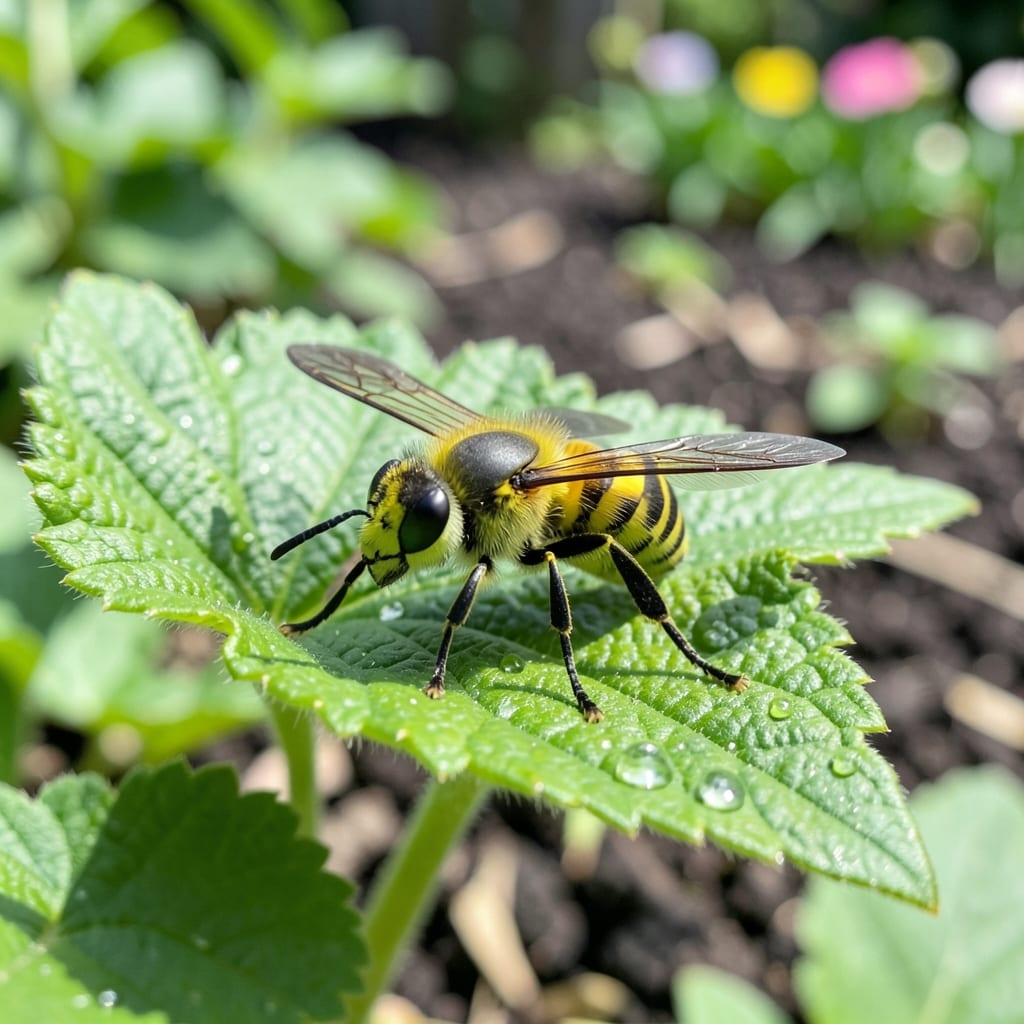
Adult yellow jacket wasps typically measure 3/8 to 5/8 inches long, with workers averaging smaller than queens, which can reach up to 3/4 inch. Their slender bodies have distinct black and yellow banding.
In my experience, these measurements help distinguish them from similar insects like honeybees, which are often fuzzier and slightly larger. The queens stand out not just in size but also in their role, laying eggs and establishing new colonies each spring. Their streamlined bodies allow for rapid flight, making them efficient hunters and scavengers. 🔥
💡 In This Article
Their size isn’t just about length—it’s about proportion. A yellow jacket’s body divides into three distinct segments: head, thorax, and abdomen. The thorax measures roughly 1/4 inch alone, housing powerful flight muscles that enable their signature rapid, darting movements.
Their wings, nearly transparent with a slight smoky tint, span about 1/2 inch when fully extended, creating a wingspan-to-body ratio of nearly 1:1. ✨
What sets them apart from other wasps is their waist—or rather, the lack of one. Unlike paper wasps with their slender, elongated “waists,” yellow jackets have a more compact connection between thorax and abdomen. This gives them a stockier appearance despite their small size.
The abdomen itself contains 6 visible segments, each adorned with alternating black and yellow bands that serve as warning coloration. 🔥
Comparisons reveal fascinating size dynamics. While workers average 7/16 inch, males (drones) fall between workers and queens at about 1/2 inch. This size hierarchy supports their colonial lifestyle: smaller workers efficiently forage and defend, while larger queens prioritize egg production.
Their smooth, shiny exoskeletons lack the fuzzy appearance of bees, making their compact size more apparent. ⚡
Their antennae, often overlooked, measure about 1/8 inch and feature 12 segments in females, 13 in males. These sensory organs detect chemical signals from miles away, compensating for their small size with extraordinary sensitivity. The mandibles, though tiny, can deliver painful stings repeatedly—a defense mechanism proportional to their aggressive nature rather than their physical dimensions.
💫
In the insect world, their size places them in the “medium” category. They’re larger than sweat bees (1/4 inch) but smaller than cicada killers (1.5 inches). This intermediate size allows them to exploit a wide range of food sources, from nectar to human picnic leftovers, while maintaining the agility to escape larger predators. 🌟
Workers typically measure 3/8 to 5/8 inch, while queens can reach 3/4 inch long. This size difference supports their roles: smaller workers forage efficiently, and larger queens prioritize egg production.
Their wings span about 1/2 inch when fully extended, creating a near 1:1 ratio with their body length. This proportion enables their rapid, darting flight patterns.
Yellow jackets are smoother and less fuzzy than bees, with a more compact waist. Their bright yellow and black banding is also more pronounced. Bees typically appear rounder and larger.
Yes, males (drones) measure about 1/2 inch, falling between workers and queens. Females also have 12 antennae segments, while males have 13.
Their medium size (3/8 to 5/8 inch) helps distinguish them from smaller insects like sweat bees or larger ones like cicada killers. This aids in accurate pest management.