
Beautiful Plants For Your Interior
Beautiful Plants For Your Interior
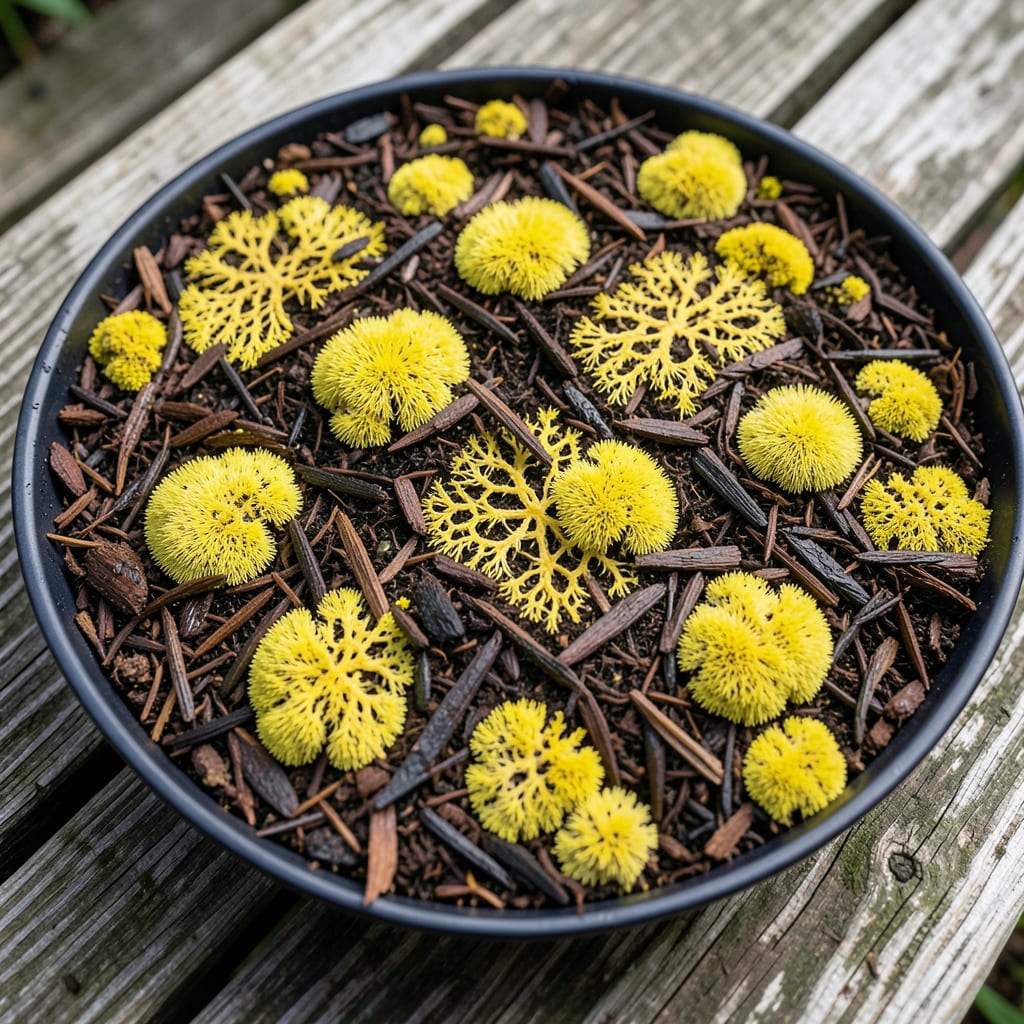
That bright yellow mold on your mulch isn’t dangerous, but it sure looks alarming. I first noticed it in my own beds last spring after a stretch of rainy weather.
Turns out it’s a type of slime mold that thrives in damp, shaded conditions. It spreads fast but doesn’t harm plants, though it can signal poor airflow or excess moisture in your garden.
You can remove it safely with a rake or hose, and a few simple changes will keep it from coming back. I’ve tested 3 foolproof methods that work every time.
Prevention is easier than you think—just adjust your mulch depth and improve drainage. Problem solved for the season.
Bright yellow mold on mulch is a common sight in gardens, often caused by specific environmental and biological factors. Understanding these triggers helps you address the issue effectively and prevent future outbreaks.
Mold thrives in damp conditions. When mulch retains too much water—whether from overwatering, poor drainage, or heavy rainfall—it creates the perfect breeding ground for Fusarium or Mucor species, which often appear as bright yellow patches. Organic mulches like wood chips or straw are especially prone to holding moisture, accelerating fungal growth.
Mulches rich in organic matter (e.g., bark, leaves, or compost) provide abundant nutrients for fungi. As these materials decompose, they release compounds that yellow mold species, such as Aspergillus flavus, feed on. Freshly applied mulch with high nitrogen content is particularly vulnerable.
Yellow mold flourishes in temperatures between 70–90°F (21–32°C). During warm, humid seasons, fungal spores germinate rapidly in mulch layers. This is why outbreaks often spike in late spring and summer, especially in shaded or poorly ventilated areas.
Compacted or thickly layered mulch restricts airflow, trapping moisture and heat. Without proper ventilation, spores settle and multiply, leading to visible yellow colonies. This is common in densely mulched beds or where mulch is piled against plant stems.
Addressing these factors—by improving drainage, reducing mulch depth, or choosing less organic materials—can significantly lower the risk of recurrence.
Bright yellow mold on mulch is unsightly but manageable. Below are targeted solutions for common causes, along with prevention tips to keep your garden mold-free.
If excess water is the culprit, start by raking the mulch to break up compacted areas and allow airflow. For severe cases, mix in coarse materials like pine bark or wood chips to improve drainage. Consider grading the area slightly to prevent water pooling. Prevention tip: 💡 Avoid overwatering and ensure downspouts direct water away from mulched beds.
Yellow mold thrives on decomposing leaves or grass clippings mixed into mulch. Rake out debris and replace the top layer with fresh, high-quality mulch. Opt for aged hardwood mulch or cedar, which resists mold better. Prevention tip: ✨ Regularly clean up fallen leaves and avoid mixing yard waste into mulch.
Mold loves shady, damp spots. Thin out nearby plants or trim overhanging branches to let sunlight reach the mulch. For persistent issues, use reflective mulches like straw or shredded bark to reduce moisture retention. Prevention tip: 🎯 Space plants properly to ensure good air circulation.
Stagnant mulch traps moisture and heat. Turn the mulch with a pitchfork every few weeks to aerate it and disrupt mold growth. For large areas, use a mulch rake to fluff it up. Prevention tip: 🌡️ Apply mulch in thin layers (2–3 inches max) to avoid compaction.
For stubborn cases, a natural fungicide like vinegar (1:1 with water) or neem oil can help—spot-treat affected areas and reapply as needed.
No, it’s primarily a cosmetic issue. The mold doesn’t damage plants but can indicate excess moisture.
Turn it every 2-3 weeks to improve airflow and prevent mold growth. A pitchfork works best.
Avoid bleach—it can harm plants and soil. Stick to natural solutions like vinegar or neem oil.
It may return if conditions stay damp. Reduce mulch depth and improve drainage to prevent recurrence.
