
Beautiful Plants For Your Interior
Beautiful Plants For Your Interior
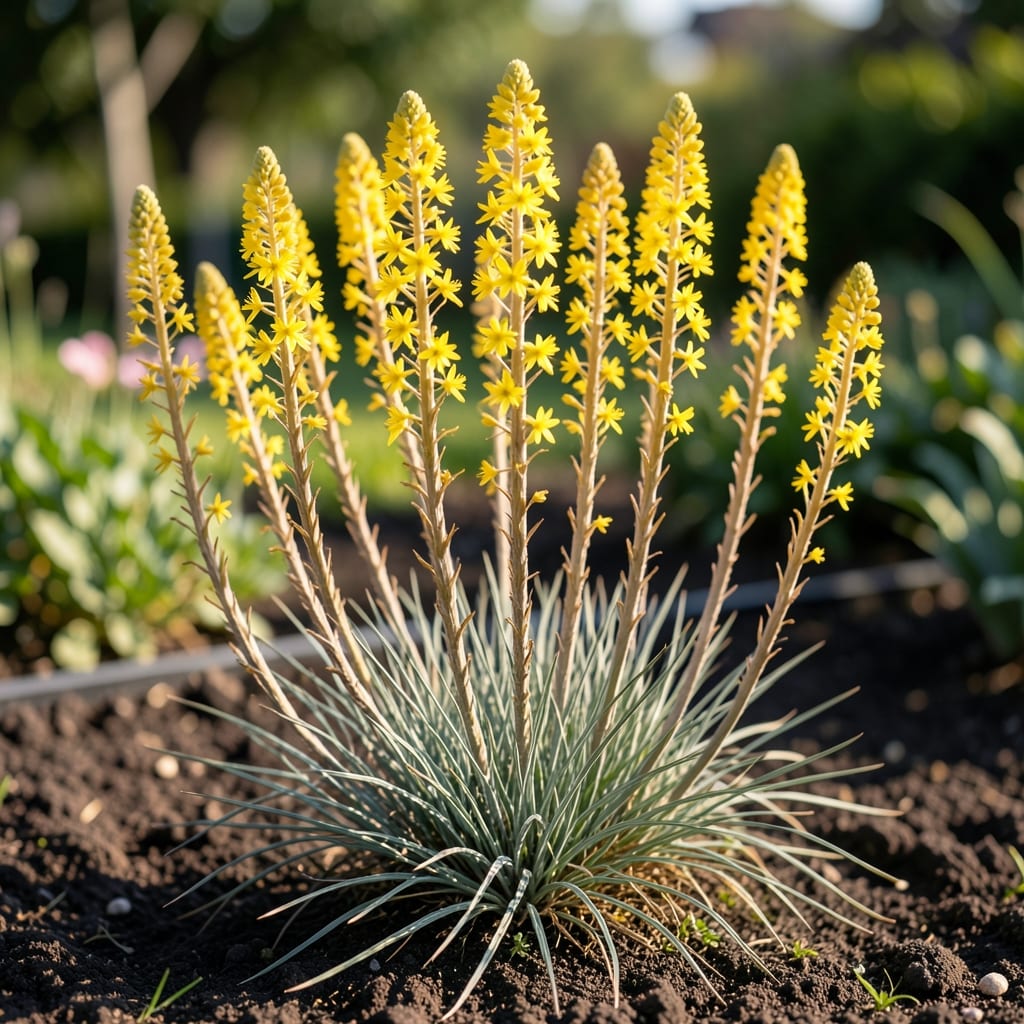
The yellow foxtail lily features tall spikes of bright yellow, bottlebrush-like flowers and grassy foliage. It thrives in full sun to partial shade and well-drained soil, blooming in mid to late summer.
I love how this plant adds architectural interest to gardens with its upright 3-5 foot flower spikes. 🌟 The dense, cylindrical blooms attract pollinators like bees and butterflies, making it a lively addition to summer landscapes. Its drought tolerance once established makes it ideal for low-maintenance gardens.
💡 In This Article
The flower spikes of this plant emerge like dense, fuzzy caterpillars, with each individual blossom a tiny, tubular yellow star. These grow in such tight clusters that they create the signature bottlebrush effect, often reaching 4-6 inches in diameter.
The stems themselves are sturdy and upright, rarely needing staking even at their full 3-5 foot height. 🌟
What makes the foliage special is its fine, grass-like texture that forms neat clumps at the base. Each blade is typically 1/4 inch wide and 18-24 inches long, creating a fountain-like mound that contrasts beautifully with the vertical flowers. The leaves maintain a vibrant green color throughout the growing season, only brown-tipping in extreme drought.
The growth habit is distinctly architectural – it sends up multiple flower spikes from each clump, creating a dramatic vertical accent. Unlike many perennials that spread aggressively, this plant maintains a tidy, non-invasive form. Its root system is fibrous rather than rhizomatous, which means it stays put where you plant it. ✨
You can distinguish it from similar plants by examining the flower structure closely. While other yellow-flowered perennials might have daisy-like or trumpet-shaped blooms, the foxtail lily’s flowers are uniquely tubular and packed so densely that individual blossoms are barely visible. The overall effect is more like a vibrant yellow torch than a traditional flower display.
💫
Another identifying feature is its bloom time – while many summer flowers peak in early July, the foxtail lily typically waits until mid to late summer to put on its show. This later bloom period makes it an excellent companion for early summer flowers that have finished their display, extending the garden’s color season significantly.
🔥
Most varieties reach 3-5 feet in height with their flower spikes. The foliage forms clumps about 18-24 inches tall, creating a nice vertical contrast in garden designs.
They thrive in full sun to partial shade. In hotter climates, afternoon shade helps prevent flower scorch while still allowing for abundant blooms.
Early spring or fall is ideal. This gives roots time to establish before summer heat or winter cold. Avoid planting during extreme temperature swings.
Well-draining soil is essential. Amend heavy clay with compost. They tolerate various soil types but dislike soggy conditions that can rot roots.
Every 3-4 years in early spring. This prevents overcrowding and maintains vigorous blooming. Lift clumps, separate, and replant the healthiest sections.