
Beautiful Plants For Your Interior
Beautiful Plants For Your Interior
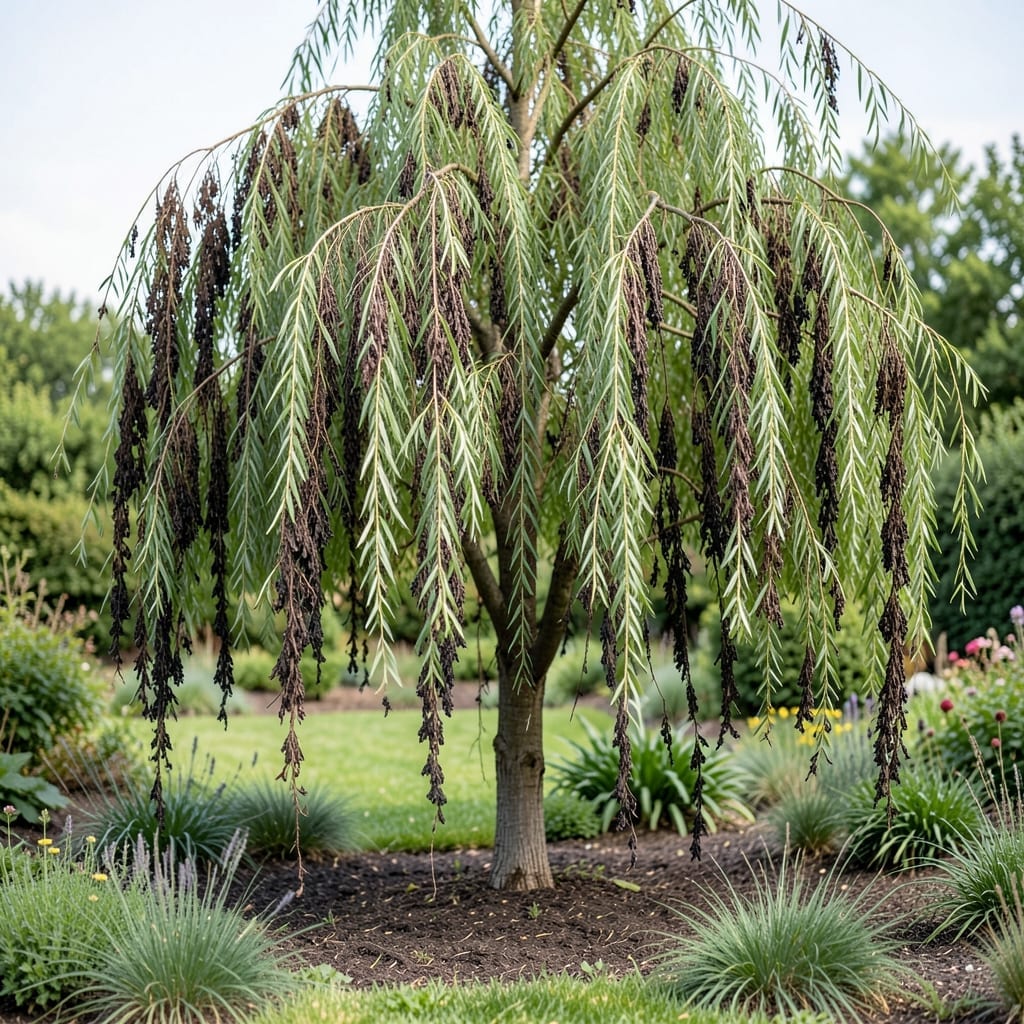
Spotted brown leaves on your willow last week? That’s how my willow tree blight nightmare started too.
I ignored the early signs—yellowing leaves, dark spots—until entire branches turned brittle overnight. By then, the fungal infection had spread to 60% of the canopy. Don’t make my mistake.
Organic treatments actually work if you catch it early. Copper-based sprays and proper pruning stopped the spread in my case, and the tree bounced back within two seasons.
Prevention is simpler than cure: improve air circulation, avoid overhead watering, and inspect weekly. Your willow’s life depends on it.
Willow tree blight doesn’t strike randomly—it’s usually the result of specific environmental or biological stressors. Understanding the root causes helps you prevent or address the issue effectively.
Willows thrive near water, but prolonged saturation or poor drainage creates ideal conditions for fungal pathogens like Phytophthora or Verticillium. These fungi attack roots and vascular systems, leading to wilting, leaf discoloration, and dieback. Action: Improve soil drainage or redirect water runoff to keep roots healthy.
Blight is often caused by Fusarium, Botryosphaeria, or bacterial pathogens like Xanthomonas. These invaders enter through wounds, pruning cuts, or stressed tissue. Action: Sterilize pruning tools with rubbing alcohol and remove infected branches immediately to limit spread.
Stressed willows—due to nutrient deficiencies, drought, or physical damage—are more susceptible to blight. Weak trees lack the vigor to fend off infections. Action: Maintain balanced fertilization, proper watering, and regular inspections for early signs of distress.
Insects like willow borers or aphids weaken trees by tunneling into bark or sapping nutrients, creating entry points for blight-causing pathogens. Action: Monitor for pest activity and use organic treatments like neem oil to deter infestations.
Dealing with willow tree blight requires quick action and the right approach. Here’s how to tackle common causes and restore your tree’s health.
If fungal spores are the culprit, start by removing infected branches with clean, sharp pruners. Cut at least 6 inches below visible damage to ensure no spores remain. Disinfect tools between cuts using a 10% bleach solution or rubbing alcohol. Burn or dispose of infected material—never compost it, as this can spread the disease. Apply a copper-based fungicide to the tree afterward to prevent recurrence.
Willows hate soggy roots. If poor drainage is causing blight, amend the soil with organic matter like compost or sand to boost aeration. For severe cases, consider installing a French drain near the tree’s base. Avoid overwatering—let the top 2 inches of soil dry out between waterings. Mulch with bark or straw (2–3 inches deep) to regulate moisture without suffocating roots.
Aphids, borers, and other pests weaken trees, making them vulnerable to blight. Introduce beneficial insects like ladybugs or lacewings to control infestations naturally. For stubborn pests, use neem oil or insecticidal soap, applying in the early morning or late evening. Remove heavily infested branches to prevent further damage.
With consistent care, your willow can bounce back stronger than ever! ✨
Look for brown or black spots on leaves, wilting branches, or oozing cankers on the bark. Early signs include yellowing leaves and premature leaf drop.
Yes, fungal spores can travel via wind, water, or contaminated tools. Always disinfect pruning tools and remove infected material immediately to prevent spread.
Copper-based fungicides or neem oil work well for mild cases. For severe infections, remove affected branches and improve air circulation around the tree.
With proper treatment, most willows show improvement within 2-4 weeks. Full recovery may take 1-2 growing seasons, depending on the extent of damage.