
Beautiful Plants For Your Interior
Beautiful Plants For Your Interior
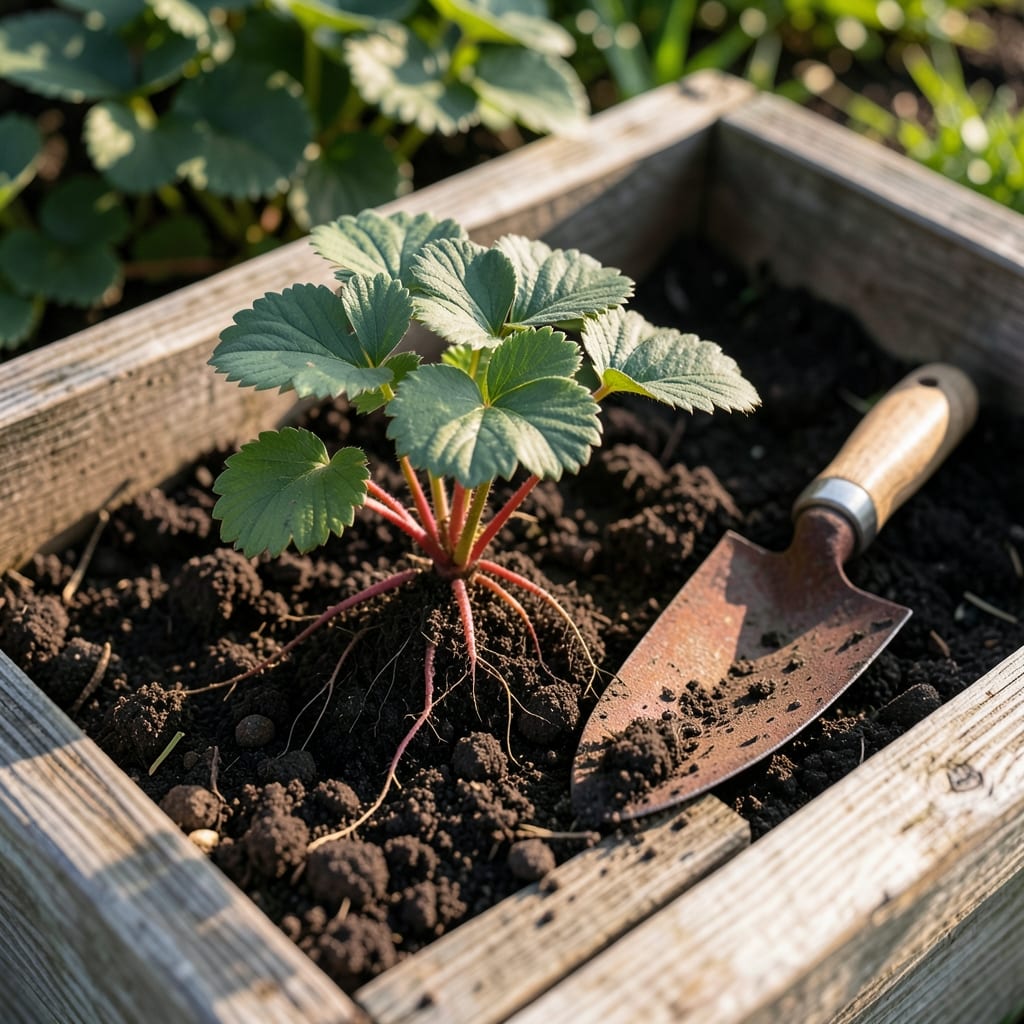
Bare root strawberries may produce a few berries the first year, but removing early blooms encourages stronger root growth for better harvests in following seasons.
I’ve found that young strawberry plants prioritize establishing their root systems over fruit production. This means most energy goes toward developing a strong foundation rather than berries. 💫 Removing those first flowers might feel counterintuitive, but it pays off with significantly larger yields in the second year. The trade-off is well worth it for long-term success.
💡 In This Article
When you plant bare root strawberries, they enter a critical establishment phase. The plant directs nearly all its energy toward root development and foliage growth rather than fruit production. This is a survival mechanism—strong roots mean better water and nutrient uptake for future seasons.
The crown (where roots meet stems) must first develop a robust network to support the plant long-term.
Strawberry plants follow a specific energy allocation pattern. In the first year, they typically produce 1-3 small berries if left to fruit, but these come at the expense of root and runner development.
Studies show that plants allowed to fruit in year one often yield 30-50% less in subsequent years compared to those where early blooms were removed. The trade-off is biological: fruits require significant resources that could otherwise build a stronger plant.
The root system of a young strawberry plant needs to reach 6-8 inches deep and spread 12-18 inches wide for optimal productivity. This takes time and energy.
When you remove early flowers, you’re essentially telling the plant: “Focus on infrastructure first.” The result is a more vigorous plant that can support heavy fruiting in year two and beyond. 💫
Hormonal factors also play a role. Young plants produce higher levels of auxins (growth hormones) that promote root development over fruit production. As the plant matures, the balance shifts toward gibberellins, which stimulate flowering. This natural progression explains why patience in the first year leads to significantly better harvests later.
Environmental stress compounds this effect. Bare root plants experience transplant shock, which further delays fruiting. The energy cost of recovering from this stress, combined with establishing new roots, leaves little reserve for berry production. This is why commercial growers often pinch off first-year flowers—it’s a strategic investment in future yields.
You might see 1-3 small berries if you let the plant fruit naturally. However, these will be tiny and the plant will grow weaker for next season. Removing early blooms redirects energy to root growth.
Yes, pinching off first-year blossoms is highly recommended. This sacrifice boosts root development, leading to 30-50% more berries in year two. Commercial growers use this technique for maximum yields.
Plant crowns just above soil level, space 12-18 inches apart, and water 1-1.5 inches weekly. Use mulch to retain moisture and remove runners to focus energy on growth.
They’re likely focusing on root establishment. Bare root plants experience transplant shock and allocate energy to survival first. Fruit production becomes a priority only after the root system develops.