
Beautiful Plants For Your Interior
Beautiful Plants For Your Interior
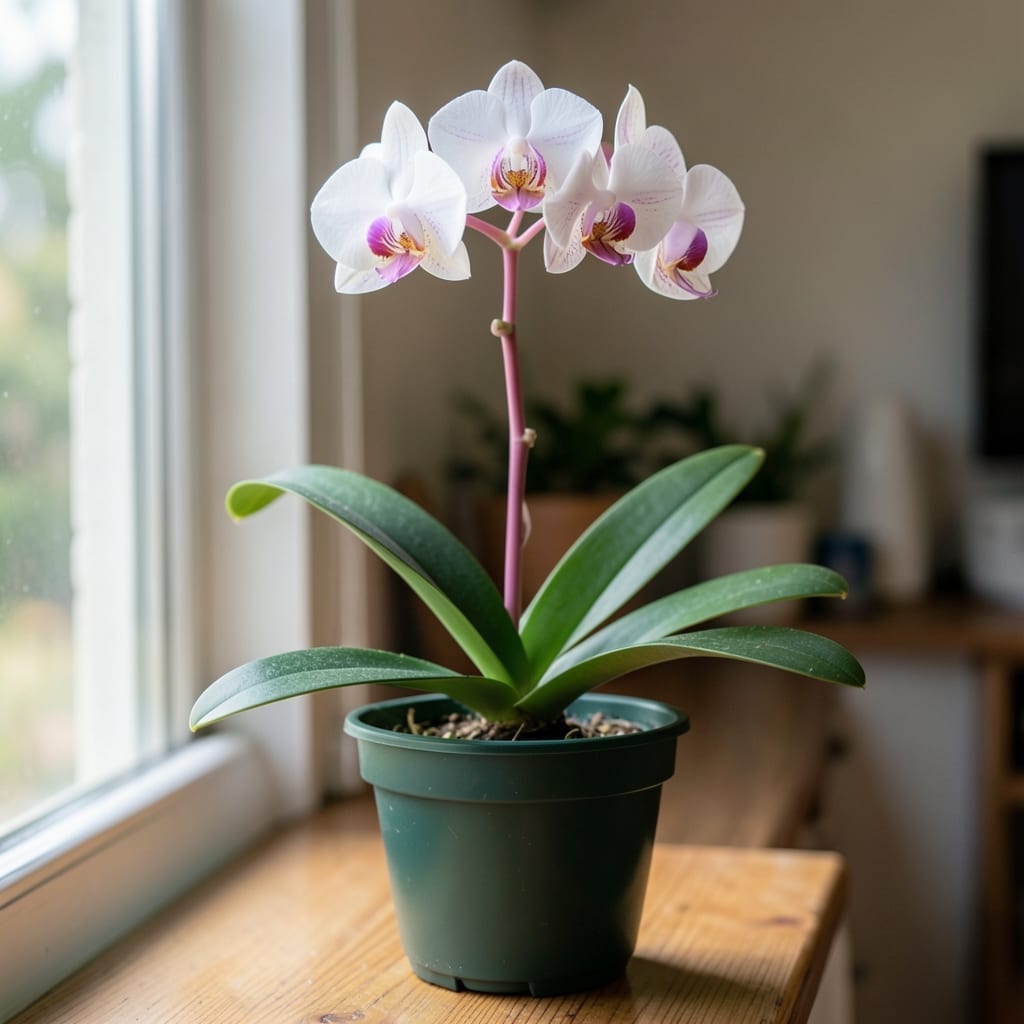
That pink stem on your orchid isn’t a cause for panic—it’s actually a clue. I’ve seen this happen often with Phalaenopsis, and it usually points to one of three simple fixes.
Most likely, your plant’s getting more direct light than it prefers. Orchids thrive in bright, indirect light, and too much sun triggers this stress response. Sometimes it’s just new growth with natural pigment, but check the intensity first.
Adjusting the light or feeding it the right nutrients usually reverses the color within weeks. The stem stays healthy, and your plant continues blooming as if nothing happened.
This is common and fixable. With a small tweak to care, you’ll see that stem return to its usual green in 2-3 weeks.
A pink orchid stem isn’t always a red flag—it’s often a natural or environmental response. Here’s why it happens:
Orchids, especially Phalaenopsis, develop pink or reddish stems when exposed to intense direct sunlight. This is due to anthocyanin production, a pigment that acts as a natural sunscreen to protect the plant’s tissues from UV damage. Think of it like a tan for your orchid! If the stem turns deep red or purple, it’s a sign of sunburn risk. Move your orchid to a spot with bright, indirect light (east or north-facing windows are ideal).
Fluctuations in temperature—particularly cold drafts or heat spikes—can trigger stress responses in orchids. When temperatures drop below 55°F (13°C) or rise above 85°F (29°C), the plant may produce anthocyanins as a defense mechanism, leading to pink discoloration. Keep your orchid in a stable environment, away from AC vents, heaters, or drafty windows.
An excess of phosphorus or a deficiency in nitrogen can alter stem color. Orchid fertilizers high in phosphorus (the “P” in NPK ratios) may promote pigment changes, while nitrogen scarcity can stunt growth and trigger stress colors. Use a balanced orchid fertilizer (20-20-20 or 10-10-10) and flush the medium with water monthly to prevent salt buildup.
Some orchid hybrids, like Phalaenopsis ‘Pink Stem’ varieties, are genetically predisposed to pink or reddish stems. If your orchid has always had a hint of pink and shows no other stress signs (e.g., wilting, yellow leaves), it’s likely just its natural coloring. No action is needed—enjoy the unique hue!
If your orchid stem is turning pink, the solution often involves adjusting its environment or care routine. Here’s how to address the most common causes and prevent future issues.
Move your orchid to a spot with bright, indirect light. East- or north-facing windows are ideal. If only a sunny windowsill is available, use a sheer curtain to diffuse the light. Prevention tip: 💡 Rotate your orchid weekly to ensure even light exposure and prevent sunburn on one side.
Keep your orchid in a room with consistent temperatures between 65–80°F (18–27°C). Avoid placing it near drafts, heaters, or air conditioning vents. Prevention tip: ✨ If temperatures fluctuate at night, consider a stable indoor spot away from windows.
Let the top inch of the potting mix dry out before watering again. Ensure the pot has drainage holes, and use an orchid-specific mix (bark-based) to prevent root rot. Prevention tip: 🎯 Water in the morning to allow excess moisture to evaporate during the day.
Switch to a balanced, water-soluble orchid fertilizer (20-20-20) and dilute it to half-strength. Fertilize every 2–4 weeks during active growth, but flush the pot with plain water monthly to remove salt buildup. Prevention tip: 🌱 Avoid over-fertilizing—more isn’t always better for orchids!
With these adjustments, your orchid’s stem should return to its natural color as it recovers. Stay consistent with care, and your plant will thrive! 🌸
Not always! Some orchids naturally develop pink stems due to genetics. If your plant shows no other stress signs like wilting, it’s likely just its unique coloration.
With proper care adjustments, the stem typically reverts in 2-3 weeks. Consistency in light, temperature, and watering speeds up recovery.
A low-intensity LED grow light (10-15 watts) for 12-14 hours daily works well. Keep it 12-18 inches above the plant to avoid stress.
This suggests increasing stress. Check for direct sunlight or temperature extremes first, then adjust care immediately to prevent damage.