
Beautiful Plants For Your Interior
Beautiful Plants For Your Interior
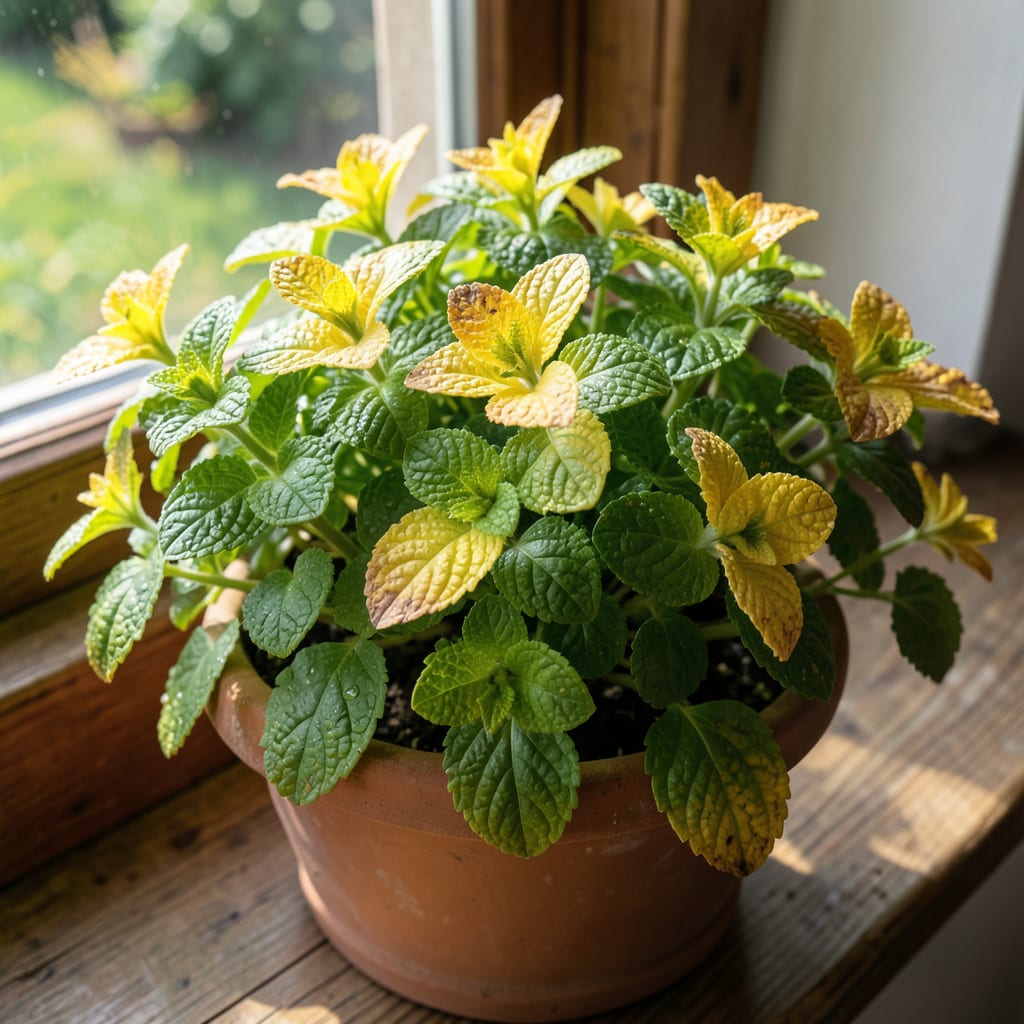
Those yellow leaves on your mint aren’t just unsightly—they’re a distress signal. I’ve seen this happen more times than I can count, and the good news is it’s almost always fixable with a few simple adjustments.
Most often, it’s either too much water drowning the roots or not enough nutrients feeding the leaves. Mint thrives on consistent moisture but despises soggy soil. A quick finger-test in the dirt usually reveals which issue you’re dealing with.
The fix starts with checking your watering routine. If the soil stays wet for days, ease up. If it’s bone dry, you’re underwatering. Either way, your mint will bounce back within weeks once you adjust.
Sometimes, a dose of balanced fertilizer is all it takes to bring back that vibrant green. Let’s figure out what your plant needs.
Mint plants develop yellow leaves due to several environmental, nutritional, or pathological triggers. Here’s a breakdown of the most common causes and their underlying mechanisms:
Excess water suffocates the roots, reducing oxygen uptake and leading to root rot. Fungal pathogens like Phytophthora or Pythium thrive in soggy soil, damaging root tissues and impeding nutrient transport. As roots die back, the plant can’t absorb water or minerals, causing chlorophyll breakdown and yellowing (chlorosis) in leaves.
Mint requires consistent moisture. When soil dries out, the plant enters water deficit stress, closing stomata to conserve moisture. This limits photosynthesis, leading to yellow, crispy leaves. High temperatures accelerate transpiration, exacerbating the issue—especially in containers with limited root space.
Yellowing often signals a lack of key nutrients:
Sap-sucking pests like aphids, spider mites, or whiteflies drain plant fluids, reducing vigor. Their feeding disrupts nutrient flow, and some (e.g., aphids) excrete honeydew, promoting sooty mold that blocks sunlight. Severe infestations cause stunted growth and leaf yellowing.
Pathogens like Verticillium wilt or Alternaria leaf spot infect mint, clogging vascular tissues or causing necrotic spots. Systemic infections disrupt water and nutrient transport, while localized lesions expand, turning leaves yellow before they brown and die.
Once you’ve identified the cause, these targeted fixes can restore your mint’s vibrant green leaves. Address the issue quickly, and your plant will bounce back in no time.
Fix: Stop watering immediately and let the soil dry out. If the pot lacks drainage, repot your mint in a container with drainage holes. Use a well-draining potting mix to prevent waterlogging.
Prevention tip: 💡 Water only when the top inch of soil feels dry. Stick your finger in the soil to check moisture levels before watering again.
Fix: Give your mint a deep watering to rehydrate the roots. If heat stress is the culprit, move the plant to a shadier spot, especially during peak afternoon sun.
Prevention tip: 🌡️ Keep the soil consistently moist (but not soggy) and use mulch to retain moisture. In hot climates, provide afternoon shade.
Fix: Feed your mint with a balanced, water-soluble fertilizer (10-10-10 or 5-5-5) every 4-6 weeks during the growing season. If the soil is poor, mix in compost or organic matter before planting.
Prevention tip: ✨ Refresh the soil annually or use a slow-release fertilizer to maintain nutrient levels.
Fix: Spray the plant with a mixture of water and mild soap (1 tsp per quart) to dislodge aphids, spider mites, or whiteflies. For severe cases, use neem oil or insecticidal soap.
Prevention tip: 🎯 Inspect leaves regularly for pests, and keep the growing area clean to deter infestations.
Fix: Remove affected leaves and improve air circulation around the plant. Avoid overhead watering to keep foliage dry. Apply a copper-based fungicide if the problem persists.
Prevention tip: 🌿 Space plants properly, water at the base, and prune excess growth to reduce humidity buildup.
Water when the top 1 inch of soil feels dry. Mint prefers consistently moist but not soggy conditions. In hot weather, this may mean watering every 1-2 days.
Unfortunately, no. Once leaves turn yellow, they won’t regain their green color. Focus on fixing the underlying issue and new growth will emerge healthy.
Use a balanced, water-soluble fertilizer like 10-10-10 or 5-5-5 every 4-6 weeks during the growing season. Organic options like compost also work well.
Yes, remove yellow leaves to redirect the plant’s energy to healthy growth. Use clean scissors and cut just above a leaf node.
