
Beautiful Plants For Your Interior
Beautiful Plants For Your Interior
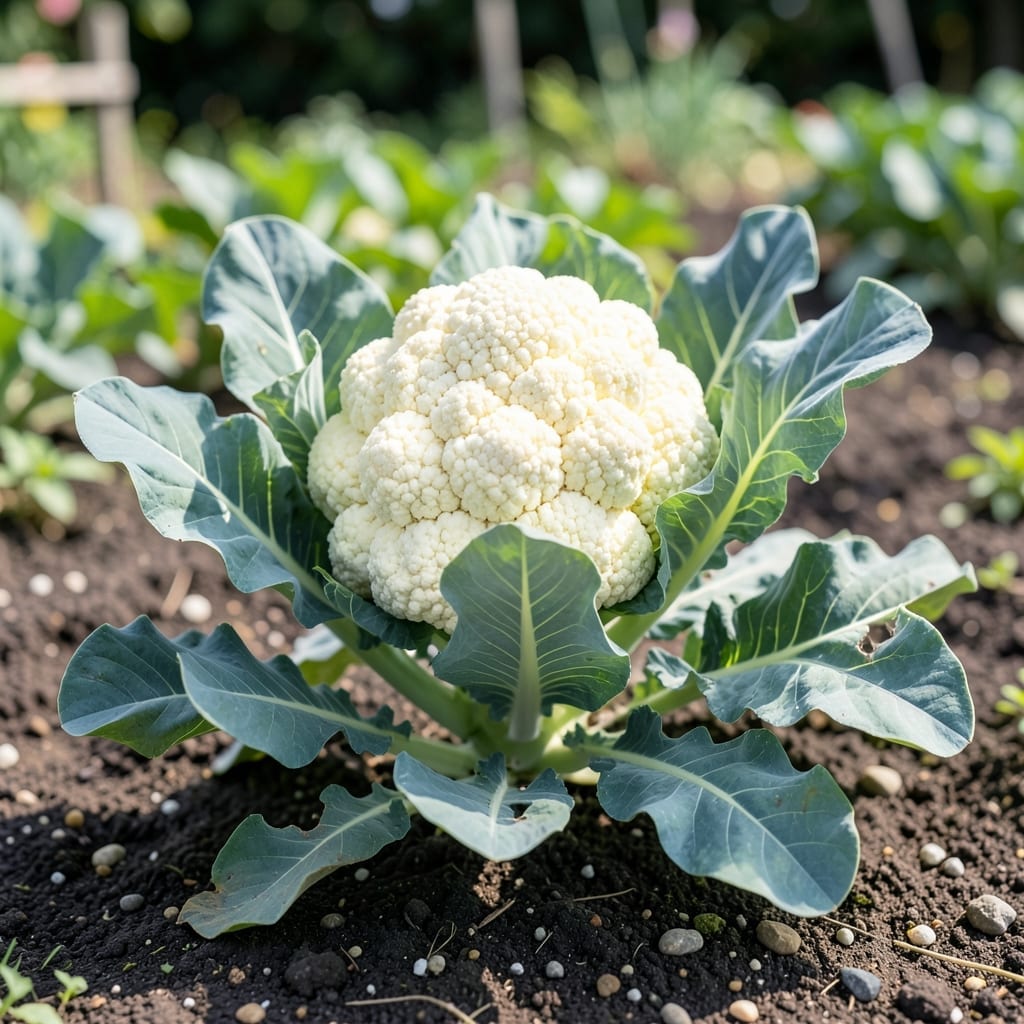
Cauliflower is white because its tightly packed flower buds are shielded from sunlight by thick green leaves, preventing chlorophyll development that would otherwise turn them green.
This natural process is called self-blanching, where the outer leaves act like a protective shield. 🔥 Without light exposure, the plant can’t produce chlorophyll, which is what gives most vegetables their green color. I find it fascinating that this built-in mechanism ensures the cauliflower head stays pale and tender while growing.
💡 In This Article
Cauliflower’s white color comes from a natural self-blanching process. The plant’s large, outer leaves grow in a way that wraps around the developing head, creating a light-blocking canopy. This prevents sunlight from reaching the tightly packed flower buds at the center, stopping photosynthesis and chlorophyll production.
Without chlorophyll, the curds remain pale instead of turning green. 🔥
Chlorophyll requires light to form, which is why most green vegetables develop their color. In cauliflower, the leaves act like a natural umbrella, shielding the head from 80-90% of sunlight. This process begins when the head starts forming and continues until harvest.
The thicker the leaf coverage, the whiter the cauliflower will be, as even small amounts of light can trigger some green pigmentation. ✨
What makes this mechanism so effective is the plant’s structure. The leaves grow outward and upward, creating a protective dome. Farmers often give nature a helping hand by gently tying the outer leaves together when the head is about the size of a silver dollar. This ensures consistent coverage and prevents uneven coloring. 💫
The result is a head that stays white, tender, and mild in flavor. This self-blanching process also helps maintain the cauliflower’s delicate texture, as direct sunlight can make the curds tougher. The absence of chlorophyll means the plant doesn’t develop the slightly bitter taste that green vegetables often have. ⚡
Interestingly, some cauliflower varieties are bred to have more upright leaves, which naturally create better coverage. These varieties require less manual intervention from growers while still producing beautifully white heads. The most popular white cauliflower, Snowball Y, is a perfect example of this natural efficiency. 🌟
Exposure to sunlight triggers chlorophyll production. If leaves don’t fully cover the head, the curds develop green patches. Even 20-30 minutes of direct light daily can cause this.
Yes, but choose self-blanching varieties like Snowball Y. Their leaves naturally wrap tighter around the head. Still, check for gaps and manually cover any exposed areas.
White cauliflower tends to be milder and sweeter. Less chlorophyll means no bitter compounds develop. This is why it’s often preferred in dishes where a delicate flavor is key.
Overmature heads may turn yellow or develop a coarse texture. The curds can also separate, reducing quality. Harvest when the head is firm and 6-8 inches across.