
Beautiful Plants For Your Interior
Beautiful Plants For Your Interior
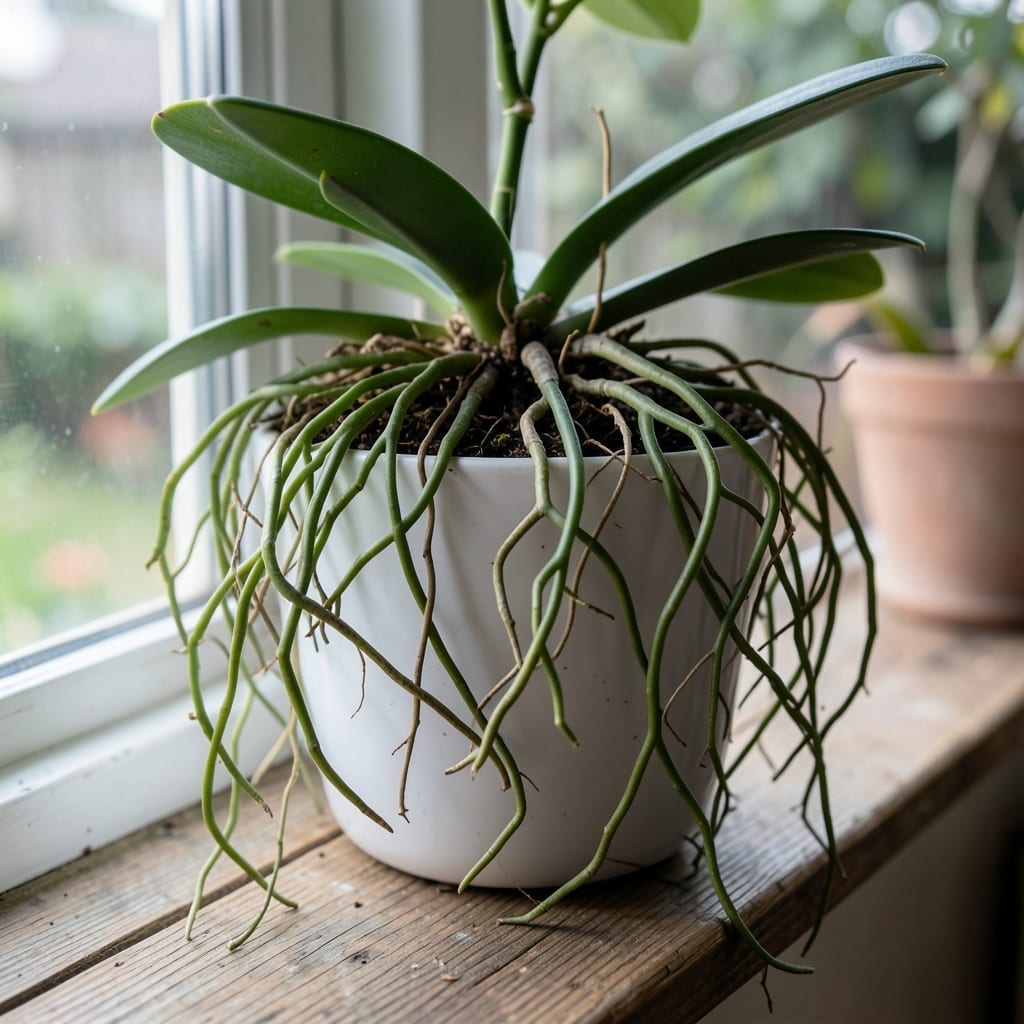
Root-heavy orchids with no blooms usually mean they’re stuck in survival mode. I’ve seen this happen when plants focus all their energy on growing roots instead of flowers, often because they’re searching for light or nutrients.
Most indoor orchids need bright, indirect light for 10-12 hours daily and a balanced fertilizer to trigger flowering. Without these, they’ll keep producing roots and leaves but never set buds.
Once you adjust the light and feeding routine, you’ll notice flower spikes forming within 4-6 weeks. The roots will still grow, but now they’ll support blooms instead of just more roots.
Works for Phalaenopsis, Cattleya, and other common indoor varieties. Small tweaks, big difference in results.
Orchids growing excessive roots with no flowers often signal a few common issues. Here’s why this happens:
Orchids like Phalaenopsis need bright, indirect light to trigger blooming. Too little light shifts their energy toward root growth for survival. East or north-facing windows are ideal, while south or west exposures may need filtering to avoid leaf burn.
A lack of a day-night temperature drop (10–15°F difference) disrupts flowering hormones. Orchids thrive with cooler nights (55–65°F) to stimulate spikes. Consistent warmth encourages only foliage and roots.
Over-fertilizing with high-nitrogen mixes promotes leafy growth and roots at the expense of flowers. Switch to a bloom-boosting formula (higher phosphorus, like 10-30-20) during active growth to redirect energy.
Orchids in constant moisture (or drought) prioritize root development to seek water. Allow the root zone to dry slightly between waterings to mimic natural conditions that cue blooming.
Tight pots or degraded bark restrict air flow, stressing the plant. Repot every 1–2 years with fresh, chunky orchid-specific mix to encourage healthy spikes over excessive roots.
If your orchids are growing roots instead of flowers, these targeted fixes will help bring back the blooms. Address each issue with practical steps and prevent future problems.
Move your orchids to a spot with bright, indirect light—an east-facing window is ideal. If natural light is limited, supplement with a grow light for 12–14 hours daily. Prevention tip: Rotate the plant weekly to ensure even light exposure. 💡
Switch to a high-phosphorus orchid fertilizer (look for a 10-30-20 ratio) to promote flowering. Fertilize every 2–4 weeks during active growth, then reduce to monthly in winter. Prevention tip: Flush the potting mix with water every few months to avoid salt buildup. ✨
Orchids need a day-to-night temperature drop of 10–15°F to trigger blooming. Place them in a cooler room at night (55–65°F). Prevention tip: Avoid drafts or sudden temperature swings. 🌡️
Water only when the top inch of the mix is dry, and ensure the pot has drainage holes. Use room-temperature water to avoid shocking the roots. Prevention tip: Soak the pot for 10–15 minutes, then let it drain completely. 💧
Repot your orchid every 1–2 years or when roots overflow the pot. Use a well-draining mix (bark, sphagnum moss, or perlite). Prevention tip: Trim dead or rotting roots during repotting to encourage healthy growth. ✂️
Use a high-phosphorus fertilizer every 2-4 weeks during active growth. Reduce to monthly in winter when growth slows. This helps redirect energy from roots to flower production.
Yes, direct sunlight can burn leaves and stress the plant. Use bright, indirect light instead, like an east-facing window or filtered light. This mimics their natural habitat for optimal blooming.
Aim for 65-80°F during the day and 55-65°F at night. The 10-15°F drop between day and night triggers blooming hormones. Keep away from drafts or heat sources.
Yes, repot every 1-2 years or when roots overflow. Use a well-draining orchid mix to prevent stress and encourage healthy spikes. Trim any dead roots during the process.