
Beautiful Plants For Your Interior
Beautiful Plants For Your Interior
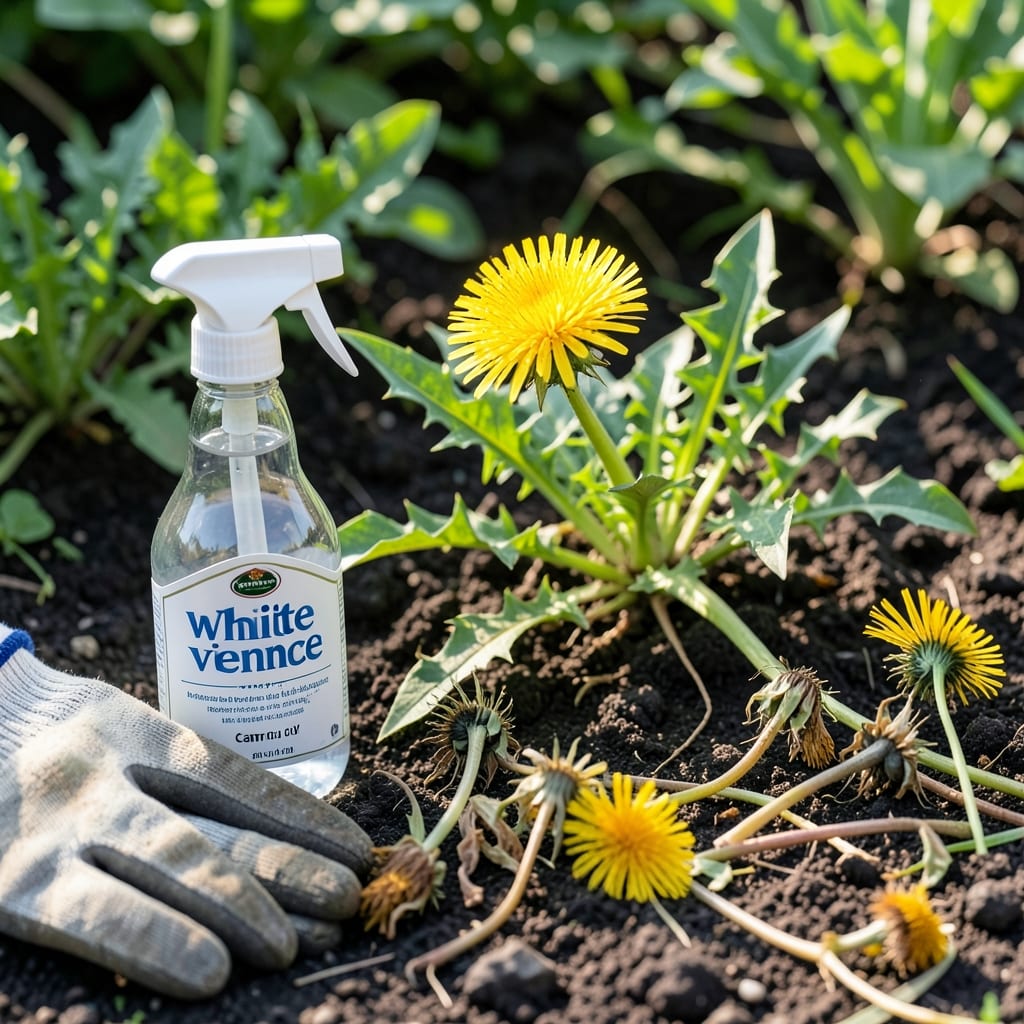
White vinegar kills weeds by breaking down cell membranes with its acetic acid. Use 5-10% concentration for young weeds, but expect regrowth without repeated applications.
I’ve found this method works best on sunny days when the acetic acid can fully penetrate the foliage. The process is most effective on annual weeds with thin leaves, as their cell walls break down faster under the solution’s impact. For tougher perennial weeds, you’ll likely need multiple treatments to see lasting results. 🔥
💡 In This Article
Acetic acid works by disrupting the cell membranes of plants, causing them to lose moisture rapidly. This process, called dessication, essentially makes the plant cells collapse from the inside out. Household white vinegar typically contains 5% acetic acid, which is strong enough to damage young weed leaves on contact.
The acid interferes with the plant’s ability to maintain its structure, leading to visible wilting within 24-48 hours. 🔥
Higher concentrations, like 10-20% horticultural vinegar, pack more punch because they contain more acetic acid molecules per volume. These stronger solutions can tackle tougher weeds with thicker cuticles, but they also pose greater risk to nearby plants.
The acid’s effectiveness depends on direct contact with foliage, as it doesn’t travel through the plant’s vascular system like commercial herbicides. 💛
Young weeds with tender leaves absorb the acid more readily than mature plants with waxy coatings. This is why you’ll see the best results on seedling weeds under 2 inches tall. The solution works fastest in warm, sunny conditions where the acetic acid can penetrate quickly without being washed away by rain. ✨
What most people don’t realize is that vinegar’s herbicidal action is non-selective. It will damage any plant it touches, including your prized flowers or grass. The acid doesn’t discriminate between weeds and desired plants, making careful application crucial.
This also explains why regrowth often occurs – the roots may survive if the solution doesn’t reach them. 🌟
For comparison, commercial vinegar-based herbicides often contain 20-30% acetic acid, which can provide more complete kill rates. However, these stronger concentrations require careful handling, as they can cause skin irritation and damage to surfaces like concrete or metal. The higher acidity also means they work faster, sometimes showing effects within just 6-12 hours. ⚡
You’ll typically notice wilting within 24-48 hours for young weeds. Tougher plants may take 3-5 days to show damage. Results depend on vinegar concentration and weather conditions.
Yes, 5% acetic acid household vinegar works for small, tender weeds. For larger or persistent weeds, 10-20% horticultural vinegar is more effective. Always wear gloves when handling stronger solutions.
Vinegar only kills plant foliage it touches, not the roots. For deep-rooted weeds, manual removal after wilting prevents regrowth. Repeated applications may be needed for full control.
Once dry, vinegar solutions are generally safe. However, keep pets and kids away until the spray has fully dried (1-2 hours). Avoid areas where they dig or play frequently.