
Beautiful Plants For Your Interior
Beautiful Plants For Your Interior
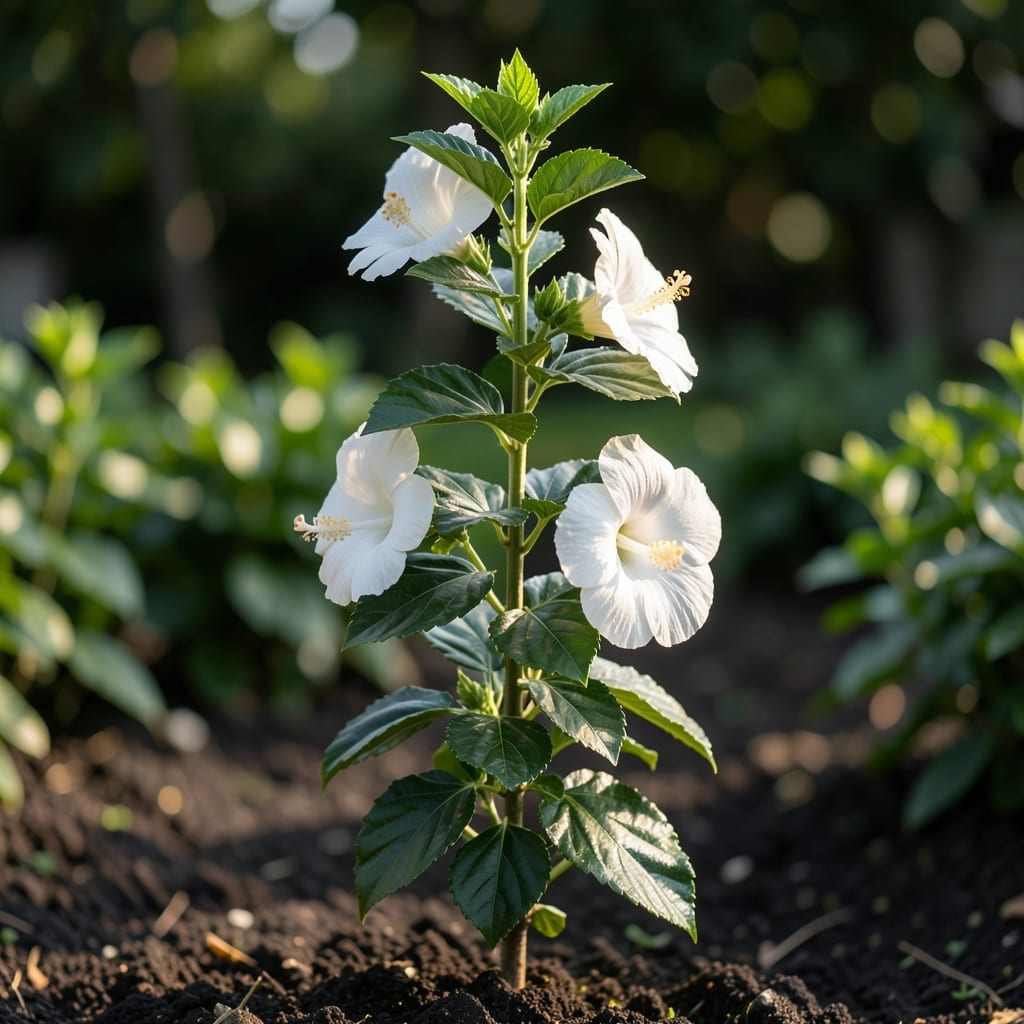
White Pillar Hibiscus stands out with its tall, columnar shape and stunning white blooms that last all summer. I planted mine last spring, and it’s been the star of my garden ever since.
This hardy shrub thrives in full sun with well-drained soil. With minimal care, you’ll get years of dramatic vertical interest and pollinator visits. It’s drought-tolerant once established, making it perfect for busy gardeners.
📚 In This Guide
Here’s the method I rely on to keep these stunning plants thriving and blooming profusely.
Select a location that receives full sun—at least 6-8 hours of direct sunlight daily. White Pillar hibiscus performs best in rich, well-draining soil with a slightly acidic to neutral pH (6.0-7.0). I always amend heavy clay soils with compost to improve drainage and fertility.
Dig a hole that’s twice as wide and just as deep as the root ball. Gently remove the plant from its container and loosen any circling roots before placing it in the hole. Backfill with native soil and water deeply to settle the roots.
Established plants need about 1-2 inches of water per week, either from rainfall or irrigation. I water deeply at the base of the plant 2-3 times per week during the first growing season to encourage strong root development. The goal is to keep the soil consistently moist but never soggy.
After establishment, White Pillar hibiscus is surprisingly drought-tolerant. You’ll know it’s time to water when the top 2-3 inches of soil feel dry to the touch. Always water in the morning to allow foliage to dry before evening, which helps prevent fungal diseases.
Feed your hibiscus with a balanced, slow-release fertilizer (10-10-10 or 20-20-20) in early spring, just as new growth appears. I apply a second feeding in early summer to support the heavy blooming period. Follow package instructions for amounts—usually about 1 tablespoon per square foot of planting area.
For even more spectacular blooms, supplement with a high-phosphorus liquid fertilizer every 4-6 weeks during the growing season. Stop fertilizing in late summer to allow the plant to prepare for dormancy. Over-fertilizing leads to excessive leaf growth at the expense of flowers.
Prune your White Pillar hibiscus in late winter or early spring while the plant is still dormant. I use clean, sharp pruners to remove any dead, damaged, or crossing branches first. Then, shape the plant by cutting back the remaining branches by about one-third of their length.
This annual pruning encourages vigorous new growth and more abundant flowering. Always make cuts at a 45-degree angle just above an outward-facing bud. Remove all pruned material from the area to prevent disease and pest buildup.
Keep an eye out for aphids, whiteflies, and Japanese beetles, which are common hibiscus pests. I inspect my plants weekly, paying special attention to the undersides of leaves. A strong stream of water often dislodges soft-bodied pests like aphids, while hand-picking works for larger pests like beetles.
Prevent fungal diseases by ensuring good air circulation around the plant. Space multiple hibiscus plants at least 3-4 feet apart. If you notice leaf spots or powdery mildew, remove affected foliage immediately and consider applying a fungicide according to label instructions.
Small adjustments in your care routine can make a dramatic difference in bloom quality and plant health.
Sunlight Strategy: The 6-8 hours of daily direct sun specified in Step 1 isn’t negotiable for vibrant blooms. I’ve learned that morning sun with some afternoon shade works best in extremely hot climates, but full sun exposure is ideal for most regions. Without this, you’ll get leggy growth and fewer flowers.
Watering Wisdom: That 2-3 times per week schedule in Step 2 is perfect for establishment, but here’s what nobody tells you—deep watering beats frequent shallow watering every time. Use a moisture meter or your finger to check those top 2-3 inches of soil before watering. Overwatering is the most common mistake I see with new hibiscus growers.
Pruning Precision: When shaping in Step 4, cutting back by exactly one-third of their length encourages the strongest new growth. Confession: I skipped this precise measurement for years and wondered why my blooms were sparse. Always make those 45-degree angle cuts just above an outward-facing bud—this small detail prevents water pooling and disease.
Spacing Solution: The 3-4 feet apart spacing in Step 5 isn’t just about aesthetics—it’s critical for air circulation. I’ve seen fungal issues disappear completely when growers finally give their plants this breathing room. Crowded plants also compete for sunlight and nutrients, reducing bloom production.
Water deeply 2-3 times per week during the growing season, allowing the top inch of soil to dry between waterings. Reduce frequency in cooler months. Overwatering can lead to root rot, so ensure good drainage!
Lack of blooms may be due to insufficient sunlight, improper pruning, or nutrient deficiencies. Ensure it gets 6+ hours of sun daily, use a balanced fertilizer, and prune only after flowering.
Plant in early spring or fall when temperatures are mild. This gives roots time to establish before extreme heat or cold. Avoid planting in peak summer or winter.
Yellow leaves often signal overwatering, nutrient deficiencies, or pests. Check soil moisture, adjust watering, and test for pests. A slow-release fertilizer can help restore vibrant foliage.
Yes! Use a large container with well-draining soil. Ensure it gets full sun and regular watering. Container-grown plants may need more frequent fertilizing and winter protection in cold climates.