
Beautiful Plants For Your Interior
Beautiful Plants For Your Interior
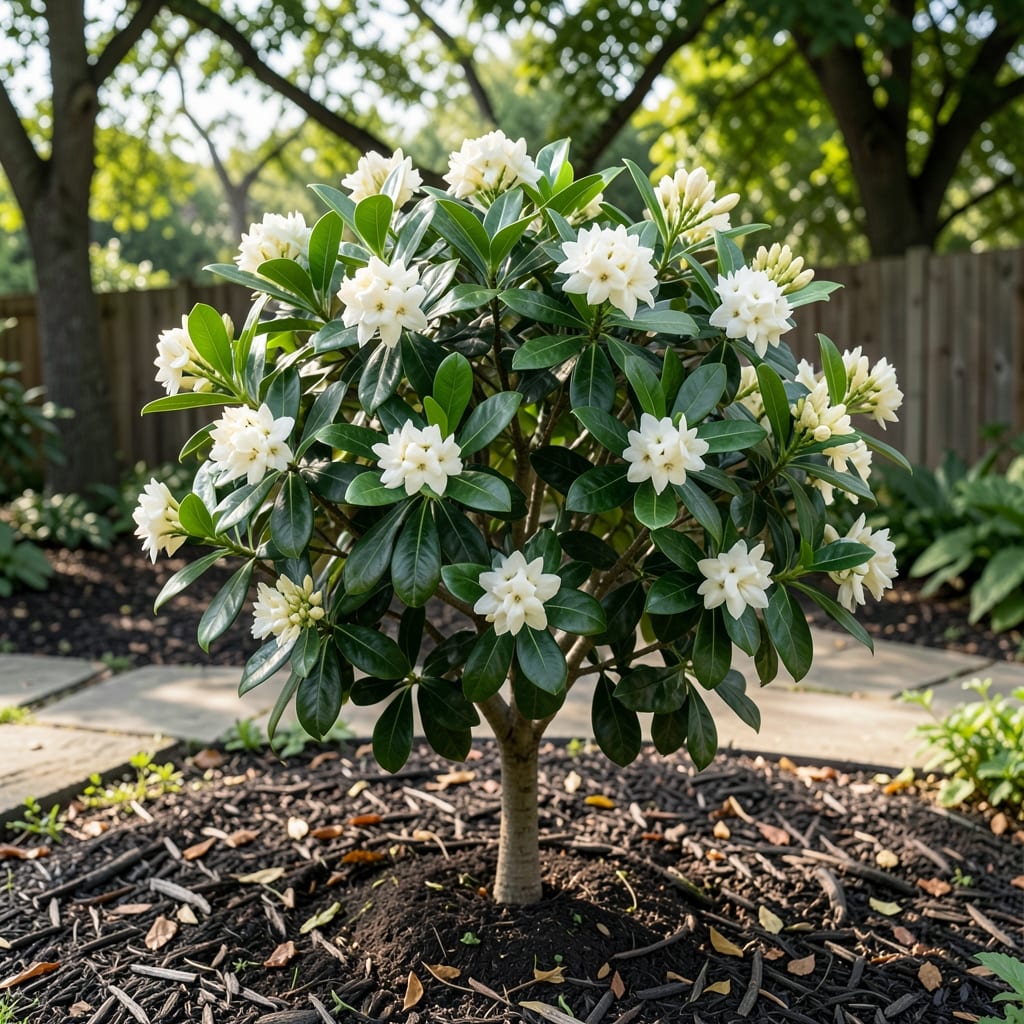
That first whiff of gardenia blossoms stops me in my tracks every time. I’ve grown these for years, and the pure white blooms never fail to make my yard feel like a luxury resort.
They’re picky about soil and light, but get it right and you’ll have fragrant flowers from late spring through fall. The key is consistent moisture without soggy roots, and a spot with morning sun and afternoon shade.
📚 In This Guide
Here’s the method I use to keep my gardenias blooming beautifully all season long.
Select a spot with partial to full sun, ideally 6-8 hours of direct sunlight daily. Gardenias thrive in well-draining, acidic soil with a pH between 5.0 and 6.0. I test my soil first—if it’s alkaline, I amend it with sulfur or peat moss to lower the pH.
Ensure the location is sheltered from strong winds, which can damage delicate blooms. If planting near a structure, keep it at least 3-4 feet away to allow for proper air circulation and growth.
Dig a hole twice as wide as the root ball but no deeper. Place the gardenia in the hole, ensuring the top of the root ball sits slightly above ground level to prevent water pooling. Backfill with native soil, gently pressing to remove air pockets.
Water thoroughly after planting to settle the soil. I add a 2-3 inch layer of mulch around the base, keeping it 3 inches away from the trunk to prevent rot. Mulch helps retain moisture and regulate soil temperature.
Keep the soil consistently moist but not soggy, especially during the first growing season. I water deeply 2-3 times per week, adjusting based on rainfall and soil dryness. A good rule: stick your finger 1-2 inches into the soil—if it feels dry, it’s time to water.
Avoid overhead watering to prevent fungal diseases. Instead, use a soaker hose or water at the base. Gardenias are sensitive to drought, so consistency is key. Yellowing leaves often signal underwatering or poor drainage.
Feed your gardenia with an acid-forming fertilizer every 4-6 weeks during the growing season. I use a product labeled for acid-loving plants, following the package instructions for dosage. Over-fertilizing can burn roots, so less is often better.
Yellow leaves with green veins may indicate iron deficiency, common in alkaline soils. In that case, I apply chelated iron according to label directions. Always water before and after fertilizing to protect roots.
Prune after the blooming season, typically in late summer or early fall. Remove dead, diseased, or crossing branches first. Then, shape the plant by trimming back overgrown areas, but avoid cutting into old wood, as gardenias bloom on new growth.
I use clean, sharp pruners and sanitize them between cuts to prevent disease spread. Light pruning after each bloom cycle encourages bushier growth and more flowers. Never prune in late fall or winter—new growth is vulnerable to cold damage.
These practical insights will help you avoid pitfalls and get the most from your gardenia.
Sunlight Strategy: That 6-8 hours of direct sunlight daily in Step 1 is non-negotiable for vibrant blooms. Morning sun is gentler and ideal, while harsh afternoon sun can scorch the leaves. If your space only gets partial sun, choose the sunniest spot available.
Soil pH Precision: The 5.0 to 6.0 pH range mentioned in Step 1 is critical—gardenia roots can’t absorb iron outside this window, leading to yellow leaves. Test your soil before planting; it’s easier to amend the hole than the entire bed later.
Mulching Method: In Step 2, that 2-3 inch layer of mulch makes a huge difference, but the 3-inch gap from the trunk is just as important. Piling mulch against the stem traps moisture and invites rot. Use organic mulch like pine bark, which also helps acidify the soil as it breaks down.
Watering Wisdom: For the 2-3 times per week schedule in Step 3, consistency beats frequency. Deep watering encourages strong root growth, while shallow, frequent watering leads to weak roots. Always check that 1-2 inch soil depth—your finger is the best tool for this.
Water your white gardenia tree 1-2 times a week, keeping the soil moist but not soggy. Adjust based on rainfall and temperature—drought stress can cause bud drop.
Yellow leaves often signal overwatering, poor drainage, or nutrient deficiencies (like iron). Test soil pH (ideal: 5.0–6.0) and ensure proper airflow to prevent root rot.
Prune right after the blooming season (late summer/early fall) to shape the plant and remove dead wood. Avoid heavy pruning in spring, as it may cut off new flower buds.
Yes! Choose a large pot with drainage holes and acidic potting mix. Dwarf varieties like ‘Radicans’ thrive in containers—just provide bright, indirect light and consistent moisture.
Spray leaves with insecticidal soap or neem oil at dusk, targeting undersides. Introduce beneficial insects like ladybugs, and avoid over-fertilizing, which attracts pests.