
Beautiful Plants For Your Interior
Beautiful Plants For Your Interior
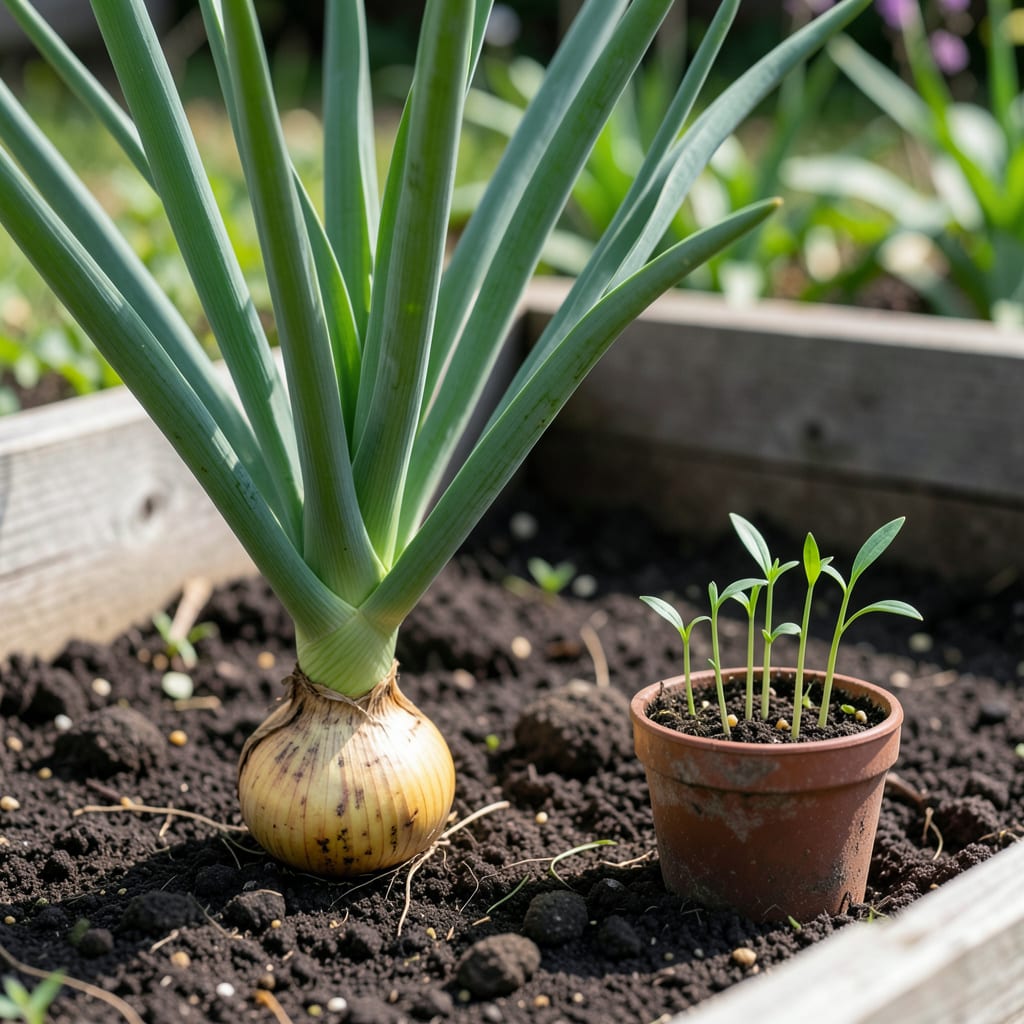
Growing onions 🧅 in Indiana can be a rewarding experience with the right timing. The key to a successful harvest is planting at the optimal time, taking into account the state’s climate and frost dates.
In Indiana, which falls within USDA zones 5b-6b, the ideal time to plant onions is in early spring or fall, specifically September-October or March-April. This allows the onions to mature before the heat of summer or the cold of winter.
Planting onions in Indiana requires careful consideration of the state’s climate and frost dates. Indiana falls within USDA zones 5b-6b, which means gardeners need to time their onion planting around the last spring frost and first fall frost.
The ideal time to plant onions in Indiana is in early spring or fall. For spring planting, onions should be planted 4-6 weeks before the last frost date, typically around late March to early April. For fall planting, onions should be planted 6-8 weeks before the first frost, usually around September or early October.
Understanding these planting windows is crucial because onions need 120-150 days to mature. Planting at the right time ensures that onions have enough time to grow before the weather becomes too hot or cold.
In Indiana’s climate, spring-planted onions are typically ready to harvest in July or August, while fall-planted onions are ready in May or June of the following year.
Soil temperature is another critical factor in determining the best time to plant onions. Onions thrive in soil temperatures between 55°F and 75°F. In Indiana, soil temperatures typically reach this range during the recommended planting windows.
For gardeners in different parts of the state, it’s essential to check local frost dates and soil temperature. Northern Indiana tends to have cooler temperatures than the southern regions, which can affect the optimal planting time.
By planting onions at the right time and under the right conditions, Indiana gardeners can enjoy a successful harvest. Proper timing helps onions develop strong roots and bulbs, leading to better flavor and storage quality.
It’s also worth noting that onions can be grown from sets, seeds, or transplants. Each method has its advantages, and the choice often depends on personal preference and specific growing conditions.
For those new to growing onions, starting with sets is often recommended as they are easier to establish and mature more quickly than seeds.
Regardless of the method chosen, preparing the soil properly before planting is crucial for a bountiful harvest. This includes ensuring the soil is well-draining and rich in organic matter.
By following these guidelines and understanding the best time to plant onions in Indiana, gardeners can look forward to a rewarding onion-growing experience.
Preparing the soil is a critical step in growing successful onions in Indiana. Onions require well-draining soil that is rich in organic matter to produce high-quality bulbs. In Indiana, where soil types can vary significantly across different regions, understanding how to prepare your soil is essential for a bountiful harvest 🌾.
The ideal soil for onions is loamy with a pH between 6.0 and 7.0. Indiana’s soils tend to be more clay-heavy in some areas and sandy in others. To create the optimal conditions for onions, gardeners should amend their soil accordingly. Adding compost or well-rotted manure can improve soil structure and fertility, providing the necessary nutrients for onion growth.
Test your soil pH and amend it if necessary. Add organic matter like compost to improve soil structure and fertility, ensuring optimal conditions for onion growth.
Onions are heavy feeders and benefit from balanced fertilization. A soil test can help determine the nutrient levels in your garden. Based on the test results, you can apply the appropriate fertilizers to ensure your onions receive the nutrients they need.
In addition to nutrient management, ensuring good soil drainage is vital. Onions are susceptible to rot in waterlogged conditions. If your soil tends to retain water, consider raised beds or mounding the soil to improve drainage.
By preparing your soil properly, you set the stage for a successful onion harvest. Proper soil preparation not only improves the yield but also enhances the flavor and storage quality of the onions. Taking the time to prepare your soil according to the needs of onions will pay off in the long run, providing you with a rewarding gardening experience 🌼.
For Indiana gardeners, it’s also important to rotate crops to avoid depleting the soil of nutrients and to reduce the risk of pests and diseases. Onions should not be planted in the same spot year after year.
Overall, with careful soil preparation and the right planting conditions, Indiana gardeners can look forward to a successful onion harvest. By following these guidelines, you can enjoy a bountiful yield of delicious, home-grown onions 🧅.
Successful onion cultivation in Indiana requires more than just proper timing. Gardeners should also focus on water management, as onions need consistent moisture, especially during bulb formation. Watering deeply once or twice a week is usually sufficient, but this can vary depending on weather conditions ⛅️.
Water onions regularly during dry spells, aiming for about 1 inch of water per week. Avoid overhead watering to prevent disease.
Apply a layer of organic mulch around your onion plants to retain moisture, suppress weeds, and regulate soil temperature.
Keep an eye out for common onion pests like onion maggots and thrips. Use organic pest control methods whenever possible to protect your crop.
By following these tips, Indiana gardeners can improve their chances of a successful onion harvest. Proper care throughout the growing season is just as important as planting at the right time 🌼.
Onions are relatively low-maintenance crops, but they do benefit from regular weeding and fertilization. A balanced fertilizer applied every 4-6 weeks can provide the necessary nutrients for healthy growth.
As the onions mature, it’s essential to stop watering once the tops begin to yellow and fall over. This helps the bulbs to dry properly, making them easier to store 🌱.
With these expert tips, Indiana gardeners can enjoy a bountiful harvest of delicious, home-grown onions. By combining proper timing with good care practices, you can maximize your yield and enjoy the fruits of your labor 🧅.
The ideal time to plant onions in Indiana is in early spring or fall. For spring planting, onions should be planted 4-6 weeks before the last frost date, typically around late March to early April. For fall planting, onions should be planted 6-8 weeks before the first frost, usually around September or early October.
Onions require well-draining soil rich in organic matter. Amend your soil with compost or well-rotted manure to improve its structure and fertility. Ensure the soil pH is between 6.0 and 7.0 for optimal onion growth. A soil test can help determine nutrient levels and guide fertilizer application.
Onions need consistent moisture, especially during bulb formation. Water them deeply once or twice a week, aiming for about 1 inch of water per week. Avoid overhead watering to prevent disease. Adjust watering based on weather conditions.
Spring-planted onions are typically ready to harvest in July or August, while fall-planted onions are ready in May or June of the following year. Harvest when the tops fall over and begin to yellow. Stop watering at this stage to help the bulbs dry properly.
