
Beautiful Plants For Your Interior
Beautiful Plants For Your Interior
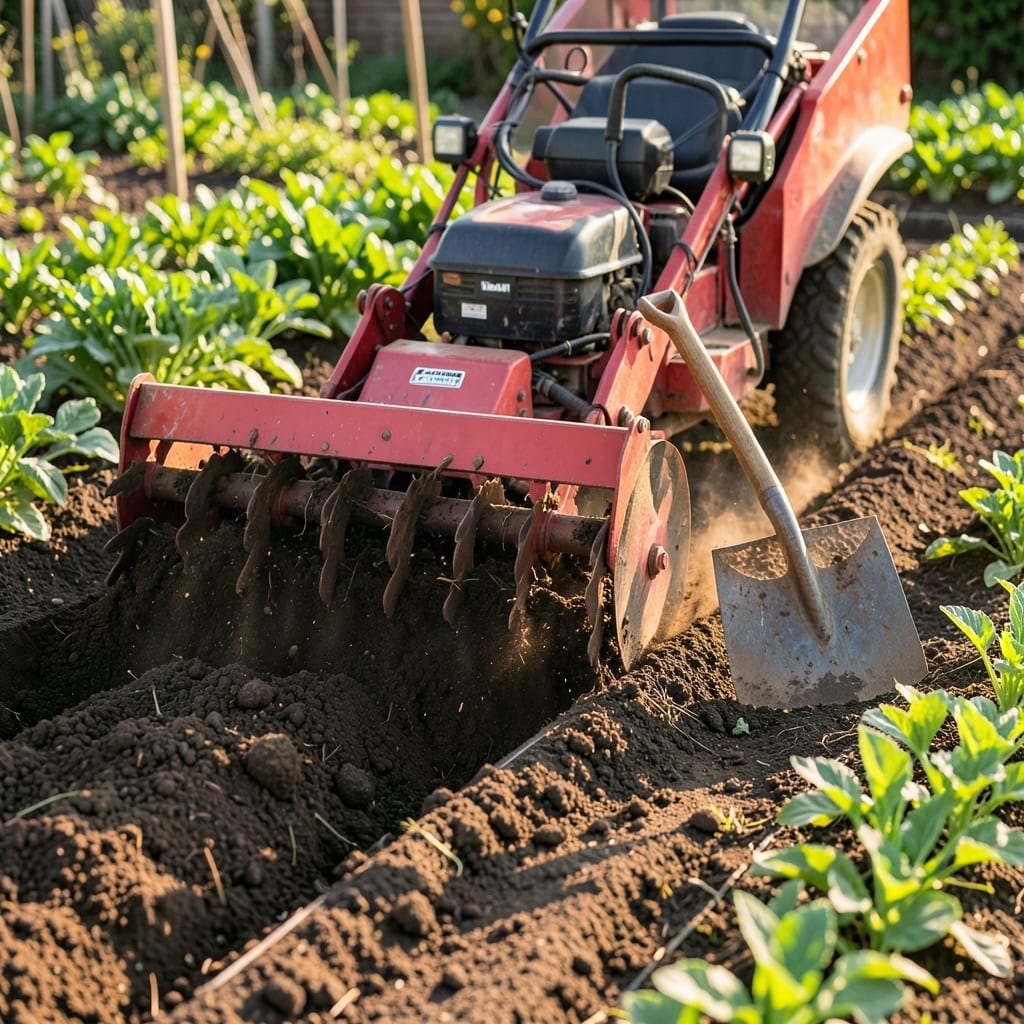
Tilling in agriculture is the process of turning and breaking up soil to prepare it for planting. It improves soil aeration, nutrient distribution, and root penetration while helping control weeds.
This practice has been a cornerstone of farming for centuries, allowing me to create the perfect seedbed for crops. By loosening the top layer, I’ve seen how it helps roots establish more easily while giving water and air better access to plant systems. It also disrupts weed growth cycles, giving my plants a competitive advantage early on. ✨
💡 In This Article
The mechanical action of tilling shatters compacted soil aggregates, creating pore spaces that allow air to circulate 6-8 inches deeper. This aeration kickstarts microbial activity, as oxygen-loving bacteria and fungi multiply rapidly in the newly exposed soil layers.
The process also breaks up hardpan layers that can form 4-6 inches below the surface, which otherwise block root growth and water drainage. 🔥
Water absorption improves dramatically after tilling. Untilled soil may absorb only 0.5-1 inch of water per hour, while tilled soil can take in 2-4 inches in the same timeframe. This happens because the broken-up soil particles create capillary spaces that pull water downward through gravity and surface tension.
The increased porosity also prevents runoff, allowing more moisture to reach plant roots. ✨
Nutrient availability gets a significant boost. Tilling mixes organic matter throughout the top 6-12 inches of soil, where it decomposes faster and releases nutrients. This is particularly important for nitrogen, which can be 30-50% more available in tilled soil compared to untouched ground.
The mixing action also distributes existing nutrients more evenly, preventing pockets of deficiency. 💫
The practice disrupts weed life cycles by burying weed seeds too deep to germinate or exposing them to light and air which can break dormancy at unfavorable times. Studies show tilling can reduce weed populations by 40-60% in the first growing season.
However, it’s important to note that over-tilling can bring new weed seeds to the surface, creating a different set of challenges. ⚡
Soil temperature also benefits from tilling. Darker soil brought to the surface absorbs more solar radiation, warming the seedbed by 5-10°F faster in spring. This early warming can extend the growing season by 7-14 days, particularly valuable in cooler climates where every day counts for crop maturation. 🌟
Tilling loosens compacted soil, allowing roots to penetrate deeper and water to drain properly. It also brings nutrients to the surface and disrupts weed growth cycles.
Spring tilling should occur 2-3 weeks before planting. Fall tilling works well after harvest. Always avoid tilling when soil is too wet or dry.
For vegetable beds, 4-6 inches is ideal. Root crops need 8-12 inches. Raised beds only require 2-4 inches of cultivation.
Yes, over-tilling can break down soil structure and bring weed seeds to the surface. It may also harm beneficial earthworms and microbes.