
Beautiful Plants For Your Interior
Beautiful Plants For Your Interior
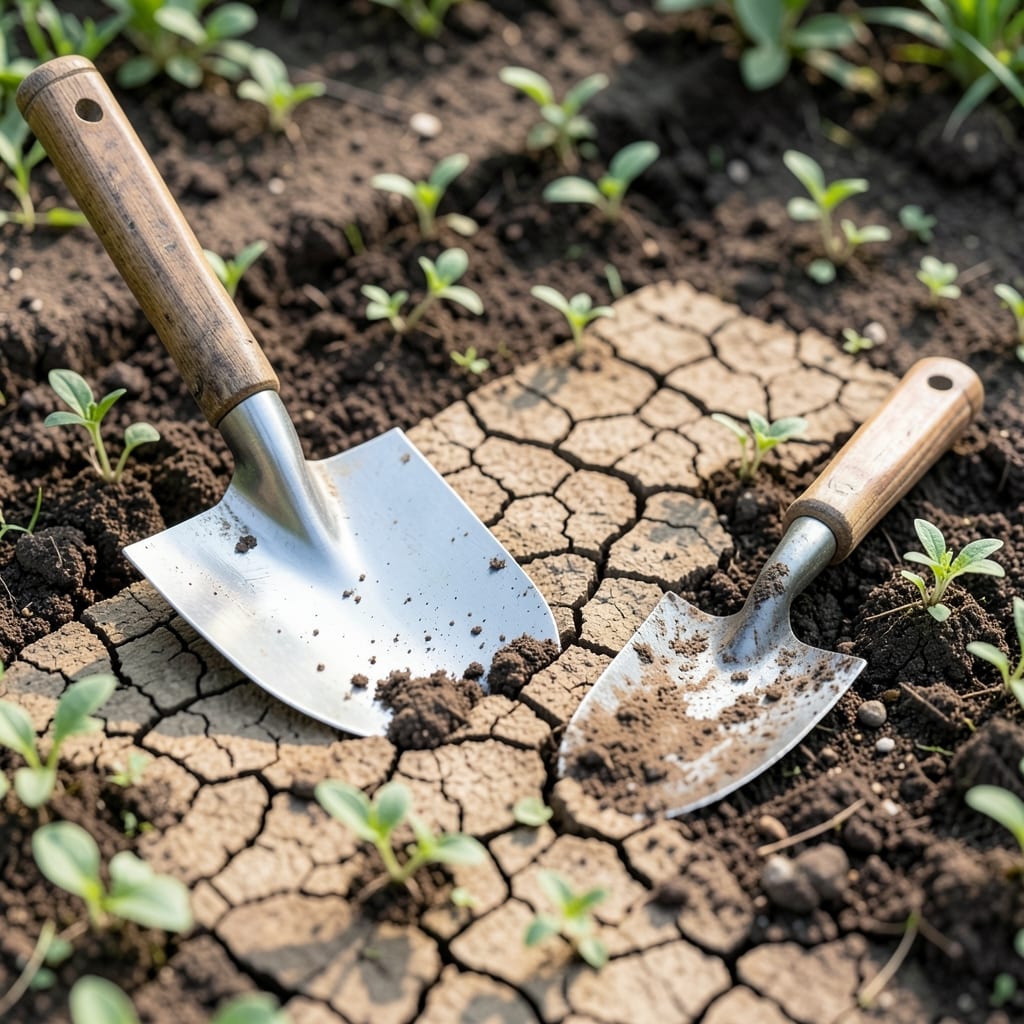
Hardpan is a dense, compacted soil layer just below the surface that restricts root growth and water drainage, often caused by heavy machinery or natural mineral buildup.
I’ve seen this happen in gardens where foot traffic or farming equipment presses soil particles together over time. 🔥 The result is a nearly impermeable barrier that can suffocate plant roots and create waterlogging above it. In my experience, clay-heavy soils are especially prone to this, as their fine particles pack tightly when wet.
💡 In This Article
Hardpan develops through a combination of natural and human-induced processes. The most common culprit is soil compaction from repeated foot traffic, which squeezes air pockets out of the soil. Heavy machinery, like tractors or construction equipment, can compress soil to depths of 6-12 inches, creating an nearly impenetrable layer. 🔥
Clay-rich soils are particularly susceptible because their tiny particles pack tightly together when wet. Over time, these particles cement into a solid mass, especially in areas with poor drainage. Natural mineral deposition also plays a role—iron, calcium, and silica can leach downward and harden into a pan-like layer.
In agricultural settings, plows can inadvertently create hardpan just below the tilled layer. This “plow pan” forms when the blade shears the soil at the same depth repeatedly, compacting the layer beneath. Meanwhile, in gardens, even regular walking paths can develop hardpan within 2-3 years of consistent use. ✨
The result is a soil profile with dramatically different layers. Above the hardpan, you might find loose, workable soil, but just 4-8 inches down, roots hit a wall. This barrier prevents water from draining properly, leading to soggy surface soil while deeper layers remain dry. The contrast can stun plant development.
This formation process explains why hardpan often appears in distinct horizontal bands. Each layer tells a story—whether it’s the depth of old plow lines, the reach of construction equipment, or the natural accumulation of minerals over decades. 💫
Dig a small hole about 12 inches deep. If you hit a dense, rock-like layer that’s hard to penetrate with a trowel, that’s likely hardpan. Also watch for water pooling on the surface after rain, which often indicates poor drainage from compacted soil below.
Yes, especially in high-traffic areas or clay-heavy soils. Prevent recurrence by using raised beds, installing permanent walkways, and regularly adding organic matter. Avoid working wet soil, as this accelerates recompaction.
Shallow-rooted species like lettuce or herbs may grow fine, while deep-rooted plants like tomatoes or fruit trees will struggle. Native plants adapted to your region’s soil often handle mild hardpan better than exotic varieties.
No. While both are dense layers, caliche forms from calcium carbonate buildup and is white/chalky. Hardpan is typically darker, caused by compaction or mineral cementation. Caliche usually forms deeper in the soil profile.