
Beautiful Plants For Your Interior
Beautiful Plants For Your Interior
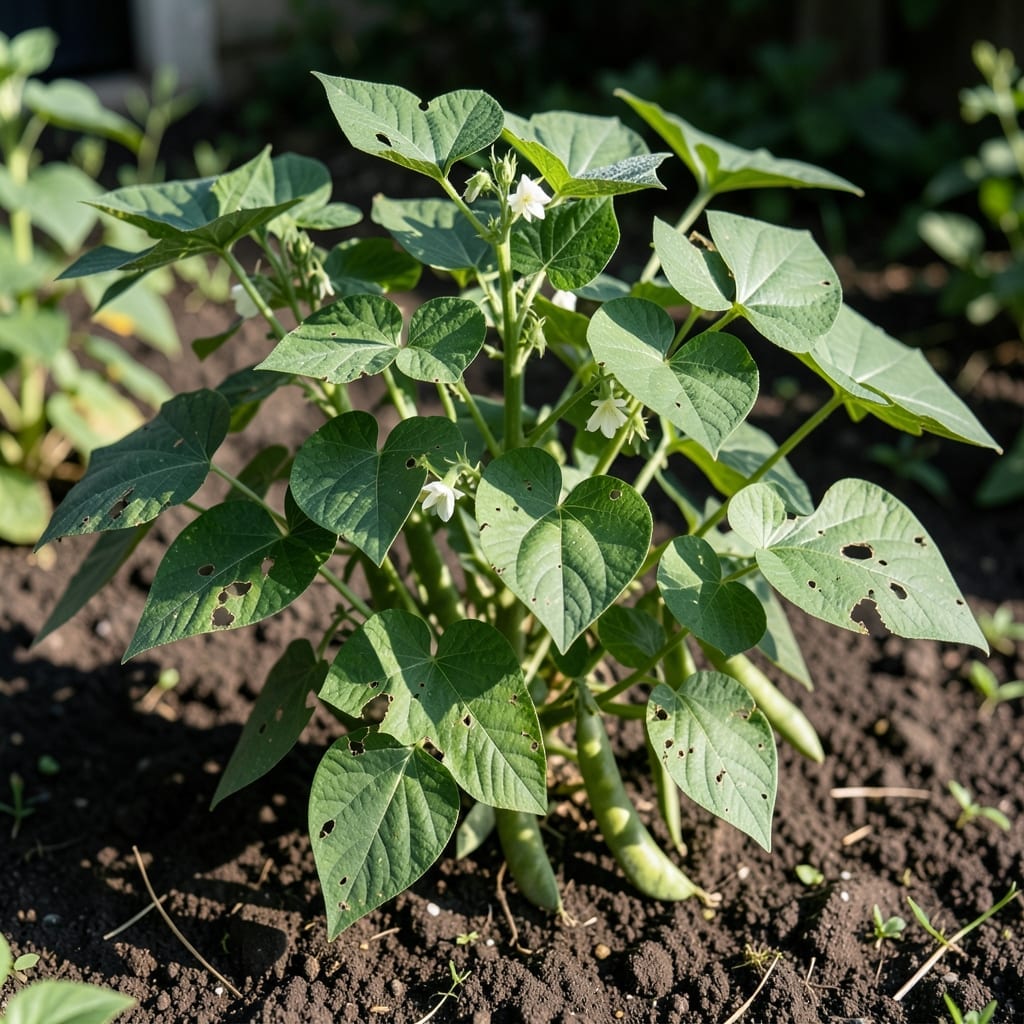
Slugs, snails, earwigs, and cutworms are the most likely culprits eating green bean leaves at night. These nocturnal pests chew irregular holes and leave slimy trails or cut stems near the soil.
I’ve found these critters thrive in moist, dark conditions, which is why they’re most active after sunset. Earwigs target tender new growth, while cutworms sever young plants at the base, often leaving them toppled over. 🔥
Regular inspections with a flashlight after dark can reveal the offenders, and I always recommend checking the undersides of leaves for hidden pests.
💡 In This Article
Each pest leaves a distinct calling card on your green beans. Slugs and snails create irregular, ragged holes with silvery slime trails that glisten in morning light. These mollusks prefer young, tender leaves and often feed from the edges inward, leaving a translucent window effect on remaining leaf tissue.
Cutworms operate at soil level, severing stems at the base with clean cuts. You’ll often find toppled seedlings lying flat, their stems clipped at 1-2 inches above the ground. These caterpillars curl into a C-shape when disturbed, and their damage is most severe during cool, damp nights when they’re most active. ✨
Earwigs target the newest growth, chewing small, rounded holes between leaf veins. Unlike other pests, they often leave jagged leaf margins and prefer flower buds over mature leaves. These insects thrive in mulched beds and hide under debris during the day, emerging after sunset to feed.
Look for black excrement near damage sites—this is a key identifier. Slug pellets appear as tiny black specks, while cutworm frass looks like coarse sawdust. Earwigs often leave behind chewed petals in addition to leaf damage, as they’re particularly fond of blossoms. 🔥
The timing of damage offers clues too. Slugs are most active during humid nights after rain, while cutworms prefer dry, warm evenings. Earwigs feed consistently throughout the night but become more destructive during mating season in late spring and early summer.
Use a flashlight with a red filter for night inspections—this disturbs pests less while allowing you to observe their behavior. Check the undersides of leaves and soil surface where these creatures prefer to feed, as they’re naturally photophobic and avoid direct light. ⚡
Look for irregular, ragged holes in leaves with silvery slime trails nearby. These trails glisten in morning light and are a dead giveaway for slug or snail activity.
Cutworms sever stems at the base, leaving toppled seedlings with clean cuts 1-2 inches above soil. They curl into a C-shape when disturbed and prefer cool, damp nights.
Earwigs prefer tender new growth and flower buds. They chew small, rounded holes between leaf veins and often leave jagged margins. Their damage is usually cosmetic rather than deadly.
Use a flashlight with a red filter about 1-2 hours after sunset. This disturbs pests less while letting you observe their behavior on leaves and soil.