
Beautiful Plants For Your Interior
Beautiful Plants For Your Interior
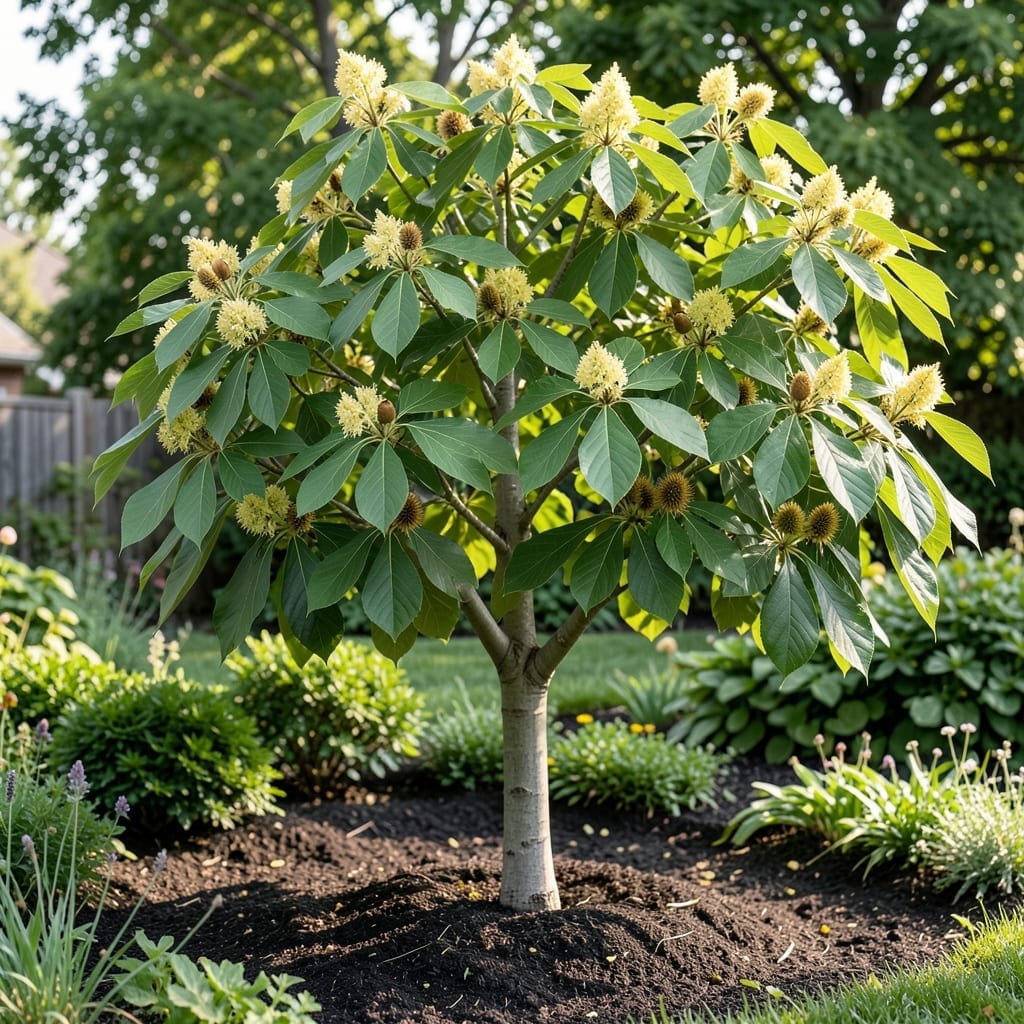
A buckeye is a tree or shrub in the Aesculus genus, known for its distinctive palmate leaves and glossy seeds called buckeyes. These trees are native to North America and produce showy flowers in spring.
I’ve always loved how these trees stand out in a landscape with their five to seven leaflets radiating from a single point. The seeds, often called buckeyes because of their resemblance to a deer’s eye, are encased in spiky husks that split open in autumn. 🌟 In my experience, they thrive in well-drained soil and partial shade, making them a favorite for gardeners looking for seasonal interest.
💡 In This Article
The Aesculus genus includes 13-19 species, with the Ohio buckeye and California buckeye being most common in North America. Each species has 5-7 leaflets arranged like fingers on a hand, creating a star-like pattern. The leaves typically measure 6-12 inches long, with serrated edges that feel slightly rough to the touch.
Bark is another key identifier—it’s usually gray to brown with deep furrows that become more pronounced as the tree matures. The Ohio buckeye develops scaly bark, while the California buckeye has smoother, lighter gray bark.
Both species produce clusters of upright, tubular flowers in spring, ranging from pale yellow to pinkish-white, which attract pollinators like bees and hummingbirds. 🌟
The seeds, or buckeyes, are the most distinctive feature. These 1-2 inch nuts have a glossy chestnut-brown surface with a lighter, circular “eye” at the center. They grow inside a spiky, leathery husk that splits open in September-October.
The seeds are toxic if ingested raw due to saponins, but squirrels and deer often eat them without issue.
Seasonal changes offer additional clues. In spring, new leaves emerge a soft bronze-green before maturing to deep green. Autumn brings a spectacular show as leaves turn vibrant shades of orange, red, and yellow before dropping. The California buckeye often loses its leaves by late summer during drought periods, a survival mechanism called summer deciduousness. ✨
Height varies by species and environment. The Ohio buckeye typically reaches 20-40 feet tall with a similar spread, while the California buckeye stays smaller at 10-20 feet. Both prefer moist, well-drained soils but can adapt to clay or loamy conditions. Their growth rate is moderate, adding about 12-24 inches per year under ideal conditions.
No, raw buckeye seeds contain toxic saponins. Roasting can reduce toxicity, but they’re still not recommended for human consumption. Wildlife like squirrels and deer eat them without issue.
Look for 5-7 leaflets arranged like fingers on a hand, with spiky seed pods. Buckeyes also have smooth, glossy seeds with a light “eye” spot. Compare bark texture—Ohio buckeyes have scaly bark, while California buckeyes are smoother.
Early spring or fall is ideal. Plant in partial shade with well-draining soil. Avoid extreme heat or frost, which can stress young trees.
Leaf scorch often occurs in dry conditions. Ensure consistent watering, especially for young trees. Mulching with 2-3 inches of organic material helps retain moisture.