
Beautiful Plants For Your Interior
Beautiful Plants For Your Interior
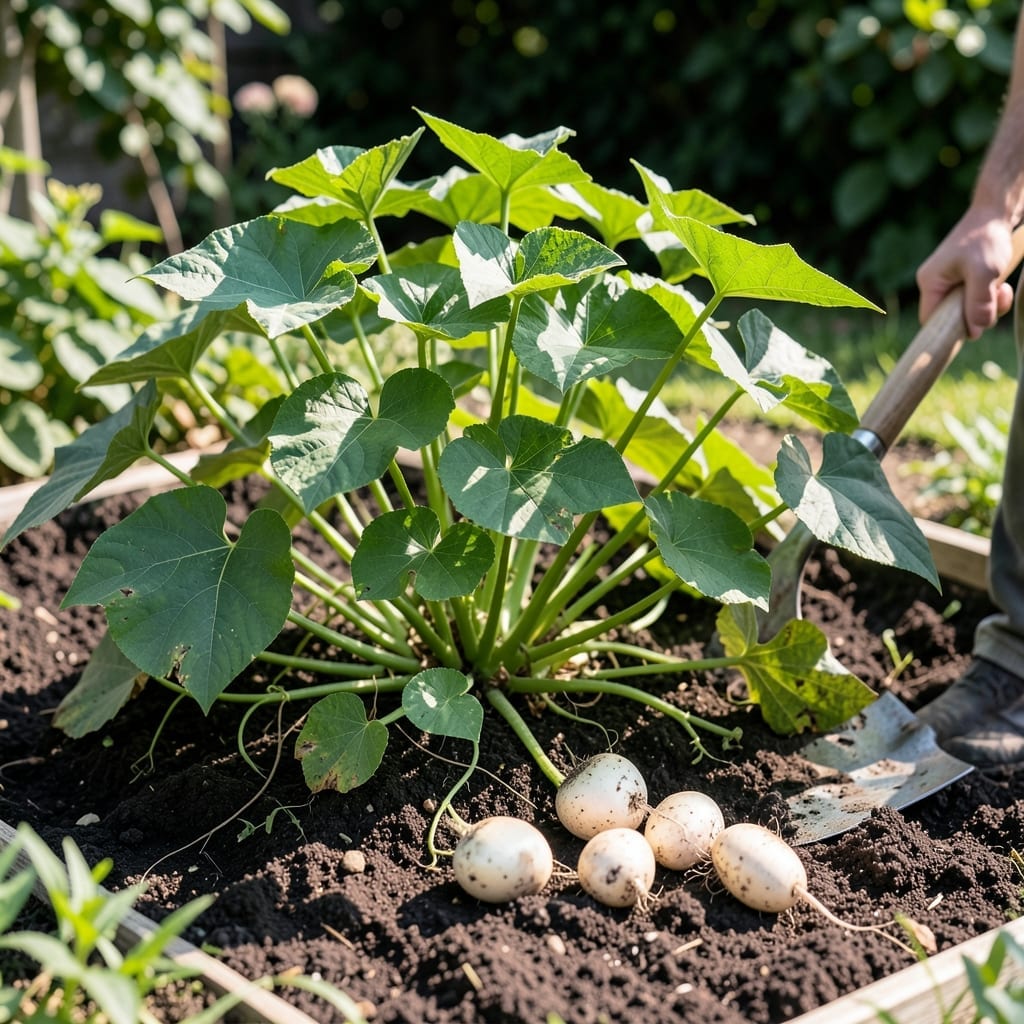
White sweet potatoes are commonly called boniatos, white yams, or Japanese sweet potatoes. They have a milder, nuttier flavor compared to orange varieties.
I love how these tubers bring a unique twist to dishes with their subtle chestnut-like notes. 🌟 In many Latin American markets, you’ll hear them referred to as boniatos, while Asian cuisines often call them satsumaimo. Their pale flesh stays firm when cooked, making them perfect for roasting or frying without turning mushy.
💡 In This Article
The Bonita variety, a favorite among farmers, boasts a creamy white interior with a smooth, tan skin. This type thrives in the Southern U.S., where the warm climate and sandy loam soil create ideal growing conditions. Its flesh stays exceptionally dry and firm, even after baking at 400°F for 45-60 minutes. 🔥
Meanwhile, the O’Henry stands out with its slightly sweeter profile and golden-tan skin. Developed in Louisiana, it adapts well to both home gardens and commercial farms. When cooked, its texture remains dense and moist, making it a top choice for casseroles or mashed dishes. The sugar content measures around 12-15%, lower than orange varieties.
Japanese white sweet potatoes, often called satsumaimo, feature a purple-tinged skin and snow-white flesh. These are staples in Okinawa, where they’re prized for their chestnut-like flavor and high starch content. Unlike orange sweet potatoes, they contain minimal beta-carotene, giving them their pale color. Their starch structure is also more resistant to breaking down during cooking.
✨
What sets these varieties apart is their classification. While all are Ipomoea batatas, white-fleshed types lack the beta-carotene that gives orange sweet potatoes their vibrant hue. This genetic difference also affects their glycemic index, which tends to be slightly lower in white varieties.
The skin color can range from pale tan to deep purple, depending on the cultivar.
For gardeners, white sweet potatoes require 90-120 days to mature, with soil temperatures consistently above 60°F. They prefer well-drained, slightly acidic soil with a pH of 5.8-6.5. The vines spread aggressively, often reaching 10-12 feet in length, so they need ample space to flourish. 💫
Regional names reflect cultural and linguistic traditions. In Latin America, boniato comes from the Taíno word for sweet potato. In Japan, satsumaimo references the Satsuma region where they were popularized. These names help identify local varieties.
White sweet potatoes have a milder, nuttier flavor with less sweetness. Their texture stays firmer when cooked, making them ideal for frying or roasting. Orange varieties are sweeter and moister due to higher beta-carotene content.
Yes, but adjust expectations. Their drier texture works better in dishes requiring structure, like fries or gratins. For creamy dishes like pie, you may need to add more liquid or sweetener to match the orange variety’s consistency.
Growing difficulty is similar, but white varieties often tolerate slightly cooler soil (60°F minimum). They require the same 90-120 days to mature and prefer well-drained, slightly acidic soil. Their vines spread just as aggressively, needing 3-4 feet of space.