
Beautiful Plants For Your Interior
Beautiful Plants For Your Interior
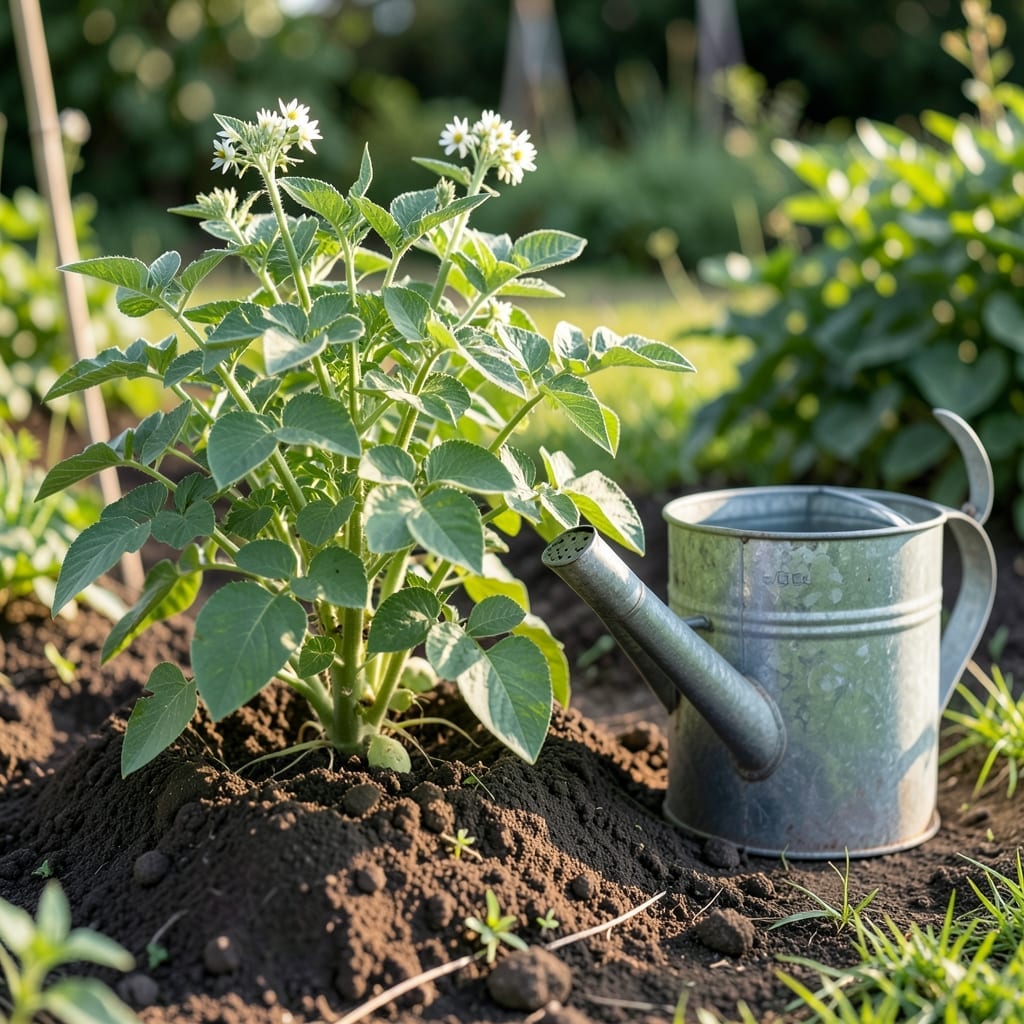
Getting the watering right for your 🥔 Potato plants can make or break your harvest. Too much or too little water can lead to disease, stunted growth, or a poor yield.
I’ve learned through trial and error that consistency is the key. Potato plants thrive with regular moisture, but they don’t like soggy soil.
Discover the perfect weekly watering schedule to keep your plants healthy and productive. Let’s dive into the details that will help you grow the best Potatoes yet.
I’ve found that potato plants have different watering needs as they grow. Early on, they need less water, but as tubers form, consistent moisture becomes critical for healthy development.
Getting the timing right prevents common issues like cracking or disease. Let me walk you through the ideal schedule for each growth phase, from sprouting to harvest.
| Growth Stage | Watering Frequency | Amount per Week |
| Sprouting | Every 5-7 days | 0.5-1 inch |
| Vegetative Growth | Every 5 days | 1-1.5 inches |
| Flowering | Every 3-4 days | 1.5-2 inches |
| Tuber Formation | Every 3 days | 2 inches |
| Maturity | Every 7-10 days | 0.5-1 inch |
During sprouting, I keep the soil slightly moist but not soggy. Overwatering at this stage can cause seed potatoes to rot before they even get started.
The vegetative phase is when the plant is building its leafy structure. I increase watering to 1-1.5 inches weekly, ensuring the top 6 inches of soil stays consistently moist.
When I see flowers appear, that’s my signal to ramp up watering. This is when tubers start forming, and they need more water to grow properly. I aim for 1.5-2 inches per week.
The most critical period is during tuber formation. I water every 3 days with about 2 inches weekly. This prevents cracking and ensures good size development.
As the plants mature, I start tapering off water. This helps toughen up the skins for harvest. I reduce to 0.5-1 inch every 7-10 days when the tops start yellowing.
I always water in the early morning to allow foliage to dry before evening. This reduces the risk of fungal diseases that potatoes are prone to.
I’ve seen firsthand how improper watering can ruin a potato crop. Yellowing leaves and wilting plants often signal trouble, but the cause isn’t always obvious at first glance.
Learning to read these visual cues helps me adjust my care before it’s too late. Both too much and too little water show distinct symptoms that are easy to spot once you know what to look for.
❌ Yellow leaves with soft stems
❌ Root rot and blackened tubers
❌ Mold growth on soil surface
✅ Crispy leaf edges and curling
✅ Cracked soil pulling from roots
✅ Small tubers or premature wilting
With overwatering, I notice yellow leaves that feel soft to the touch. The soil stays soggy, and I might see mold growth or smell a foul odor, which means root rot has set in.
Underwatered potatoes tell a different story. The leaves become crispy and curl at the edges. The soil pulls away from the plant base, and I often find small, stunted tubers when I dig around.
I check the soil by sticking my finger 2 inches deep. If it’s bone dry, I water immediately. If it’s waterlogged, I hold off and let it drain. This simple test helps me avoid both extremes.
I also watch for cracked tubers, which happen when the soil moisture fluctuates wildly. Keeping a consistent schedule prevents this issue and ensures even growth throughout the season 🌱