
Beautiful Plants For Your Interior
Beautiful Plants For Your Interior
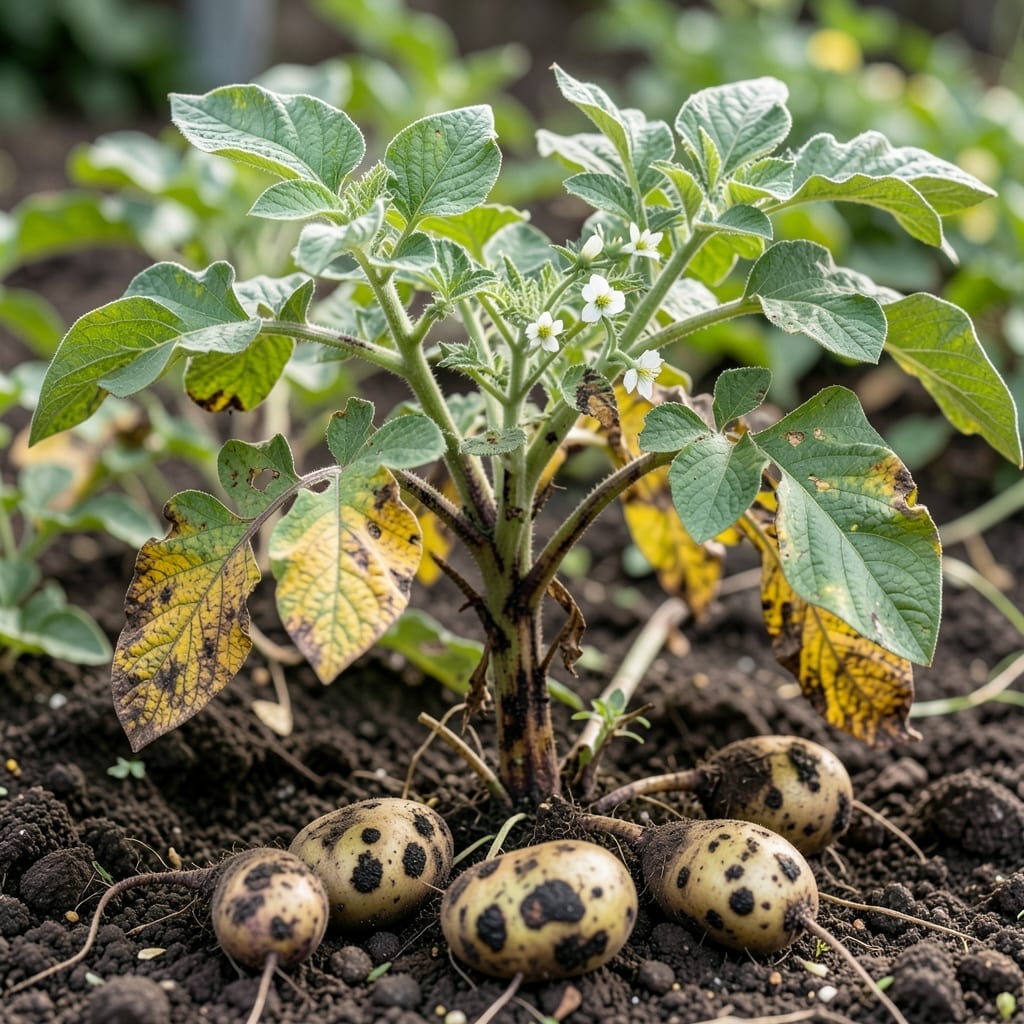
Wilted potato plants don’t always mean thirst. I’ve watched entire rows collapse overnight from Verticillium, a soil-borne fungus that chokes plants from the roots up.
Early signs are subtle: yellowing between leaf veins, lower leaves wilting in hot afternoons, then brown streaks inside stems when you cut them open. By the time plants show stress, the damage is often done.
The good news? Organic control works. Crop rotation, resistant varieties, and soil health can break the cycle. I’ve saved seasons with these methods.
No chemical shortcuts here—just proven techniques that protect your harvest without harming the soil. Let’s tackle this head-on.
Potato Verticillium wilt occurs due to specific pathogens and environmental conditions that favor their spread. Below are the primary causes, each with actionable insights to help you understand and mitigate the risk.
The disease is primarily caused by Verticillium dahliae and Verticillium albo-atrum, fungi that thrive in soil. These pathogens can persist for years as microsclerotia (dormant structures) in infected soil or plant debris. When susceptible potato crops are planted, the fungi germinate, infecting the roots and colonizing the vascular system, leading to wilt and reduced yield.
Using seed potatoes contaminated with Verticillium spp. is a direct route for disease introduction. Even asymptomatic tubers can carry the pathogen, which then spreads to the new crop. Always source certified disease-free seed potatoes and inspect them for signs of infection, such as discoloration or shriveled skin.
Planting potatoes or other susceptible crops (e.g., tomatoes, eggplants, or peppers) in the same field year after year increases fungal buildup in the soil. A minimum 3-4 year rotation with non-host crops like cereals or legumes is essential to break the disease cycle and reduce inoculum levels.
Drought, waterlogging, or nutrient deficiencies weaken potato plants, making them more susceptible to Verticillium infection. Ensure consistent moisture levels and balanced soil fertility to bolster plant resilience. Overhead irrigation can also splash soil-borne pathogens onto lower leaves, so drip irrigation is recommended.
Fungal spores can hitch a ride on farming tools, machinery, or even footwear, spreading the pathogen across fields. Sanitize equipment with a 10% bleach solution or other approved disinfectants between uses, especially when moving between infected and healthy areas.
Tackling Verticillium wilt in potatoes starts with quick action and smart strategies. Below are targeted solutions for each cause, paired with prevention tips to keep your crop healthy long-term.
If the soil harbors the fungus, rotate potatoes with non-host crops like corn or beans for at least 3–4 years. For immediate action, solarize soil by covering it with clear plastic for 4–6 weeks during hot weather—this heats the soil enough to kill the pathogen.
Prevention: Avoid planting potatoes or other solanaceous crops (tomatoes, peppers) in the same spot year after year.
Always source seed potatoes from reputable suppliers that test for Verticillium. If saving your own seeds, inspect them for signs of disease (e.g., discoloration, wilting) and discard any suspect tubers.
Prevention: Store seeds in a cool, dry place and treat them with a hot water bath (110°F for 20 minutes) to kill surface fungi before planting.
Excess moisture stresses plants and spreads the fungus. Use drip irrigation to target roots directly and avoid wetting foliage. Amend heavy or clay soils with compost to boost drainage.
Prevention: Plant potatoes in raised beds or ridges to enhance airflow and prevent waterlogging. 💡 Pro tip: Mulch with straw to retain moisture without oversaturating the soil.
Boost plant resilience with compost or well-rotted manure to improve soil fertility. Apply a compost tea or Trichoderma-based fungicide as a foliar spray to outcompete the pathogen.
Prevention: Practice balanced fertilization—avoid high nitrogen, which can encourage lush, susceptible growth.
Pull and burn or trash (do not compost) any wilted or yellowing plants immediately to prevent the fungus from spreading. Sanitize tools with a 10% bleach solution after handling infected plants.
Prevention: Clean up all plant debris after harvest and rotate crops to break the disease cycle.
By addressing the root causes and adopting these practices, you can reduce infections and protect future harvests. Stay vigilant—early action saves time and potatoes! ✨
The Verticillium fungus can persist for 5-10 years as dormant structures in soil or plant debris. This is why crop rotation is essential to manage its spread.
Yes, but only after solarization or a 3-4 year rotation with non-host crops. Avoid planting susceptible crops like tomatoes or peppers in the same spot.
Some varieties like ‘Kennebec’ and ‘Russet Burbank’ show moderate resistance. However, no variety is completely immune, so combine with other control methods.
Yes, compost improves soil health and plant resilience. Use well-rotted compost and avoid infected plant debris in your compost pile.