
Beautiful Plants For Your Interior
Beautiful Plants For Your Interior
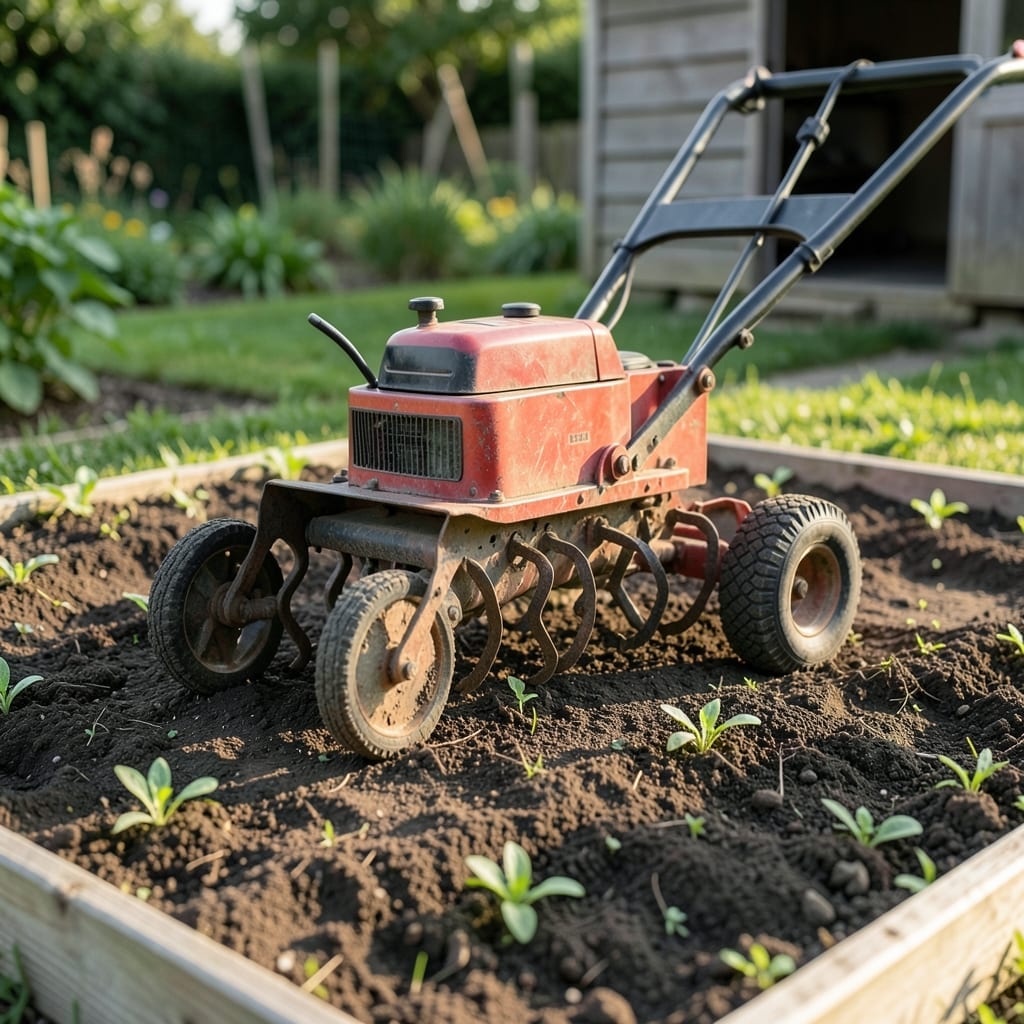
A rototiller is a motorized garden tool with rotating blades that break up and aerate soil, making it easier to plant and improve growing conditions.
I’ve used these machines to transform hard, compacted earth into loose, fertile ground ready for seeds. The spinning tines dig deep to mix in organic matter while improving drainage and root penetration. For me, a rototiller turns backbreaking manual labor into a manageable 30-minute task that prepares the perfect planting bed. ⚡
💡 In This Article
The mechanical action starts with the engine powering a central driveshaft connected to curved tines. These blades spin at 150-200 RPM, slicing through soil in forward motion while simultaneously lifting and turning it. The rotation creates a churning effect that breaks up compacted earth 8-12 inches deep, depending on the model. 🔥
As the tines work, they pull weeds to the surface where they dry out and decompose. The turning action also incorporates air pockets into the soil structure, which dramatically improves oxygen availability for plant roots. This aeration process typically increases soil porosity by 30-40%, allowing water to drain 2-3x faster than untreated ground.
What you might not notice is how the machine mixes organic matter throughout the entire depth. This creates a uniform growing medium where nutrients are evenly distributed. The result is a loose, crumbly texture that encourages root penetration while reducing water runoff by up to 50%. ✨
Depth adjustment is key to this process. Most models let you control how deep the tines dig, from just 2 inches for light cultivation to 10 inches for breaking new ground.
The angle of the tines also matters—forward-rotating models pull the machine through the soil, while counter-rotating tines provide more aggressive breaking power for hardpan layers.
This mechanical action mimics natural soil processes but at an accelerated rate. Where earthworms might take months to loosen and aerate soil, a rototiller accomplishes the same in a single pass. The immediate benefit is visible: transformed soil that’s ready for planting within hours rather than weeks. 💫
Most models allow 4-12 inch depth adjustments. Light-duty front-tine tillers typically max out at 6-8 inches, while heavy-duty rear-tine models can reach 12 inches for breaking new ground.
Yes, but choose a model with durable tines and slower speed settings. Rocks can damage blades, so go slow and check for obstacles. Some machines have special rock-guards to protect the tines.
Once or twice a year is usually enough. Over-tilling can disrupt soil structure and harm beneficial microbes. Spring tilling before planting is most common, with optional light cultivation mid-season.
Gas models offer more power for large gardens, while electric tillers are quieter and easier to maintain for small plots. Consider your garden size and power needs when choosing.