
Beautiful Plants For Your Interior
Beautiful Plants For Your Interior
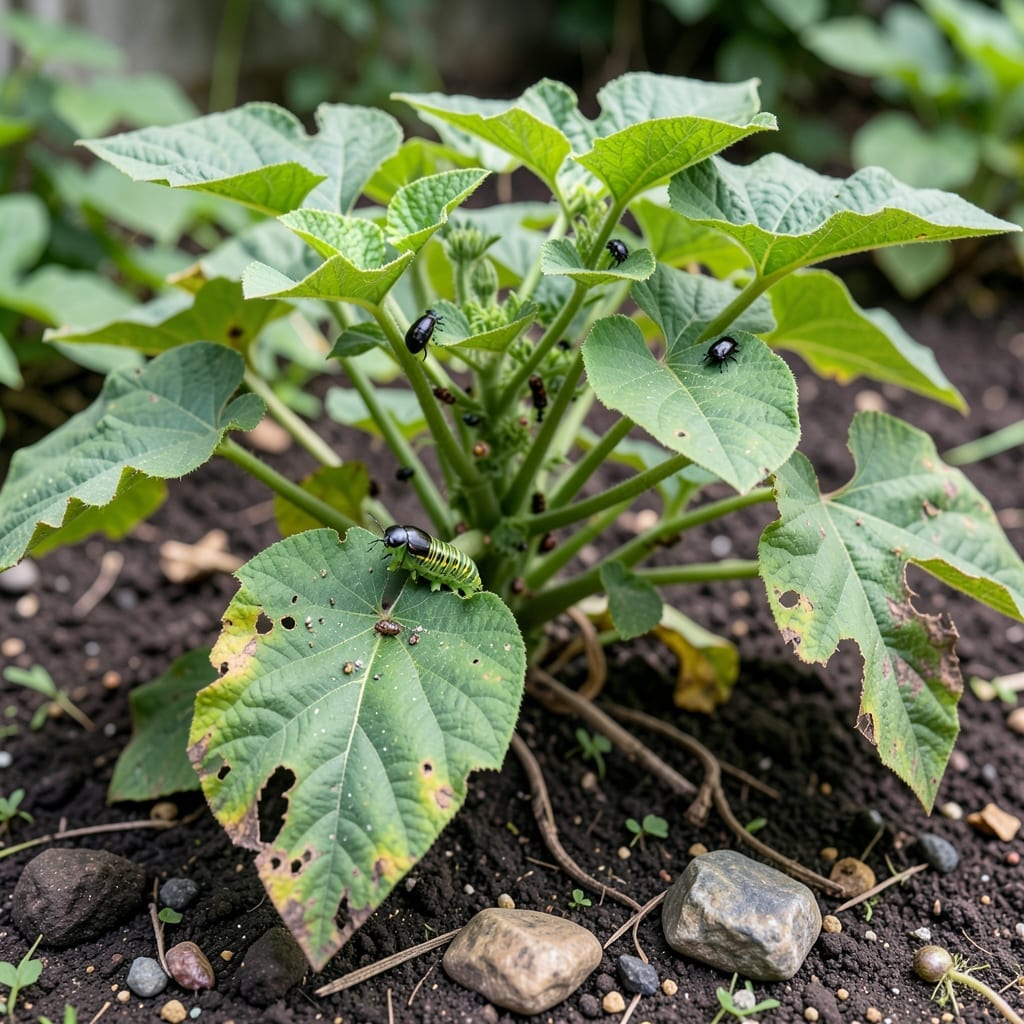
Deer, rabbits, and insects like sweet potato flea beetles, whiteflies, and caterpillars commonly feed on sweet potato vine leaves, causing visible damage.
I’ve seen these pests leave behind jagged edges, holes, or yellowing on the foliage, which can weaken the plant over time. Sweet potato flea beetles are particularly notorious for skeletonizing leaves, while whiteflies often leave a sticky residue that attracts mold. 💫
Prevention is key, and I always recommend using row covers or natural predators like ladybugs to keep these invaders in check.
💡 In This Article
Each pest leaves a distinct calling card on sweet potato vines. Sweet potato flea beetles create tiny shot-hole patterns as adults, while their larvae tunnel through leaves, leaving serpentine trails. This dual-stage damage often appears as a combination of surface pitting and internal mining, reducing photosynthesis by up to 40% in severe cases. 🔥
Whiteflies congregate on leaf undersides, causing yellowing and that sticky honeydew that fosters sooty mold growth. Their nymphs are stationary and look like tiny white scales, excreting up to 10 times their body weight in honeydew daily. This weakens the plant and can reduce yields by 20-30% if left unchecked. ✨
Mammalian pests like deer leave jagged, torn edges on leaves, often consuming entire sections overnight. Rabbits tend to make cleaner cuts closer to the ground, typically nibbling young shoots and tender growth. Both prefer the succulent foliage during early morning or dusk hours when plants are most hydrated. 💫
Caterpillars such as the sweet potato hornworm can defoliate plants rapidly, often starting at the leaf margins and working inward. Their dark droppings on lower leaves are a telltale sign. A single hornworm can consume up to 80% of a vine’s foliage in just 48 hours during its final larval stage. ⚡
For accurate identification, examine leaves with a 10x magnifying glass at dawn when pests are most active. Look for eggs, nymphs, or adult forms, and note the specific damage patterns. This helps distinguish between chewing and piercing-sucking insects, which require different management approaches. 🌟
Yes, leaves are non-toxic and often eaten by deer, rabbits, and livestock. However, overconsumption may cause mild digestive upset in some animals.
Look for tiny holes, skeletonized leaves, or sticky residue. Flea beetles leave shot-hole patterns, while whiteflies cause yellowing and honeydew.
They’re especially prone to flea beetles, whiteflies, and hornworms. These pests target the tender foliage, often leading to rapid defoliation if unchecked.
Using broad-spectrum pesticides that kill beneficial insects like ladybugs. Natural solutions like neem oil or companion planting work better long-term.