
Beautiful Plants For Your Interior
Beautiful Plants For Your Interior
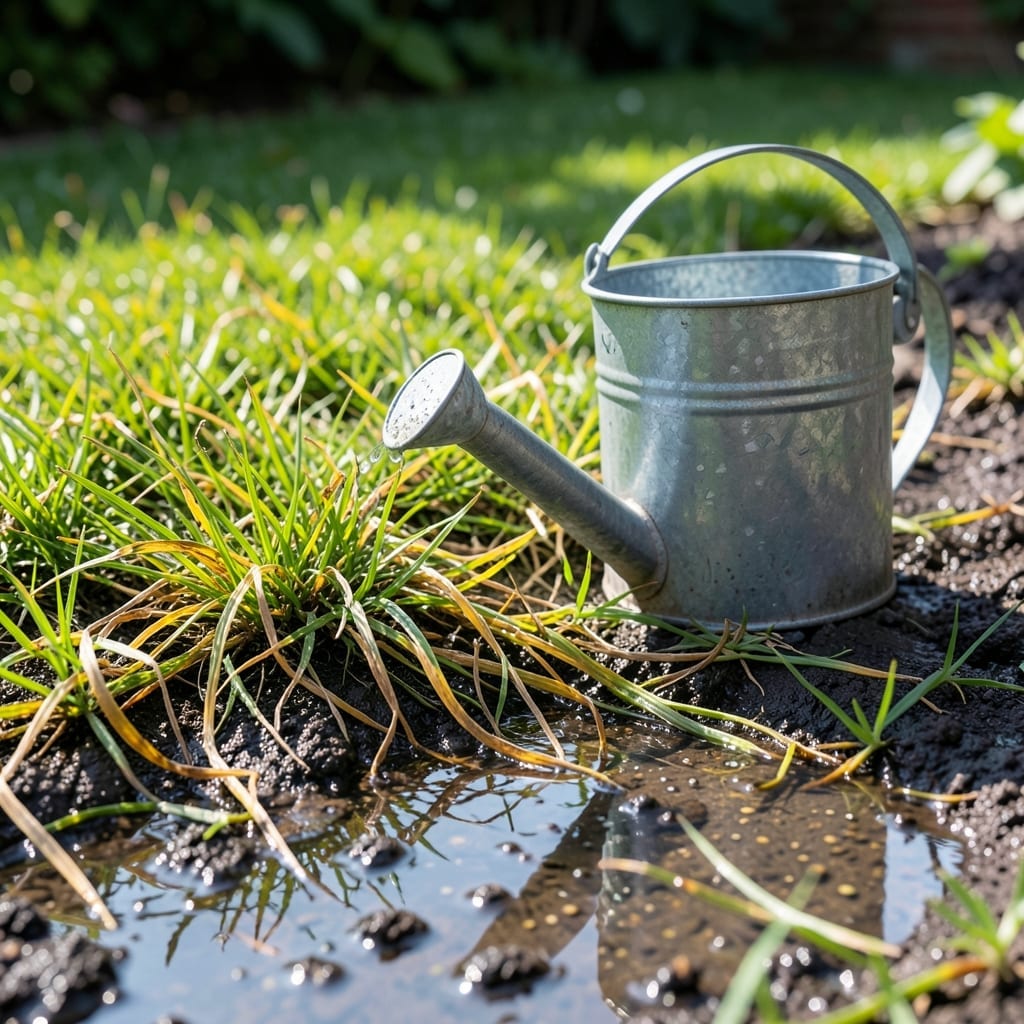
That sinking feeling when your lawn looks worse after watering? I’ve been there. Overwatered grass doesn’t just look sad—it practically screams for help with yellowing blades and soil that squishes underfoot like a soaked sponge.
Here’s the thing—what looks like drought stress might actually be too much water. The grass turns yellow or light green, wilts despite wet soil, and sometimes even develops a funky smell or moldy patches.
You’ll notice the blades feel soft and mushy rather than crisp, and the soil stays waterlogged 24-48 hours after watering. Footprints linger longer than they should on healthy turf.
Fair warning: this is fixable, but you’ll need to adjust your schedule and improve drainage before the roots rot completely.
Overwatering grass often stems from a few key issues, each disrupting the delicate balance your lawn needs to thrive. Below are the most common causes, explained with actionable insights.
Grass typically needs 1–1.5 inches of water per week, including rainfall. When you water too often—especially in short, daily bursts—the soil becomes saturated, suffocating the roots. Shallow watering also encourages weak root systems, making grass more susceptible to disease and stress. Fix it: Water deeply (6–8 inches into the soil) but infrequently, allowing the top inch to dry between sessions.
Heavy or compacted soil (like clay) drains slowly, trapping water at the root zone. This creates anaerobic conditions, where roots can’t access oxygen. Over time, the grass weakens, turns yellow, and may develop fungal infections like Pythium blight or brown patch. Fix it: Aerate your lawn annually and amend the soil with compost or sand to improve drainage.
Watering on a fixed schedule—without adjusting for rain, humidity, or cool temperatures—leads to overhydration. For example, watering before a storm or during high humidity prevents evaporation, leaving grass submerged. Fix it: Use a rain gauge or smart irrigation controller to adjust watering dynamically. Skip sessions if rainfall exceeds 0.5 inches.
Some grass varieties (e.g., Kentucky Bluegrass) thrive in cooler, well-drained areas, while others (like Bermuda grass) tolerate heat and drought. Planting a water-loving species in a humid or poorly draining region invites overwatering problems. Fix it: Choose drought-tolerant grasses (e.g., Fescue or Zoysia) if your area gets frequent rain.
If your lawn is showing signs of overwatering, don’t worry—here’s how to fix it and prevent future issues. Start by adjusting your watering schedule to 1–1.5 inches per week, including rainfall. Water deeply but less frequently to encourage strong root growth.
If your grass is yellow, squishy, or has a foul odor, cut back on watering immediately. Let the soil dry out slightly between waterings. Use a rain gauge or a simple tuna can to measure how much water your lawn receives. Water early in the morning to reduce evaporation and fungal risks.
If water pools on your lawn, your soil may be compacted. Aerate the lawn with a core aerator to create channels for water to drain. Mix in organic matter like compost to improve soil texture. For severe cases, consider installing a French drain or regrading the area.
Overwatering can lead to fungal diseases like brown patch or dollar spot. Apply a fungicide if needed, and rake up any thatch buildup to improve airflow. Prevent future issues by avoiding evening watering and ensuring proper spacing between grass blades for ventilation.
Prevention Tips: 💡
Look for yellow or light green patches that feel squishy underfoot. The soil will stay soggy for 24-48 hours after watering, and footprints may remain visible longer than usual.
A foul odor signals anaerobic conditions where roots are drowning. This happens when water displaces oxygen in the soil, creating a perfect environment for bacteria that produce that rotten egg smell.
If caught early, grass usually recovers within 1-2 weeks of proper care. However, prolonged overwatering can lead to root rot and fungal diseases that may require reseeding or sod replacement.
Water between 4-8 AM to allow absorption before heat evaporates moisture. Evening watering encourages fungal growth, while midday watering wastes water through evaporation.