
Beautiful Plants For Your Interior
Beautiful Plants For Your Interior
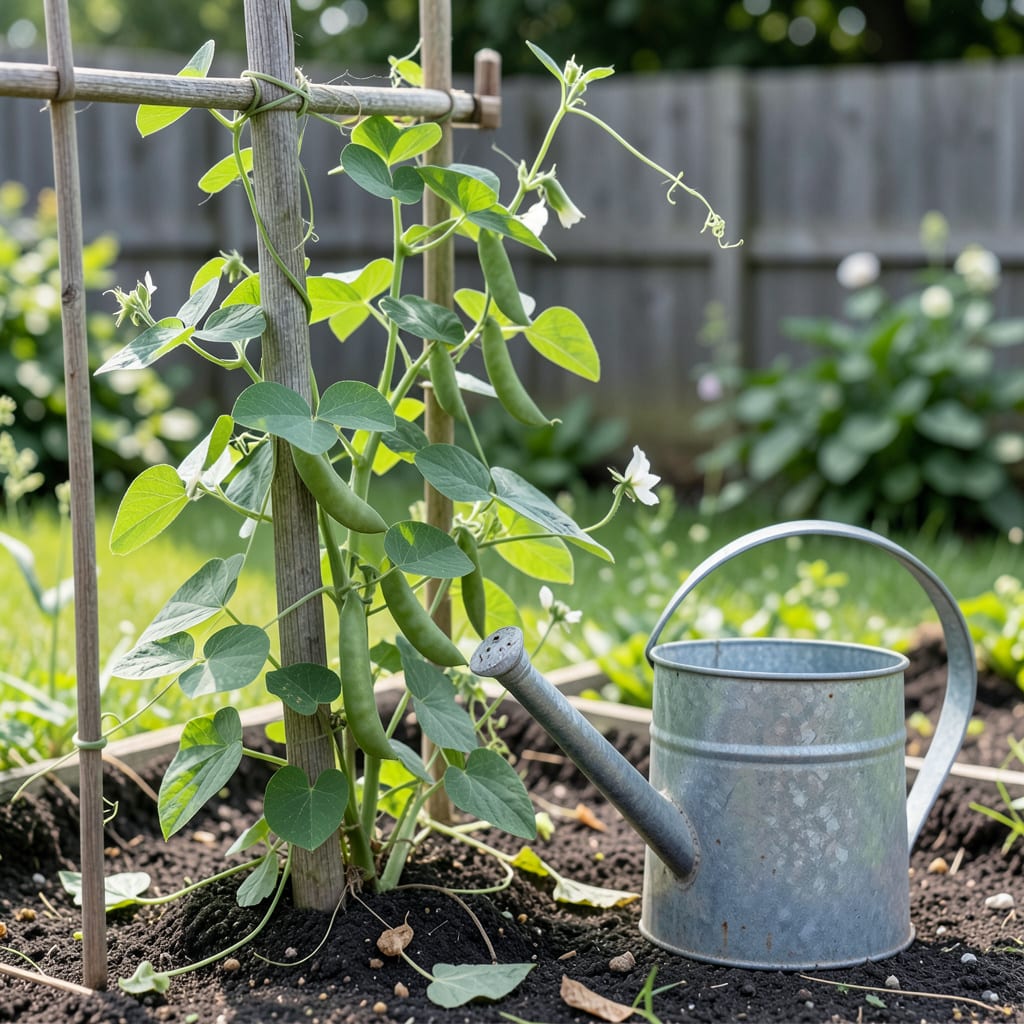
Growing 🟢 Pea plants in USDA Zone 6 can be a rewarding experience, but it requires careful attention to watering needs. Too little water can cause stress, while too much can lead to root rot.
I’ll share the optimal watering tips to help your Pea plants thrive during their spring growing season. By understanding their watering requirements, you’ll be on your way to a healthy harvest.


Pea plants have specific watering needs that vary throughout their growth stages. Understanding these requirements is crucial for optimal growth and yield. I’ll cover the ideal moisture levels for different stages, from germination to maturity 🌱.
The watering needs of pea plants change as they grow. Initially, they require consistent moisture for germination, followed by regular watering during their vegetative stage. As they mature, the watering needs adjust again to support pod development 🌿.
During the germination stage, it’s essential to maintain consistent soil moisture. Pea seeds typically germinate within 7-10 days when the soil is kept moist 🔍.
As the seedlings emerge, the focus shifts to providing strong support for their growth. Watering every 2-3 days helps maintain the right moisture levels without overwatering 🌱.
The flowering and pod formation stage is critical for pea plant development. Increasing the watering frequency to every 1-2 days ensures that the plants receive adequate moisture to support pod growth 🌟.
It’s also important to monitor soil moisture by checking the top 2 inches of soil. If it feels dry, it’s time to water. This simple check helps prevent both underwatering and overwatering 🚿.
Pea plants prefer consistent moisture, especially during the flowering and pod formation stages. Maintaining the right balance is key to a healthy harvest 🌼.
Overwatering can lead to root rot and other issues, while underwatering can cause stress and reduce yields. Finding the right balance is crucial for optimal growth ⚖️.
Adjusting the watering schedule according to the growth stage and weather conditions helps ensure that pea plants receive the right amount of moisture. This flexibility is vital for their overall health 🌞.
By understanding the specific watering needs at each growth stage, you can provide your pea plants with the best conditions for growth and a bountiful harvest 🌻.
Regular monitoring and adjustments to the watering schedule will help you achieve the optimal moisture levels for your pea plants, leading to a successful growing season 📆.
Determining the right amount of water for your pea plants is crucial for their growth and development. I’ll share practical methods to check soil moisture, monitor plant health, and adjust your watering schedule accordingly 🌱.
Checking soil moisture is a simple yet effective way to determine if your pea plants need water. You can do this by inserting your finger into the soil up to the first knuckle. If the soil feels dry, it’s time to water 💧.
Check soil moisture by inserting your finger into the soil. If it’s dry, water thoroughly until you see drainage from the bottom of the pot or container 🌿.
Monitoring your pea plants’ health is also essential in determining their watering needs. Look for signs of underwatering, such as wilting or yellowing leaves. On the other hand, overwatering can cause yellowing leaves or root rot 🌟.
Adjusting your watering schedule according to the weather conditions is vital. During hot and dry spells, your pea plants may need more frequent watering. Conversely, during cool and rainy periods, they may require less water ☁️.
A good rule of thumb is to water your pea plants in the morning, so the plants have the entire day to absorb the water. This also helps prevent fungal diseases that can develop in moist conditions overnight 🌞.
The amount of water your pea plants need can also depend on the soil type. For example, sandy soils drain quickly and may need more frequent watering, while clay soils retain moisture longer and may need less frequent watering 🌿.
By combining these methods, you can determine the right amount of water for your pea plants and ensure they receive the moisture they need to thrive 📊.
Growing pea plants can be challenging if you don’t know the common watering mistakes to avoid. I’ll share some crucial tips to help you prevent overwatering and underwatering issues that can affect pea plant development 🌿.
One of the most common mistakes is overwatering, which can lead to root rot and other problems. Pea plants don’t like waterlogged soil, so it’s essential to ensure good drainage and avoid excessive watering ⚠️.
Be cautious of overwatering, as it can cause root rot and other issues in pea plants. Ensure good drainage and avoid excessive watering 🚿.
Underwatering is another common mistake that can cause stress to your pea plants. If the soil is too dry for an extended period, it can lead to stunted growth and reduced yields 🌟.
To avoid these mistakes, it’s crucial to monitor soil moisture regularly. Check the soil by inserting your finger into it, and adjust your watering schedule accordingly 💧.
The type of soil you’re using can also impact your watering schedule. For example, sandy soils drain quickly and may need more frequent watering, while clay soils retain moisture longer and may need less frequent watering 🌿.
Weather conditions also play a significant role in determining your pea plants’ watering needs. During hot and dry spells, they may need more frequent watering, while during cool and rainy periods, they may require less water ☁️.
By being aware of these common watering mistakes and taking steps to avoid them, you can help your pea plants thrive and enjoy a healthy harvest 🌼.
Water your pea plants every 2-3 days, ensuring the soil remains consistently moist but not waterlogged. Adjust the frequency based on weather conditions and soil type .
Check soil moisture by inserting your finger into the soil up to the first knuckle. If it feels dry, it’s time to water. You can also monitor your plants for signs of underwatering or overwatering .
It’s best to water your pea plants in the morning, so they have the entire day to absorb the water. This helps prevent fungal diseases that can develop in moist conditions overnight .
During flowering and pod formation, pea plants require more moisture. Increase watering to every 1-2 days to support pod growth and ensure a healthy harvest .
