
Beautiful Plants For Your Interior
Beautiful Plants For Your Interior
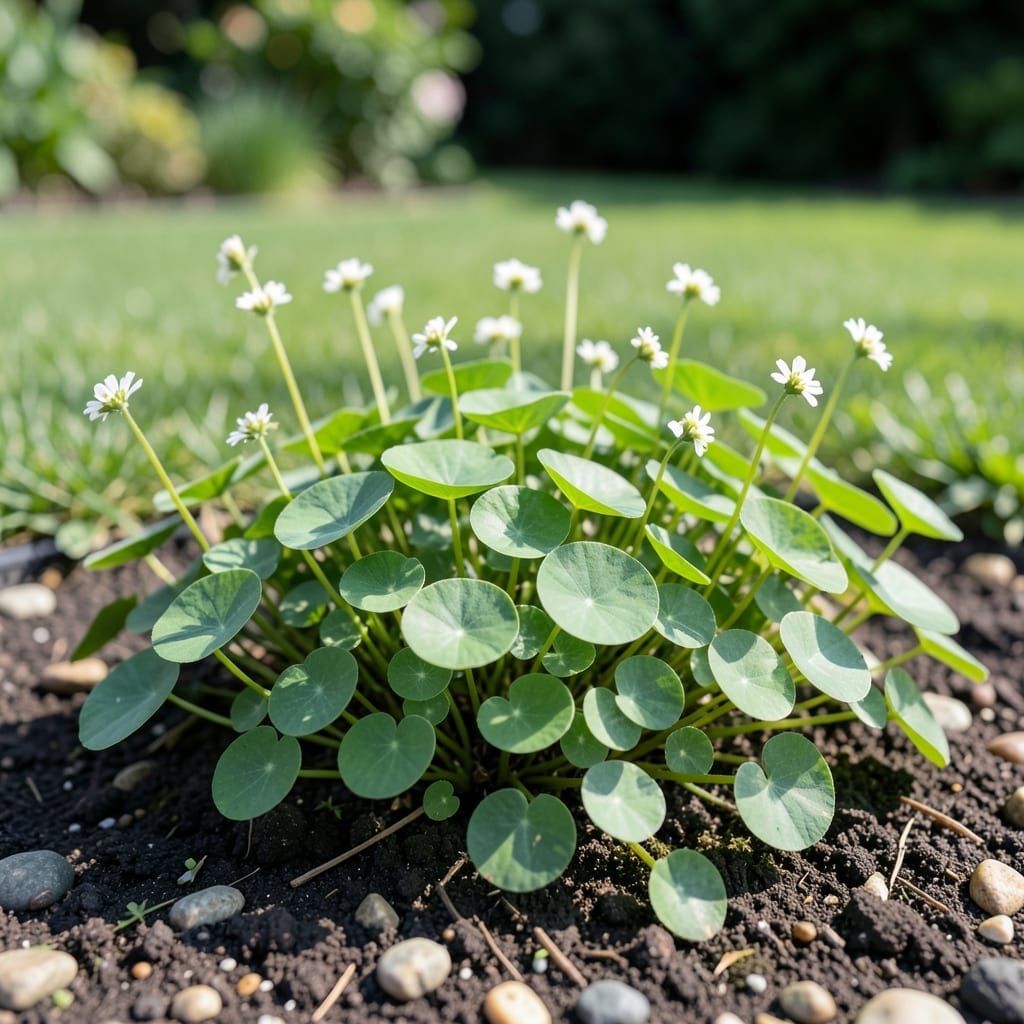
I first noticed dollar weed as bright green patches spreading faster than my grass. It forms dense mats that choke out everything else, and those little fan-shaped leaves are impossible to miss once you know what to look for.
Each stem produces small white flowers that look like tiny lily pads floating on the soil. The leaves grow in pairs from a single point, creating that distinctive fan shape that gives the plant its name.
You’ll spot it in damp areas where other plants struggle—low spots, near sprinklers, or in shaded corners. It thrives where the soil stays moist and the grass is thin.
Identifying it early means you can pull it before it takes over. The roots are shallow, so a little effort now saves a lot of work later.
Dollar weed thrives when conditions favor its aggressive growth. Below are the primary causes, each backed by science and practical insights.
Dollar weed (Hydrocotyle spp.) flourishes in waterlogged soil, where poor drainage or overwatering creates a haven for its shallow roots. This plant’s ability to grow in both dry and wet conditions gives it an edge, but soggy soil accelerates its spread. Overwatered lawns or areas with poor drainage are prime targets.
Weak or sparse grass provides open space for dollar weed to establish itself. Compacted soil restricts grass root growth, reducing competition and allowing dollar weed to dominate. Regular aeration and overseeding can help prevent this by strengthening your turf’s defenses.
Dollar weed is a warm-season perennial, thriving in humid, tropical, and subtropical regions. Temperatures between 75–90°F (24–32°C) are ideal for its rapid growth. If you live in such a climate, proactive management is key to keeping it at bay.
Poor soil nutrition, particularly low nitrogen levels, weakens grass while giving dollar weed a competitive advantage. This weed tolerates nutrient-poor conditions better than many turfgrasses. Regular soil testing and fertilization can help maintain a lawn dense enough to resist invasion.
Dollar weed thrives in damp, compacted soil and spreads quickly if left unchecked. Here’s how to tackle it effectively, with practical fixes for every scenario.
Problem: Poor drainage or compacted soil encourages dollar weed growth.
Fix: Aerate your lawn to improve airflow and water penetration. Prevention tip: ✨ Overseed bare spots with grass to outcompete weeds. Water deeply but less frequently to discourage shallow-rooted weeds like dollar weed.
Problem: Small patches can be handled without chemicals.
Fix: Use a weeding tool or your hands to pull dollar weed before it flowers. Ensure you remove the entire root system to prevent regrowth. Prevention tip: 💡 Mulch garden beds to block sunlight and suppress new weeds.
Problem: Large infestations may require chemical intervention.
Fix: Apply a post-emergent herbicide labeled for dollar weed (e.g., 2,4-D or glyphosate for non-lawn areas). Spot-treat to avoid harming desirable plants. Prevention tip: 🎯 Reapply pre-emergent herbicide in early spring to stop seeds from germinating.
Problem: Prefer eco-friendly methods for small or isolated patches.
Fix: Spray undiluted white vinegar (5% acetic acid) directly on leaves on a sunny day, or pour boiling water over the weeds. Prevention tip: 🌡️ Reapply as needed, but avoid overspray on grass or ornamental plants.
Consistency is key—combine methods for the best results and keep your lawn healthy to prevent dollar weed from returning.
It thrives in damp, compacted soil and spreads via creeping stems that root at nodes. Each node can produce new plants, forming dense mats in just weeks.
Yes, it produces small white flowers that resemble tiny lily pads. They appear on long stems above the fan-shaped leaves, making them easy to spot.
While it prefers moist conditions, it can tolerate brief dry spells. However, it grows fastest in consistently damp soil and struggles in parched ground.