
Beautiful Plants For Your Interior
Beautiful Plants For Your Interior
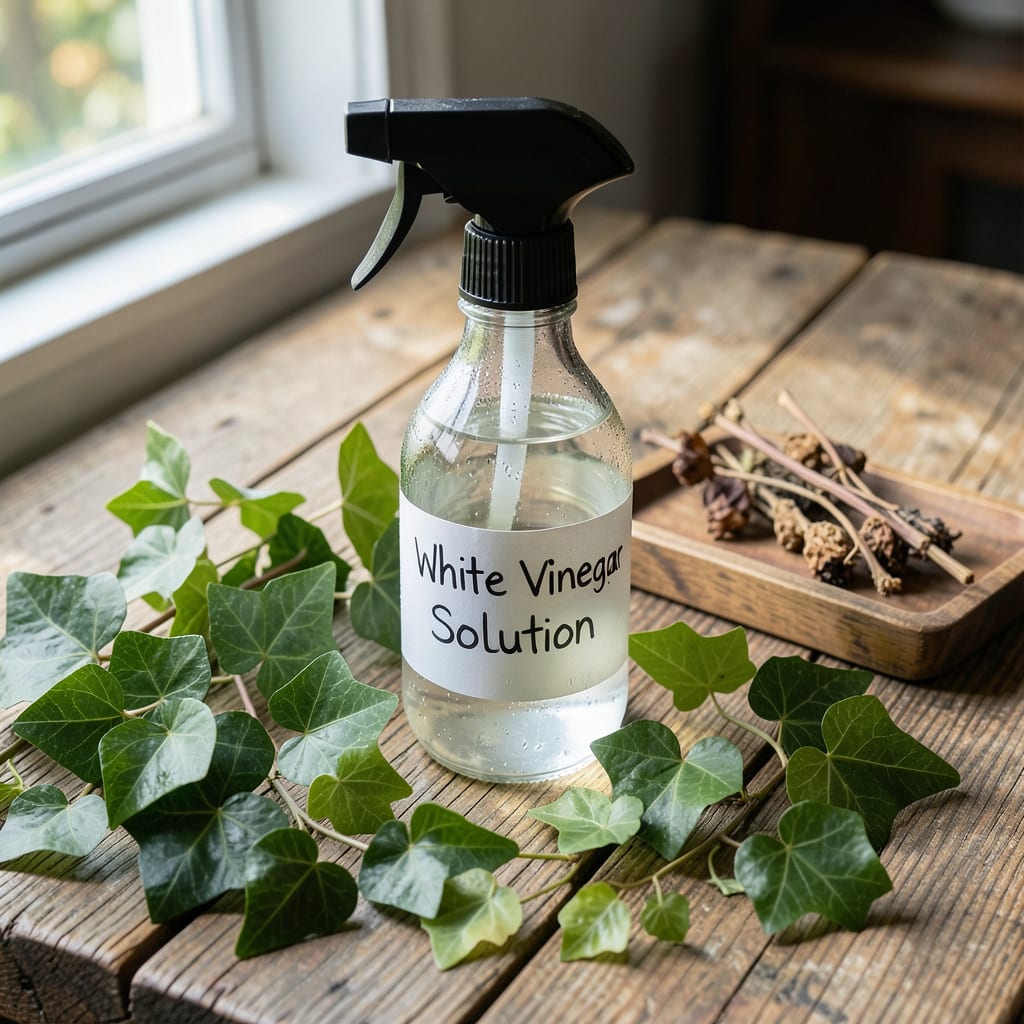
Ivies got you cornered in your yard? I’ve been there, watching it strangle my fence and climb my trees. White vinegar changed the game—no toxic sprays, just plain kitchen vinegar doing the heavy lifting.
It works by drying out the leaves and roots, but here’s the thing—it’s not instant. You’ll need a few applications on sunny days, and you’ll want to protect the plants you actually like. I learned that the hard way.
What you get is a clean, chemical-free way to reclaim your space. The vinegar breaks down fast, so no lingering harm to soil or pets. Just don’t expect it to work on deep roots the first try.
Best for driveways, patios, or anywhere ivy’s taken over. Stick with it, and you’ll see those stubborn vines wither away.
White vinegar’s effectiveness against ivy stems from its high acetic acid content, which disrupts plant cells and halts growth. Below are the key reasons this natural solution works so well.
Vinegar, particularly white vinegar with 5-20% acetic acid, breaks down the lipid membranes of ivy leaves and stems. This causes cells to lose moisture and nutrients, leading to rapid wilting and death. The higher the acetic acid concentration, the faster and more effectively it destroys the plant tissue.
Unlike some herbicides that target specific pathways, vinegar works by drying out the plant from the inside out. When sprayed, it removes the waxy cuticle layer on ivy leaves, increasing water loss through evaporation. This systemic dehydration starves the plant of essential fluids, making recovery nearly impossible.
Ivy thrives in slightly acidic to neutral soil (pH 6.0–7.5). White vinegar, with a pH of 2.0–3.0, drastically lowers the soil pH around the roots, creating an inhospitable environment. This acidity prevents nutrient uptake, further weakening the ivy until it dies off completely.
Tackling invasive ivy doesn’t have to mean reaching for harsh chemicals. White vinegar is a powerful, natural solution that disrupts ivy’s cell structure, drying it out from the roots up. Below are targeted methods to eliminate ivy effectively, along with tips to keep it from returning.
For ivy climbing structures, cut the vines at the base first to sever their nutrient supply. Then, fill a spray bottle with undiluted white vinegar (5% acetic acid or higher) and a teaspoon of dish soap to help it cling. Spray the leaves and stems thoroughly on a sunny day—the heat boosts the vinegar’s effectiveness. Reapply every 3–5 days until the ivy wilts and dies.
For sprawling ground ivy, mow or trim it down first to expose the leaves. Mix 1 gallon of white vinegar, 1 cup of salt, and 1 tablespoon of dish soap in a garden sprayer. Drench the ivy, focusing on the roots. Avoid spraying nearby plants, as salt can harm soil. Repeat weekly until the ivy is gone.
With consistency, white vinegar can safely and affordably reclaim your space from ivy—no toxic residues left behind!
Results typically appear within 24-48 hours as leaves wilt. Full die-off may take 1-2 weeks of repeated applications, especially for established vines. Sunny days speed up the process significantly.
Yes, vinegar is non-selective and can damage any plant it contacts. Use a shield or apply carefully on windless days. Avoid spraying desirable plants or soil where you want to grow other vegetation.
For tough ivy, use horticultural vinegar (20-30% acetic acid) for best results. Household white vinegar (5%) works but requires more applications. Always add 1 tsp dish soap to help it stick.
