
Beautiful Plants For Your Interior
Beautiful Plants For Your Interior
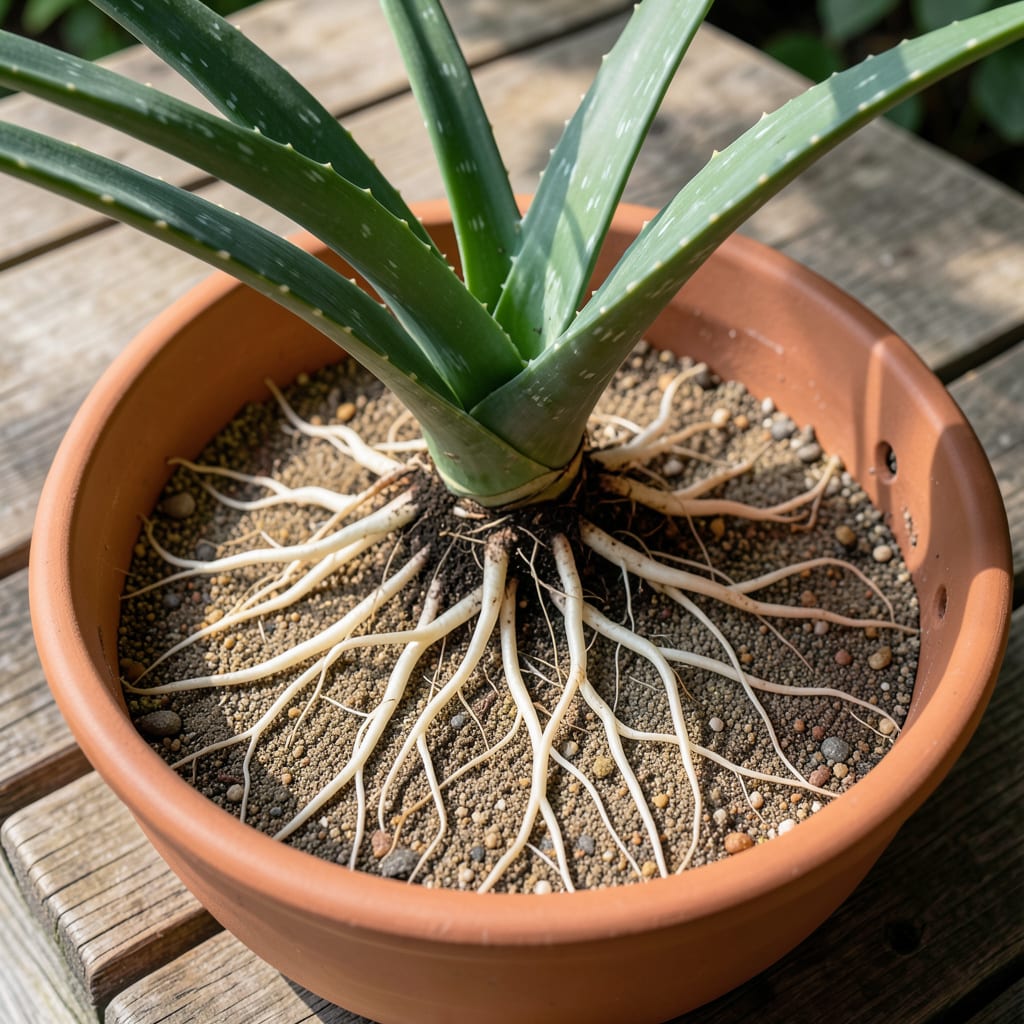
Healthy aloe vera plants start with strong roots. I learned this the hard way after watching my first aloe slowly wither from root rot caused by overwatering and poor drainage.
With the right soil mix and watering routine, your aloe will develop a fibrous, shallow root system that anchors the plant while absorbing just enough moisture. The result? A thriving plant with plump, vibrant leaves that lasts for years.
📚 In This Guide
Here’s how I keep my aloe plants thriving with a robust root system year after year.
Select a wide, shallow pot with drainage holes—aloe roots spread outward rather than deep. Terra cotta works well because it wicks away excess moisture, which prevents rot. A 10-12 inch diameter pot gives roots room to grow without being so large that soil stays soggy.
I avoid deep containers since they hold too much soil, leading to waterlogging. If your aloe is top-heavy, a heavier pot like ceramic adds stability. Always ensure the new pot is only 1-2 inches larger than the current one to avoid overpotting.
Aloe vera thrives in a gritty, fast-draining mix. I combine 2 parts cactus/succulent soil with 1 part perlite or coarse sand to improve aeration. Regular potting soil retains too much moisture and suffocates the roots.
Test your mix by watering it—if water pools on the surface for more than a few seconds, add more perlite. The ideal blend lets water flow through quickly while still holding enough moisture for the roots to absorb when needed.
Water only when the soil is completely dry to the touch at least 1-2 inches down. Aloe roots store water, so overwatering is the fastest way to kill them. I water deeply until it runs out the drainage holes, then wait until the soil dries out again.
In bright, indirect light, this usually means watering every 2-3 weeks. If the leaves start to pucker or feel thin, it’s a sign the plant needs water. Yellowing or mushy leaves mean you’re watering too often—stop immediately and let the soil dry.
Aloe vera needs 6-8 hours of bright light daily to develop a strong root system. A south- or west-facing window is ideal. If natural light is limited, a grow light positioned 6-12 inches above the plant for 12-14 hours a day works well.
Leggy, stretched-out growth or pale leaves mean the plant isn’t getting enough light. Rotate the pot a quarter turn weekly to ensure even growth. Without enough light, roots weaken and struggle to support the plant.
Feed with a balanced, water-soluble fertilizer diluted to half strength once in spring and once in summer. Too much fertilizer leads to salt buildup, which damages roots. I avoid fertilizing in fall and winter when growth slows.
Repot every 2-3 years or when you see roots circling the bottom of the pot. Gently remove the plant, loosen the root ball, and place it in a slightly larger pot with fresh soil. This encourages new root growth and prevents the plant from becoming root-bound.
After years of trial and error, I’ve learned what truly helps aloe vera roots thrive and what mistakes to avoid.
The Container Choice: Step 1 emphasizes a wide, shallow pot, and here’s why it matters so much. Aloe roots grow horizontally, not down, so a 10-12 inch diameter pot gives them space without holding excess moisture. Terra cotta is ideal because it pulls water away from roots, but if your aloe is top-heavy, a heavier ceramic pot prevents tipping.
Soil Mix Secret: In Step 2, the 2 parts cactus/succulent soil to 1 part perlite or coarse sand ratio is non-negotiable. Regular potting soil holds too much water, which suffocates the roots. Test your mix by watering it—if water sits on the surface for more than a few seconds, add more perlite until it drains quickly.
Watering Wisdom: The 2-3 weeks watering frequency in Step 3 isn’t arbitrary. Aloe roots store water, so overwatering is the most common killer. Always check that the soil is completely dry 1-2 inches down before watering. Puckered leaves mean it’s thirsty; yellow or mushy leaves mean you’re overdoing it.
Light and Rotation: Step 4’s 6-8 hours of bright, indirect light daily is key for strong roots. If you’re using a grow light, keep it 6-12 inches above the plant for 12-14 hours a day. Rotate the pot a quarter turn weekly to prevent uneven growth, which can weaken the root system over time.
Aloe vera roots typically grow 12–24 inches deep, but they spread horizontally more than vertically. Shallow, wide containers are ideal for healthy root development.
Yes, but recovery depends on the extent of damage. Trim rotten or broken roots, repot in fresh soil, and reduce watering to help the plant heal.
Inspect roots every 6–12 months, especially if growth slows or leaves yellow. Gently remove the plant to check for rot, overcrowding, or pests.
Use a well-draining mix like cactus or succulent soil with perlite. Avoid dense, moisture-retaining soils to prevent root rot.
Brown roots often signal overwatering or poor drainage. Let the soil dry completely between waterings and ensure the pot has drainage holes.
