
Beautiful Plants For Your Interior
Beautiful Plants For Your Interior
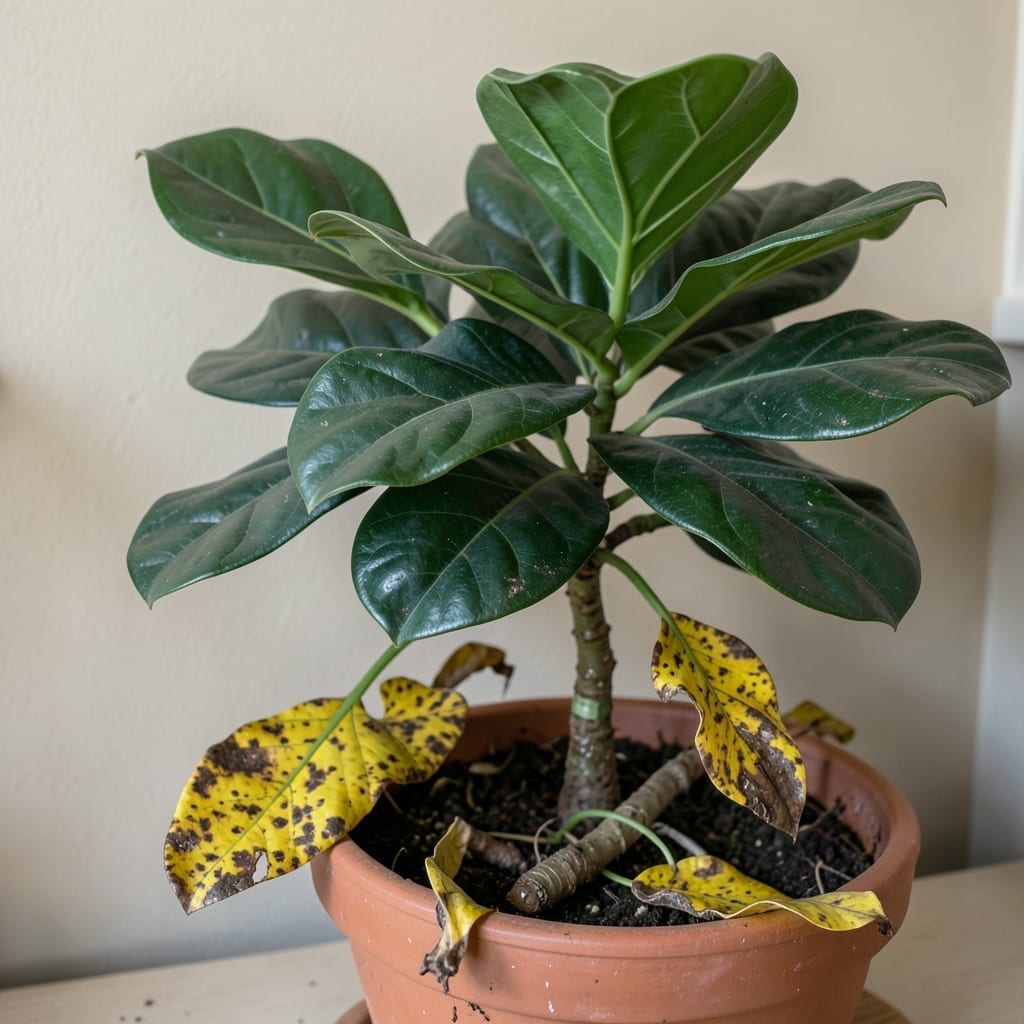
Your fiddle leaf fig’s yellow leaves aren’t just sad—they’re screaming for help. I’ve saved more of these plants from overwatering than I care to admit, and the signs are always the same: droopy foliage, mushy stems, and leaves that turn yellow or brown at the edges.
What’s happening below the soil is even worse. Roots turn to mush, and the plant can’t absorb water or nutrients, no matter how much you give it. The first step is stopping the watering cycle and letting the soil dry out completely.
After a week or so, check the roots and trim any that are dark or squishy. Repot the plant in fresh, well-draining soil, and hold off on watering for 5-7 days to give it a fighting chance.
This issue sneaks up on even the most attentive plant parents. The good news? With quick action, your fig can bounce back stronger than before.
Overwatering your fiddle leaf fig (Ficus lyrata) often stems from well-meaning but misguided care. Here’s why it happens, broken down by the most common causes:
When pots lack drainage holes or use dense, water-retentive soil, excess moisture has nowhere to go. This leads to waterlogged roots, which suffocate and rot due to a lack of oxygen. Fiddle leaf figs thrive in well-aerated soil that allows water to flow through quickly.
Many plant parents water on a fixed schedule (e.g., weekly) without checking soil moisture. Fiddle leaf figs prefer their top 1–2 inches of soil to dry out between waterings. Overwatering disrupts this balance, causing root stress and nutrient uptake issues.
Standard potting soil often retains too much moisture for these tropical plants. A chunky, fast-draining mix (e.g., with perlite or bark) mimics their natural epiphytic habitat, preventing soggy conditions that invite root rot.
Larger pots hold more soil, which stays wet longer. This increases the risk of anaerobic conditions (no oxygen) around the roots. Always match pot size to the plant’s root ball, leaving just a little room for growth.
Addressing these factors ensures your fiddle leaf fig gets the right moisture balance—not too much, not too little.
Once you’ve spotted the telltale signs of overwatering, act fast to nurse your fiddle leaf fig back to health. Here’s how to tackle each issue:
If the roots are mushy or black, it’s time for a rescue mission. Gently remove the plant from its pot and trim away any rotten roots with clean, sharp scissors. Repot in fresh, well-draining soil and a clean pot with drainage holes. Hold off on watering for a week to let the roots recover.
Prevention tip: 💡 Always use pots with drainage and check soil moisture before watering.
If the soil is waterlogged but the roots are still healthy, stop watering immediately. Move the plant to a bright, airy spot to speed up drying. Tilt the pot slightly to let excess water drain out. Wait until the top 2 inches of soil are dry before watering again.
Prevention tip: 🌡️ Stick your finger in the soil—if it feels damp, wait another day or two.
Yellow leaves won’t turn green again, so prune them off to redirect energy to healthy growth. Reduce watering frequency and ensure the plant gets bright, indirect light. Avoid fertilizing until the plant stabilizes, as overwatered plants are more sensitive to fertilizer burn.
Prevention tip: ✨ Follow the “soak and dry” method: water thoroughly, then let the soil dry out completely before the next watering.
If your pot lacks drainage holes, switch to one that does. Add a layer of pebbles or perlite at the bottom to improve drainage. Use a well-aerating potting mix designed for tropical plants to prevent future waterlogging.
Prevention tip: 🎯 Terracotta pots are great—they wick away excess moisture naturally.
Water only when the top 1-2 inches of soil are dry. This usually means every 7-10 days, but always check first. Overwatering is far more dangerous than underwatering for these plants.
Yellow leaves often signal overwatering or poor drainage. The plant can’t absorb oxygen when roots are waterlogged, causing stress and discoloration. Check the soil and roots for excess moisture.
Yes, if caught early. Remove the plant, trim all black or mushy roots, and repot in fresh, dry soil. Wait 5-7 days before watering again to allow recovery.
Use terracotta pots with drainage holes. They wick away excess moisture and allow air to reach the roots. Avoid decorative pots without drainage, as they trap water.