
Beautiful Plants For Your Interior
Beautiful Plants For Your Interior
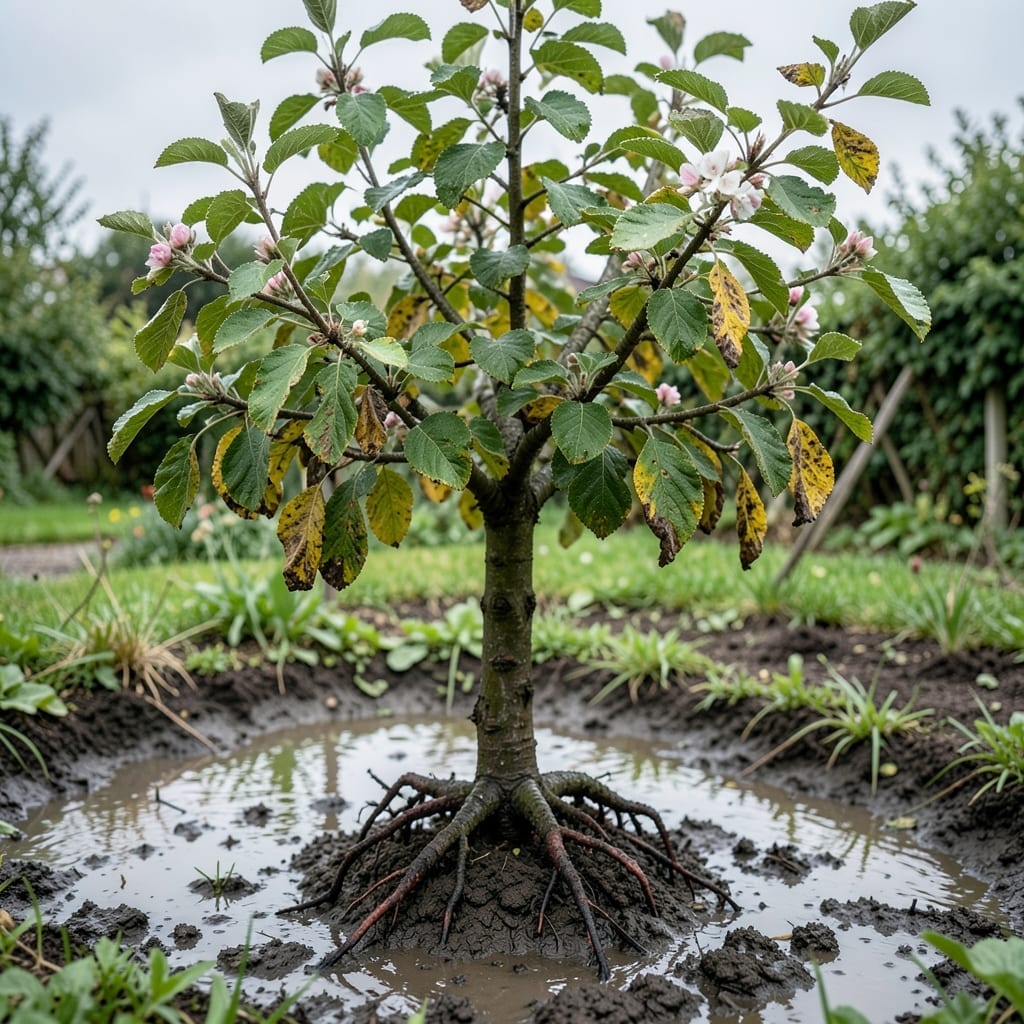
Yellow leaves and squishy bark aren’t just ugly—they’re your apple tree’s SOS. I’ve seen perfectly healthy trees decline in weeks from too much love at the hose.
Overwatering drowns roots, turning them brown and mushy. The tree can’t drink, so leaves turn yellow and wilt like they’re thirsty. Confusing, right? Even the bark gets soft and spongy.
Here’s the thing—most people water on a schedule instead of checking soil. Stick your finger in. If it’s damp 2 inches down, walk away. The fix starts there.
Catch it early and you’ll save your tree. Ignore it, and you’ll be digging it up. Your call.
Overwatering an apple tree often stems from well-intentioned but misguided care. Understanding the root causes can help you adjust your practices to prevent damage. Below are the most common reasons why overwatering occurs.
One of the primary causes is simply watering too frequently or in excessive amounts. Apple trees thrive in well-drained soil, and their roots need oxygen as much as they need water. When the soil is constantly saturated, it displaces air pockets, leading to root asphyxiation. This is especially common in clay-heavy soils, which retain moisture longer than loamy or sandy soils.
Even if you water appropriately, poor drainage can mimic the effects of overwatering. Compacted soil, lack of slope, or inadequate drainage infrastructure (like missing or clogged French drains) can cause water to pool around the tree’s root zone. Over time, this creates a waterlogged environment that suffocates the roots and promotes fungal growth.
Growers often overwater during cool, rainy seasons or after a brief dry spell, assuming the tree needs more moisture than it actually does. Apple trees are resilient and can often survive short periods of drought. However, overcompensating with extra water during these times can lead to water stress, where the roots absorb more water than they can process.
While mulch helps retain soil moisture and regulate temperature, excessive mulch or improper application can trap too much water near the trunk. A thick layer of mulch (over 4 inches) or mulch piled directly against the tree’s base can prevent proper evaporation, leading to overwatering symptoms even if irrigation is minimal.
Overwatered apple trees can bounce back with the right care. Here’s how to address the most common causes and prevent future issues:
Stop watering immediately and let the soil dry out. Check moisture by sticking your finger 2–3 inches into the soil—if it’s damp, hold off. Water only when the top 1–2 inches feel dry. For mature trees, deep, infrequent watering (1–2 times per week) is better than daily light sprinkles. Use a moisture meter for precision.
If water pools around the base, amend heavy clay soil with compost or sand to boost drainage. For severe cases, consider installing a French drain or planting in a slightly raised mound. Ensure the tree isn’t in a low-lying spot where water collects.
Prevention tip: 💡 Test drainage before planting by digging a 1-foot hole, filling it with water, and timing how long it takes to empty. Ideal: under 4 hours.
If roots are brown, mushy, or smelly, prune the affected areas with sterilized shears. Disinfect the soil with a fungicide (like copper-based products) to prevent further rot. Avoid fertilizing until the tree recovers—extra nutrients can stress damaged roots.
Prevention tip: ✨ Mulch with wood chips (2–4 inches deep) to retain moisture without waterlogging, but keep mulch 6 inches away from the trunk.
Too much mulch traps moisture against the trunk, leading to bark rot. Reduce mulch to a 2–3 inch layer and ensure it’s not piled against the base. Use coarse mulch (like bark) instead of fine materials that compact and hold water.
With these fixes, your apple tree should show improvement in a few weeks. Consistency is key—adjust care based on weather (less water in rainy seasons!) and always prioritize well-draining soil.
Yellowing leaves signal the tree can’t absorb nutrients due to waterlogged roots. This often starts at the bottom and moves upward.
With proper care, you’ll see improvement in 2-4 weeks. Severely damaged roots may take a full season to heal.
Soft bark indicates advanced overwatering. Stop watering, improve drainage, and prune affected bark. Recovery depends on root health.
Yes—overwatering causes uniform yellowing and wilting. Disease often shows spots, patches, or unusual growth patterns.