
Beautiful Plants For Your Interior
Beautiful Plants For Your Interior
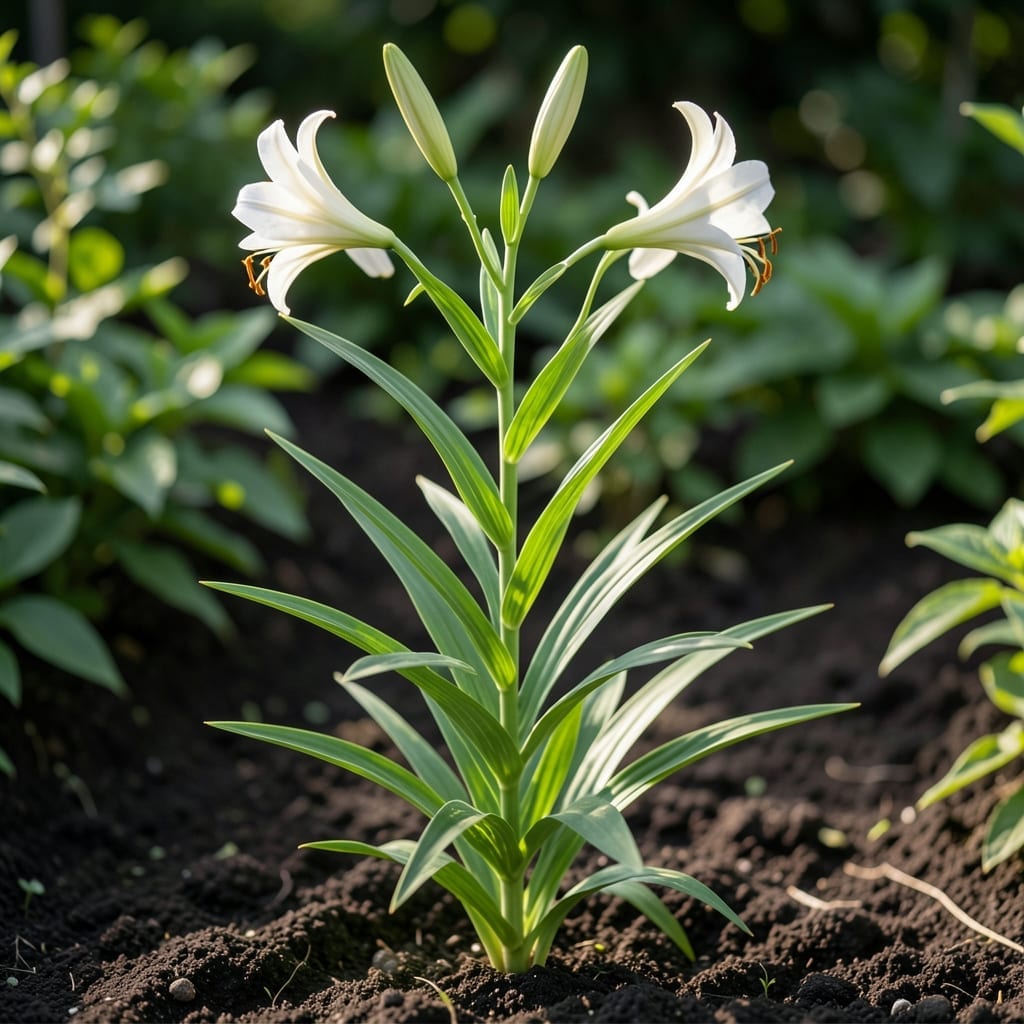
Lily leaves are typically long, slender, and lance-shaped with smooth edges, growing in whorls around the stem. They range from deep green to variegated patterns, often with a glossy or slightly textured surface.
I notice these leaves often have parallel veins running their length, which helps them efficiently collect sunlight. 🌿 Their arrangement in whorls isn’t just pretty—it maximizes light exposure while minimizing shade for lower leaves. Some varieties even display striking variegation, with white or yellow stripes adding visual interest to the plant.
💡 In This Article
The whorled arrangement of lily leaves is a marvel of botanical engineering. Each node on the stem produces 3 to 20 leaves that radiate outward in a circular pattern, creating layers of foliage. This unique growth habit ensures every leaf gets maximum sunlight exposure while minimizing shade for leaves below. 🌿
Lance-shaped leaves, typically 4-8 inches long and 0.5-2 inches wide, feature smooth edges that reduce water loss. The pointed tips help channel rainwater toward the stem, directing moisture to the plant’s roots. This design is especially efficient in the lily’s natural wetland habitats.
Parallel venation runs the length of each leaf, providing structural support while optimizing photosynthesis. The veins create a ladder-like pattern visible on both surfaces, with the underside often displaying a paler green color. This vein structure also allows the leaves to flex without breaking in wind or rain. ✨
Different lily species show variations in leaf attachment. Some have leaves that clasp the stem, while others grow from small stalks. The Asiatic lily, for example, typically has 6-8 leaves per whorl, while the Trumpet lily may produce up to 20 leaves at each node. This variation affects the plant’s overall density and appearance.
The glossy surface of many lily leaves isn’t just decorative—it helps repel water and reduce dust accumulation. This adaptation keeps the leaf surface clean for optimal light absorption. Some varieties, like the Tiger Lily, even have slightly hairy textures that help trap moisture in drier conditions. 💫
This circular pattern maximizes sunlight exposure for each leaf. It ensures upper leaves don’t completely shade lower ones, optimizing photosynthesis.
Overwatering or poor drainage is the most common cause. Check soil moisture—it should feel damp but not soggy. Adjust watering and improve drainage if needed.
Healthy leaves are vibrant green, firm, and free of spots or holes. Unhealthy leaves may show yellowing, browning, or pest damage.
No, there’s variation. Asiatic lilies typically have 6-8 leaves per whorl, while Trumpet lilies may produce up to 20 leaves at each node.