
Beautiful Plants For Your Interior
Beautiful Plants For Your Interior
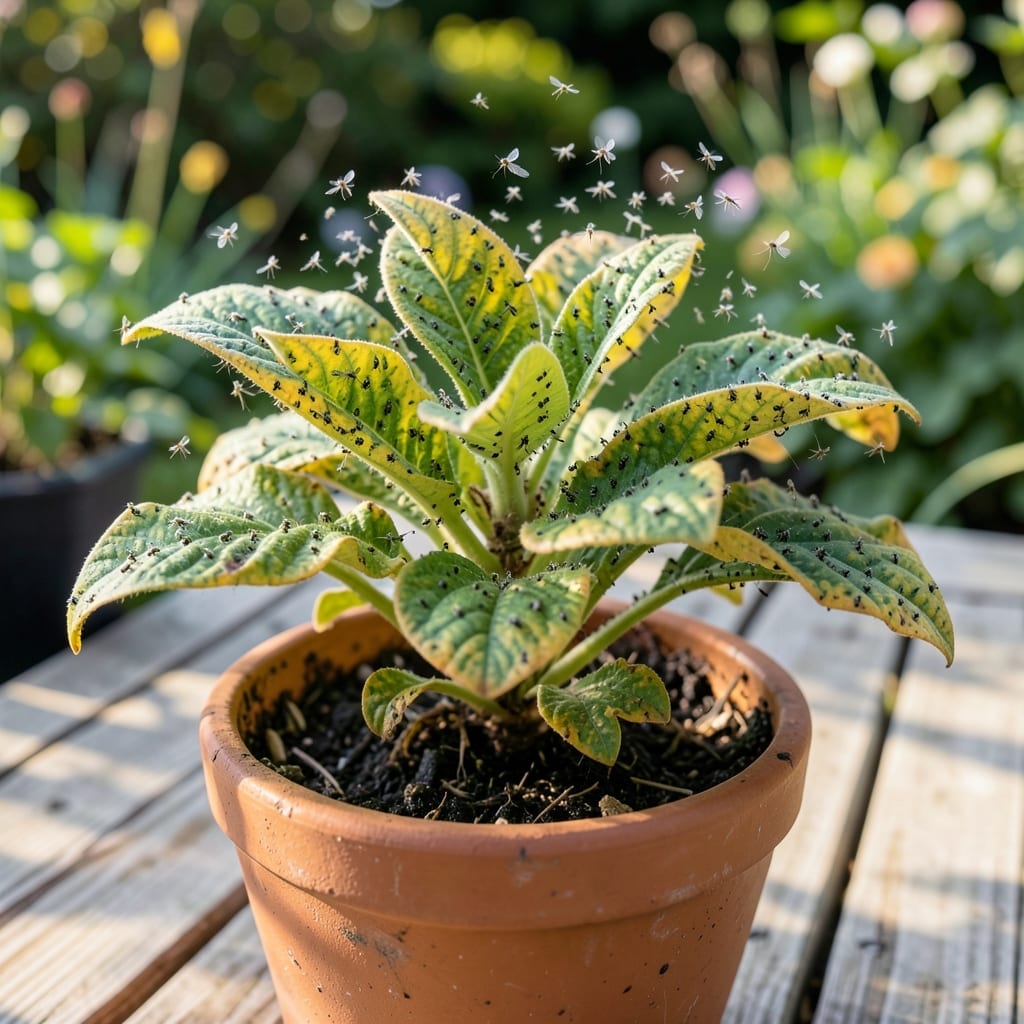
Those tiny white flying insects are often fungus gnats, whiteflies, or aphids. They thrive in moist soil, feed on plant sap, and can signal overwatering or pest infestations in gardens.
I notice these pests most often in indoor plants or greenhouses where humidity is high. 🔥 Fungus gnats love damp potting mix, while whiteflies cluster under leaves, and aphids tend to gather on new growth. The key is catching them early before they multiply and spread to other plants.
💡 In This Article
Fungus gnats are 1/8-inch long with long legs and antennae, resembling tiny mosquitoes. They lay eggs in damp soil, where larvae feed on decaying organic matter and plant roots. You’ll often spot them hovering near houseplants or seedling trays, particularly in soil that stays wet for days. Their life cycle completes in about 4 weeks, with females laying up to 200 eggs in moist conditions. ✨
Whiteflies are even smaller, at 1/16 to 1/10 inch, with powdery white wings that give them a moth-like appearance. They congregate on the undersides of leaves, sucking sap and excreting sticky honeydew that attracts sooty mold. Unlike fungus gnats, they’re weak fliers and scatter in a cloud when disturbed. Their populations explode in warm, humid environments above 70°F. 💫
Aphids are pear-shaped and 1/8-inch long, often appearing in clusters on new growth or flower buds. While some are green, white aphids are common on plants like roses and hibiscus. They reproduce asexually, meaning a single female can produce dozens of offspring without mating, leading to rapid infestations. Their honeydew secretion also promotes black sooty mold growth. 🔥
To distinguish them, check their location: fungus gnats near soil, whiteflies under leaves, and aphids on stems and buds. Fungus gnats are most active in the morning, while whiteflies and aphids remain on plants all day. Each has unique behaviors—fungus gnats fly in erratic patterns, whiteflies flutter weakly, and aphids stay put unless disturbed. ⚡
Their presence often indicates environmental issues. Fungus gnats suggest overwatering or poor drainage, whiteflies thrive in crowded plant conditions, and aphids appear when plants are stressed by drought or nutrient deficiencies. Addressing these root causes is as important as treating the pests themselves. 🌟
Yes, they can damage plants in different ways. Fungus gnat larvae attack roots, whiteflies suck sap from leaves, and aphids can stunt growth by feeding on new shoots. Left unchecked, infestations can weaken or even kill plants.
Check their behavior and location. Fungus gnats hover near soil, whiteflies cluster under leaves, and aphids gather on stems. Fungus gnats are most active at dawn, while whiteflies scatter when disturbed.
Fungus gnats may fly around but won’t bite or spread disease. Whiteflies and aphids stay on plants. To prevent indoor spread, isolate infested plants and improve ventilation.
For immediate control, use yellow sticky traps for adults and let soil dry for fungus gnats. Apply neem oil or insecticidal soap for whiteflies and aphids. Repeat treatments every 5-7 days for best results.