
Beautiful Plants For Your Interior
Beautiful Plants For Your Interior
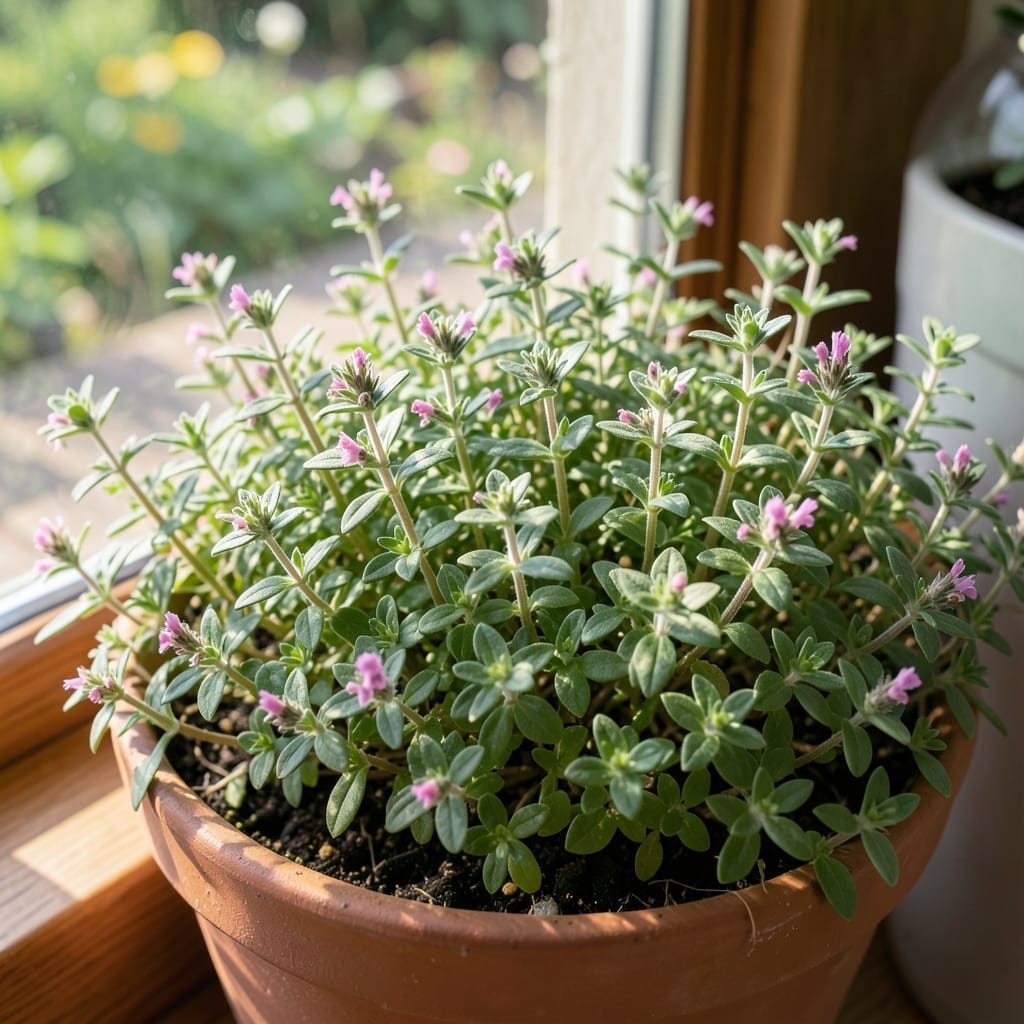
Thyme leaves are tiny, oval-shaped, and grow in pairs along woody stems. They have a grayish-green color, slightly fuzzy texture, and a strong aromatic scent when crushed.
I love how thyme’s small leaves pack such a powerful punch in both appearance and flavor. The woody stems often have a slightly reddish tint, and the pairs of leaves create a symmetrical pattern that’s easy to spot in the garden. This herb’s distinct look makes it a favorite for both culinary and ornamental uses. ✨
💡 In This Article
Thyme leaves measure just 1/8 to 1/4 inch long, with a distinct oval shape that tapers to a point. Unlike broader herbs, their edges appear smooth but slightly curled under microscopic examination. The surface has tiny hairs, giving it that characteristic fuzzy feel when you run your fingers along the stem. 🔥
The leaves grow in opposite pairs, creating a ladder-like pattern along the stem. This arrangement, called decussate, helps maximize sunlight exposure. Common thyme varieties show subtle color differences: French thyme leans toward deep green, while lemon thyme has lighter, almost chartreuse leaves. English thyme often displays a silvery underside that catches the light beautifully. ✨
What’s fascinating is how the leaf size and shape can vary by growing conditions. In full sun, thyme produces smaller, more concentrated leaves packed with essential oils. Partial shade results in slightly larger leaves that are a bit more tender.
The woody stems, which can grow 6-12 inches tall, often develop a reddish-brown hue as they mature, providing a striking contrast to the green foliage. 💫
The aromatic quality comes from tiny oil glands visible as pale dots on the leaf surface. When crushed, these release thymol and carvacrol compounds, creating that unmistakable warm, earthy scent. This is why fresh thyme often appears slightly glossy – the oils create a subtle sheen that catches the light. ⚡
For gardeners, the growth pattern offers clues about plant health. Healthy thyme produces dense, bushy growth with leaves tightly packed along the stems. If you notice sparse foliage or elongated stems, it might indicate the plant needs more sunlight or pruning to encourage fuller growth.
Thyme leaves have tiny hairs covering their surface, giving them that characteristic fuzzy texture. These hairs help protect the plant from excessive moisture loss and harsh sunlight.
Yes! Different varieties show subtle color variations. French thyme has deep green leaves, while lemon thyme appears lighter. English thyme often has a silvery underside that catches light beautifully.
Look for tiny (1/8 to 1/4 inch), oval leaves growing in opposite pairs along woody stems. The strong aromatic scent when crushed is another giveaway.
Thyme leaves are much smaller and grow on woody stems, while oregano has larger leaves on softer stems. Thyme also has smoother leaf edges compared to oregano’s slightly serrated margins.