
Beautiful Plants For Your Interior
Beautiful Plants For Your Interior
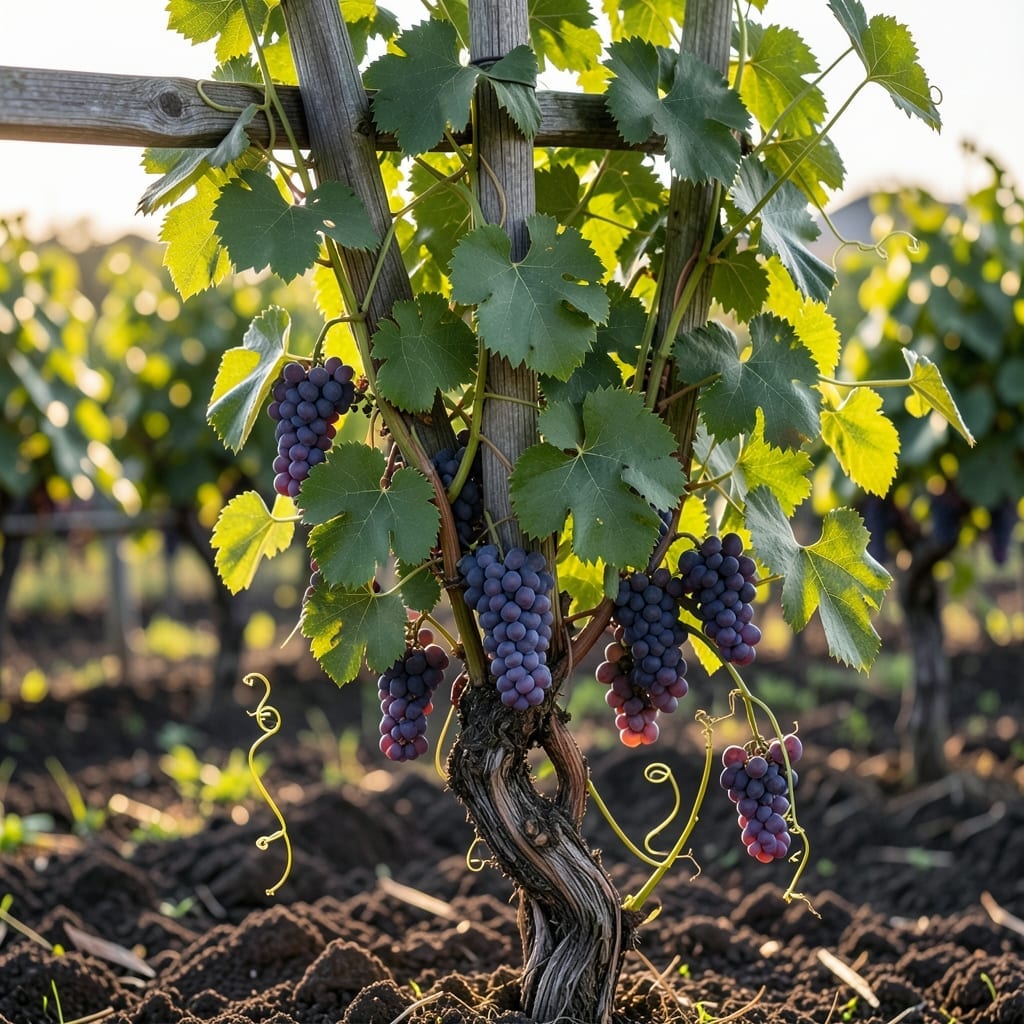
Grapevine leaves are large, heart-shaped or lobed with 3-5 distinct points, deep green, and slightly fuzzy undersides. They have prominent veins and serrated edges, turning golden or crimson in fall.
I notice these leaves stand out in vineyards because their bold lobed structure catches sunlight beautifully. The fuzzy underside, called tomentum, actually helps conserve moisture in dry climates. 🌟 As seasons change, the vibrant fall colors signal the plant is preparing for dormancy while still maintaining its iconic shape.
💡 In This Article
Grapevine leaves display remarkable diversity in their lobed patterns, ranging from 3 to 7 distinct points depending on the Vitis species. The most common cultivars, like Vitis vinifera, typically feature 5 prominent lobes with deep sinuses between them, creating that iconic hand-like silhouette.
The leaf margins are finely serrated, with tiny teeth that feel slightly rough when you run your fingers along the edge.
The venation pattern is equally distinctive. Primary veins radiate from the leaf base like spokes on a wheel, with secondary veins forming a network that’s visible from both sides. On the underside, you’ll find a dense layer of tomentum—those soft, downy hairs that help reduce water loss in hot climates.
This fuzziness is more pronounced in younger leaves and certain wild grape species. ✨
Size varies dramatically by variety and growing conditions. Mature leaves on vigorous vines can span 6 to 12 inches across, while those on younger plants or shaded shoots may be half that size. The texture is leathery yet flexible, allowing the leaves to flutter in the breeze without tearing.
This adaptability helps maximize photosynthesis while minimizing water loss.
Seasonal transformations are equally fascinating. As temperatures drop in autumn, chlorophyll breaks down, revealing underlying carotenoids (golden hues) and anthocyanins (reds and purples). The intensity of these colors depends on sugar accumulation in the leaves—sunnier days and cooler nights produce the most vibrant displays.
This metabolic shift also triggers leaf senescence, where the plant reabsorbs nutrients before the leaves fall. 🔥
What’s particularly intriguing is how leaf shape can vary even on the same vine. Basal leaves (near the trunk) often have more pronounced lobes, while apical leaves (near the shoot tips) may appear more heart-shaped. This phenomenon, called heteroblasty, helps the plant optimize light capture at different growth stages.
As temperatures drop, chlorophyll breaks down, revealing hidden pigments. Carotenoids create golden hues while anthocyanins produce reds and purples. The most vibrant colors appear after sunny days and cool nights.
Grapevine leaves have U-shaped sinuses between lobes and fuzzy undersides. Virginia creeper has V-shaped indentations and smooth leaves. Also, grapevines produce tendrils opposite their leaves.
The soft hairs, called tomentum, help reduce water loss in hot climates. This adaptation is more pronounced in younger leaves and wild species. It also gives the leaves their distinctive texture.
Yes, basal leaves near the trunk often have more pronounced lobes. Apical leaves near shoot tips may appear more heart-shaped. This variation, called heteroblasty, helps optimize light capture.