
Beautiful Plants For Your Interior
Beautiful Plants For Your Interior
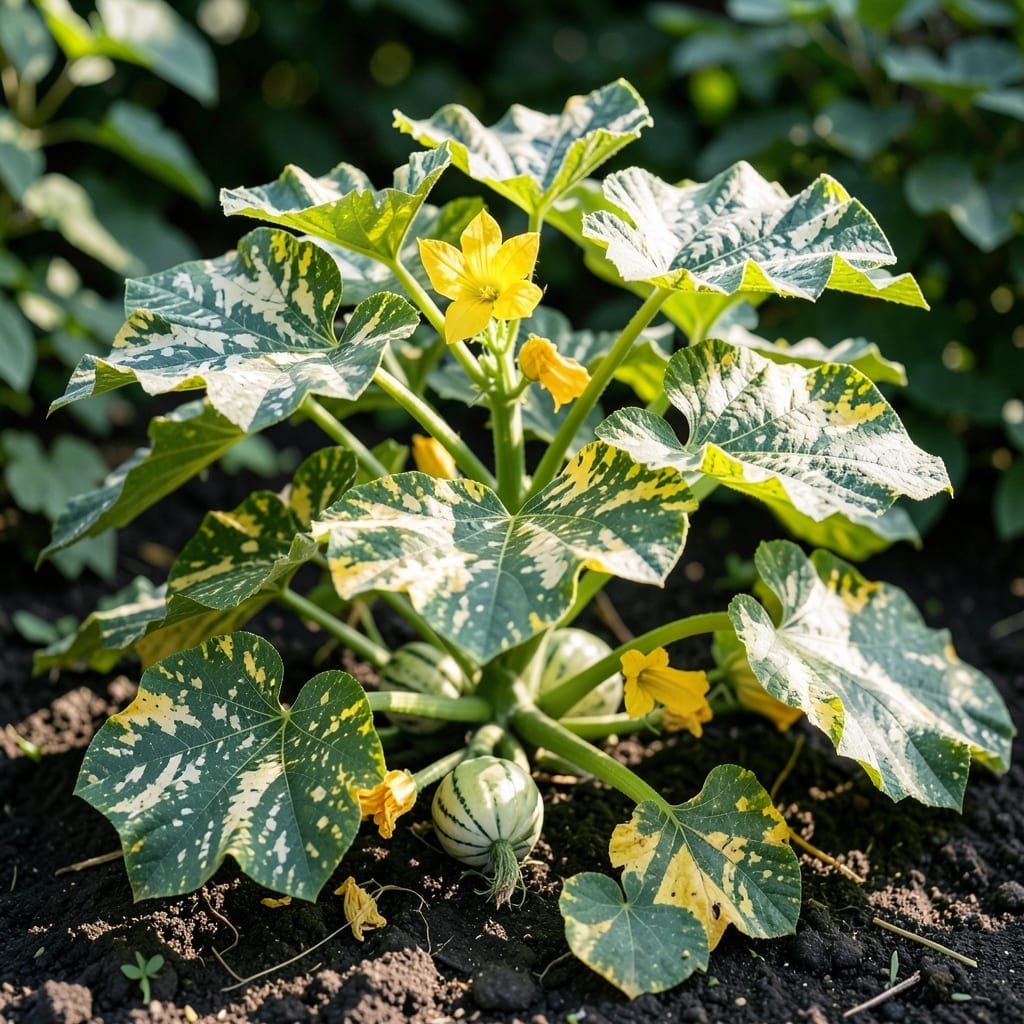
Those white stripes on your squash leaves aren’t always bad news. I’ve seen variegation scare gardeners into panicking when sometimes it’s just nature’s design.
Some squash varieties naturally develop white-patterned leaves, but other times it signals trouble. The difference matters—genetic traits stay consistent, while viral or deficiency patterns usually spread unevenly.
You’ll learn to spot the healthy patterns versus the warning signs. My plants taught me this the hard way after I almost pulled up perfectly good vines.
Early diagnosis means saving your harvest before problems take hold. Here’s how to tell them apart.
Variegated squash leaves can be fascinating, but understanding why they occur helps you manage your plants better. Here are the primary causes:
Some squash varieties naturally exhibit variegated leaves due to genetic traits. These mutations affect chlorophyll production, leading to white, yellow, or light green patches. If your plant was bred for variegation, this is normal and harmless.
Certain viruses, like Cucumber Mosaic Virus (CMV) or Squash Mosaic Virus (SqMV), can disrupt chlorophyll synthesis, causing mottled or variegated patterns. Infected plants may also show stunted growth or distorted leaves. Remove and destroy affected plants to prevent spread.
Extreme heat, cold, or excessive sunlight can stress squash plants, leading to temporary variegation. This often appears as bleached or pale spots. Providing shade cloth or consistent watering can help mitigate stress-related variegation.
Lack of essential nutrients, particularly magnesium or iron, can cause interveinal chlorosis (yellowing between veins), mimicking variegation. A soil test can confirm deficiencies, and targeted fertilizers can restore leaf color.
Addressing these causes ensures your squash plants stay healthy and productive.
If your squash plants are showing variegated leaves, don’t panic—most causes are treatable. Below are practical fixes for the most common issues, along with prevention tips to keep your garden thriving.
Yellowing or mottled leaves often signal a lack of magnesium, iron, or nitrogen. Test your soil with a DIY kit or send a sample to a local extension office. Amend with:
Prevention: Feed plants with a balanced organic fertilizer every 4–6 weeks. 💡 Pro tip: Mulch with compost to slowly release nutrients.
If variegation is paired with stunted growth or curled leaves, a virus (like cucumber mosaic virus) may be the culprit. Unfortunately, no cure exists—remove and burn or bag infected plants to prevent spread. Disinfect tools with rubbing alcohol after handling.
Prevention: Control aphids (common virus carriers) with neem oil or insecticidal soap. Plant resistant squash varieties like ‘Butternut’ or ‘Zucchini Elite’. ✨
Too much sun, inconsistent watering, or temperature swings can cause patchy leaf color. Shade cloth (30–40%) protects plants during heatwaves. Water deeply 1–2 times weekly (more in droughts) at the base to avoid fungal issues.
Prevention: Use drip irrigation for consistent moisture and mulch to retain soil temp/humidity. 🌱
Spider mites or thrips suck sap, creating speckled or striped leaves. Spray plants with water to dislodge pests, then apply horticultural oil or insecticidal soap. For severe infestations, introduce beneficial insects like ladybugs.
Prevention: Inspect leaves weekly (check undersides!) and rotate crops yearly to disrupt pest cycles. 🎯
Only if it’s caused by a virus. Viral variegation can spread through aphids or contaminated tools. Genetic or stress-related patterns stay isolated to the affected plant.
Natural variegation appears uniform across all leaves. Problematic patterns are irregular, often paired with stunted growth or leaf distortion.
Genetic variegation won’t impact yield. Viral or deficiency-related patterns often reduce fruit production. Address the cause quickly to protect your harvest.
Foliar sprays work quickest. Use 1 tbsp Epsom salt/gallon for magnesium or chelated iron for iron deficiency. Results appear in 5-7 days.