
Beautiful Plants For Your Interior
Beautiful Plants For Your Interior
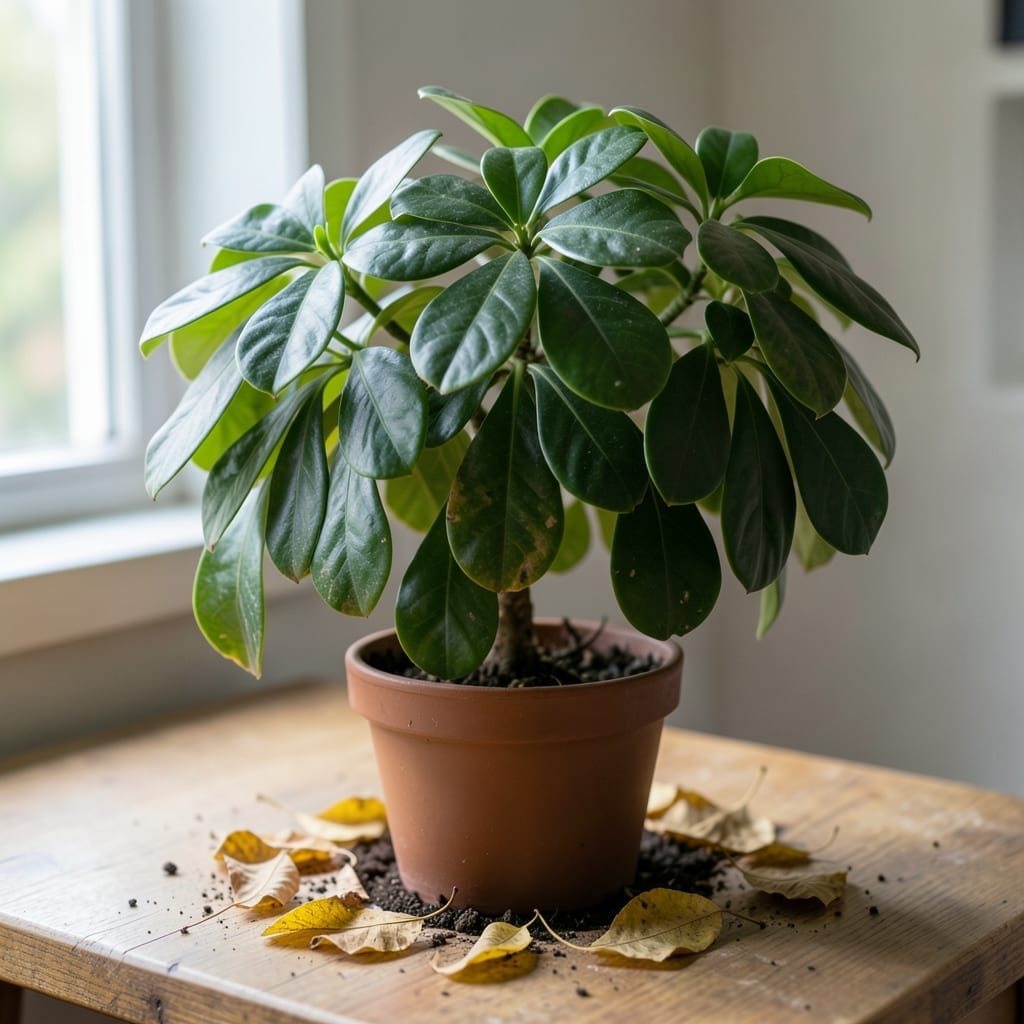
My umbrella plant looked fine yesterday. Today, half its leaves are on the floor. I’ve been there—panicked, sweeping up foliage, wondering what I did wrong.
Turns out, it’s usually one of three things: too much water, too little light, or a pest party I didn’t RSVP to. The good news? All three are fixable with simple adjustments to your care routine.
Once you nail the balance, new growth appears fast—sometimes within 2-3 weeks. The plant bounces back stronger, with fuller, vibrant green leaves that make you forget the crisis ever happened.
No green thumb required. Just a little observation and the right tweaks to get your plant thriving again.
Your umbrella plant (Schefflera) may shed leaves due to stress or environmental changes. Below are the most common causes, explained with actionable insights.
Root rot from excessive moisture is a leading cause of leaf drop. Schefflera roots need oxygen; waterlogged soil suffocates them, disrupting nutrient uptake. Check the soil: If it stays soggy for days or smells foul, repot the plant in fresh, well-draining mix and trim any black, mushy roots.
Umbrella plants thrive in bright, indirect light. Too little light weakens the plant, causing yellowing and leaf drop. Conversely, sudden exposure to harsh direct sunlight can scorch leaves. Solution: Gradually acclimate the plant to brighter conditions or move it to a spot with consistent, filtered light.
Schefflera prefers stable temperatures between 60–75°F (15–24°C). Cold drafts (e.g., near AC vents or windows in winter) or heat sources (radiators) can shock the plant, triggering leaf loss. Fix: Keep it away from drafts and maintain steady room temperature.
Native to tropical regions, umbrella plants need humidity levels of 40–50%. Dry air (common in heated homes) causes brown leaf tips and premature dropping. Boost humidity: Mist the leaves, use a pebble tray, or place a humidifier nearby.
Yellowing leaves (especially lower ones) may signal nitrogen deficiency, while crispy edges suggest excess salts from overfertilizing. Remedy: Fertilize lightly every 4–6 weeks in spring/summer with a balanced liquid fertilizer (e.g., 10-10-10), and flush the soil with water monthly to remove salt buildup.
Spider mites, scale, or mealybugs sap plant vitality, leading to leaf drop. Inspect: Check leaf undersides for webbing, sticky residue, or white cottony clusters. Treat: Wipe leaves with neem oil or insecticidal soap weekly until pests are gone.
If your umbrella plant is shedding leaves, don’t panic—most issues are fixable with a few adjustments. Below are targeted solutions for common causes, paired with prevention tips to keep your plant thriving.
Let the top 1-2 inches of soil dry out between waterings. Use a well-draining pot and ensure excess water can escape. Prevention tip: Stick your finger in the soil—if it feels damp, hold off on watering. Consider a moisture meter for precision.
Move your plant to a brighter spot with indirect sunlight, like an east-facing window. Rotate it occasionally for even growth. Prevention tip: If natural light is limited, supplement with a grow light for 6-8 hours daily.
Keep your umbrella plant in a room between 60-75°F (15-24°C) and away from drafts, heaters, or AC vents. Prevention tip: Avoid sudden temperature swings—gradual changes are less stressful for the plant.
Wipe leaves with a damp cloth to remove pests like spider mites or mealybugs. For stubborn infestations, use neem oil or insecticidal soap. Prevention tip: Inspect new plants before bringing them near your umbrella plant to avoid contamination.
Feed your plant with a balanced liquid fertilizer (10-10-10) every 4-6 weeks during the growing season. Prevention tip: Dilute fertilizer to half-strength to avoid overfeeding, which can harm roots.
If roots are circling the pot, upgrade to a container 1-2 inches larger. Use fresh, well-draining soil. Prevention tip: Repot every 2-3 years to give roots room to grow.
Small changes can make a big difference—your umbrella plant will bounce back with the right care!
Water when the top 1-2 inches of soil feel dry. Typically, this means every 7-10 days, but always check the soil first. Overwatering is a common cause of leaf drop, so err on the side of too dry rather than too wet.
Yes! Umbrella plants prefer 40-50% humidity. Dry air can lead to brown tips and shedding. Use a humidifier or place the pot on a pebble tray with water to boost moisture levels.
Isolate the plant and wipe leaves with neem oil or insecticidal soap. Check under leaves for spider mites, scale, or mealybugs. Repeat treatment weekly until pests are gone.
Yes, harsh direct sunlight can scorch leaves. Place your plant in bright, indirect light, like near an east-facing window. Rotate occasionally for even growth.