
Beautiful Plants For Your Interior
Beautiful Plants For Your Interior
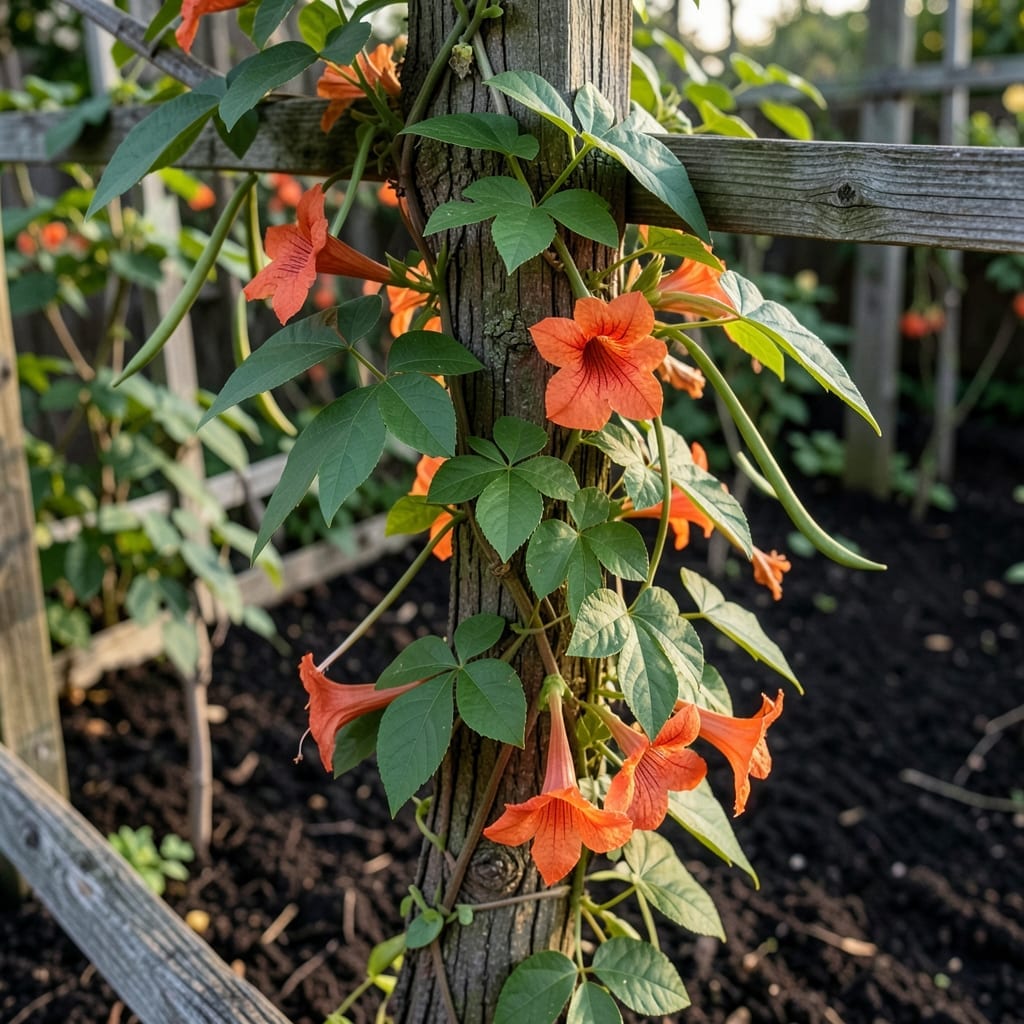
That bright orange trumpet-shaped flower climbing your fence is probably a trumpet vine. 🌿 I first spotted one in my neighbor’s yard and couldn’t believe how fast it grew—nearly 10 feet in a single season.
Look for compound leaves with 7-11 leaflets, each 2-4 inches long, and those unmistakable trumpet flowers that hummingbirds adore. The vines cling using aerial rootlets, making them aggressive climbers on any surface.
What sets it apart from similar plants is the flower’s shape and the way it spreads. You’ll find it thriving in full sun with well-drained soil, often taking over fences and arbors if left unchecked.
Once established, it’s nearly impossible to miss. Here’s how to confirm you’ve found this vigorous climber.
Trumpet vine (Campsis radicans) is often confused with other climbing plants due to its aggressive growth and showy flowers. Here’s why it’s so easy to mix up:
Many vines, like honeysuckle or wisteria, share compound leaves with trumpet vine. Its opposite, ovate leaflets (7–11 per stem) resemble those of Virginia creeper, but trumpet vine’s edges are serrated, not smooth. Without close inspection, the foliage blends in with other deciduous climbers.
The vine’s tubular, orange-red blooms (2–3 inches long) mimic trumpet honeysuckle (Lonicera sempervirens). Both attract hummingbirds and bloom in summer, but trumpet vine’s flowers lack fragrance and grow in terminal clusters, not whorls. Misidentification peaks when only flowers—not pods or bark—are visible.
Trumpet vine’s aggressive spreading (up to 40 feet!) mirrors invasive species like kudzu. Its aerial roots cling to surfaces like ivy, leading gardeners to assume it’s a pest. However, trumpet vine’s woody stems and seed pods (4–6 inches long) are distinct upon closer examination.
If you’ve mistaken another plant for a trumpet vine (Campsis radicans), here’s how to set it straight and prevent future mix-ups. These practical fixes ensure you’ll spot the real deal with confidence.
If your plant has bell-like or flat flowers, it’s not a trumpet vine. Fix: Look for the signature long, flared tubes (2–3 inches) in fiery shades of orange, red, or yellow. Compare side-by-side with a verified image or local gardening guide. Prevention tip: 💡 Bookmark a reliable plant ID app (like iNaturalist) for quick field checks.
Trumpet vines have compound leaves with 7–11 serrated leaflets. If your vine has simple, heart-shaped, or deeply lobed leaves, it’s likely honeysuckle or morning glory. Fix: Examine the leaf arrangement—trumpet vines grow opposite each other on the stem. Prevention tip: ✨ Snap a photo of the leaves and stems; compare to a trumpet vine’s distinct pinnate structure.
No hummingbirds? Trumpet vines are hummingbird magnets thanks to their nectar-rich blooms. Fix: Observe the plant at dawn/dusk when hummingbirds are most active. If none visit, it’s probably not a trumpet vine. Prevention tip: 🎯 Plant a known trumpet vine nearby to attract them—then compare visitor behavior.
Trumpet vines are aggressive climbers, growing up to 10+ feet in a season. If your plant stays small or bushy, it’s not the real thing. Fix: Check for rapid, twining stems and aerial roots. Prevention tip: 🌡️ Monitor growth weekly in spring/summer—trumpet vines sprint, not stroll!
They’re long, tubular blooms with flared ends, typically 2-3 inches long. Colors range from fiery orange to red or yellow, and they grow in clusters at the stem tips. Hummingbirds love them!
Check the leaves – trumpet vine has 7-11 serrated leaflets arranged opposite each other. Honeysuckle often has fragrant flowers and different leaf patterns.
Yes, it’s deciduous in most climates. The vines will lose all leaves in fall, then regrow vigorously each spring when temperatures rise.
It may need more sun – these plants require full sun (6+ hours daily) to flower. Also, young vines often take 2-3 years to mature enough to bloom.