
Beautiful Plants For Your Interior
Beautiful Plants For Your Interior
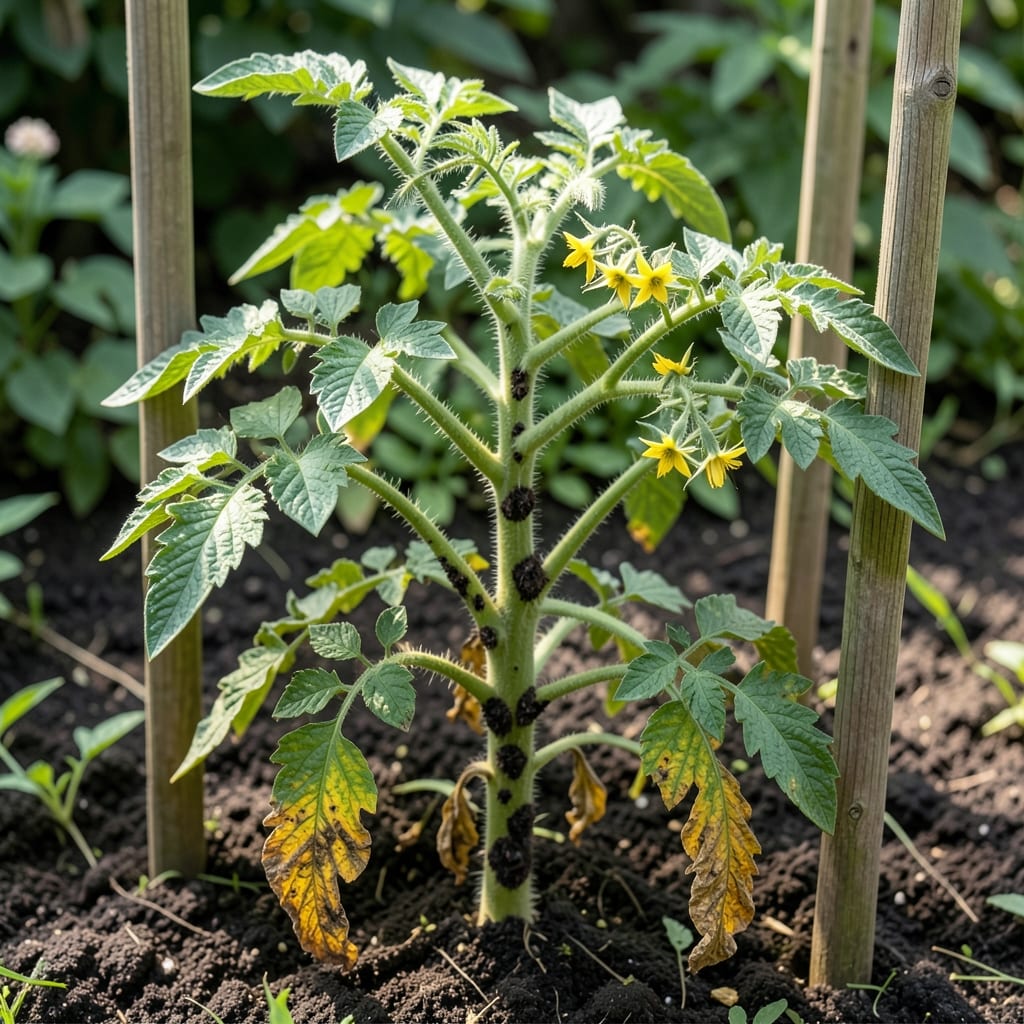
That brown lesion on your tomato stem isn’t sunburn. I’ve lost entire plants to this silent killer, watching healthy vines wilt overnight as cankers girdle their stems from the inside out.
Early signs are subtle—a slightly darkened patch at a leaf node or where a sucker was removed. Left unchecked, it spreads upward and downward, cutting off water and nutrients until the plant collapses. Caught early, you can save it.
Organic treatments work when you act fast. Remove infected branches immediately, disinfect pruners between cuts, and apply copper-based sprays to protect the rest. Prevention is simpler: rotate crops, avoid overhead watering, and keep plants stress-free.
This isn’t just about one season’s harvest. Left in your soil, the fungus can overwinter and return next year. Here’s how to break the cycle for good.
Tomato stem canker, a frustrating fungal disease, primarily stems from environmental and biological factors. Understanding these causes is the first step toward prevention and control.
The main culprit behind tomato stem canker is the fungus Didymella lycopersici (also known as Stagonosporopsis lycopersici). This pathogen thrives in warm, wet conditions, entering plants through wounds, pruning cuts, or natural openings. It spreads via infected seeds, plant debris, or contaminated tools.
Overwatering, high humidity, and poor soil drainage create the perfect breeding ground for fungal spores. When foliage stays wet for extended periods, spores germinate and infect stems, leading to canker formation. Proper spacing and drip irrigation can help reduce moisture-related risks.
Extreme temperature swings—especially warm days followed by cool, damp nights—stress tomato plants, making them more susceptible to infection. Maintaining stable growing conditions can minimize this stress.
Using infected seeds or transplants introduces the fungus directly into your garden. Always source certified disease-free seeds and inspect seedlings for early signs of canker, such as dark lesions on stems.
Improper pruning (e.g., using dull or unsterilized tools) creates entry points for the fungus. Sanitize tools between cuts and prune during dry weather to reduce infection risk.
By addressing these root causes, you can significantly lower the likelihood of tomato stem canker in your crop.
Tackling stem canker starts with quick action and smart care. Below are targeted fixes for common causes, plus prevention tips to keep your tomatoes thriving. 🌱
If fungal pathogens are to blame, prune infected stems immediately with sterilized shears (dip in rubbing alcohol between cuts). Remove all diseased plant material and do not compost it. Rotate crops next season—avoid planting tomatoes or related crops (peppers, eggplants) in the same spot for at least 3 years. Apply a copper-based fungicide (organic-approved) to healthy plants as a protective barrier.
Waterlogged soil encourages fungal growth. Switch to drip irrigation to keep foliage dry, and water early in the day so excess moisture evaporates. Ensure your soil has good drainage—amend with compost or sand if needed. Mulch (straw or wood chips) helps retain moisture without oversaturating roots.
Crowded plants trap humidity, creating a playground for canker-causing fungi. Thin seedlings to 18–24 inches apart and stake or cage vines to improve airflow. Prune lower leaves (up to 12 inches from the ground) to reduce humidity around stems. Tip: Plant in a sunny, breezy spot to speed up drying after rain. 🌬️
Pro tip: Monitor plants weekly for early signs (brown lesions, wilting) and act fast—catching it early makes treatment far easier! ✨
Early symptoms include small, dark brown lesions at leaf nodes or pruning wounds. These spots may appear sunken and can spread upward and downward along the stem.
Yes, if caught early. Remove infected branches immediately with sterilized tools and apply copper-based fungicide. Severely affected plants should be pulled to prevent spread.
Rotate crops, avoid planting tomatoes in the same spot for 3 years, and use disease-free seeds. Clean garden tools between uses and maintain good airflow around plants.