
Beautiful Plants For Your Interior
Beautiful Plants For Your Interior
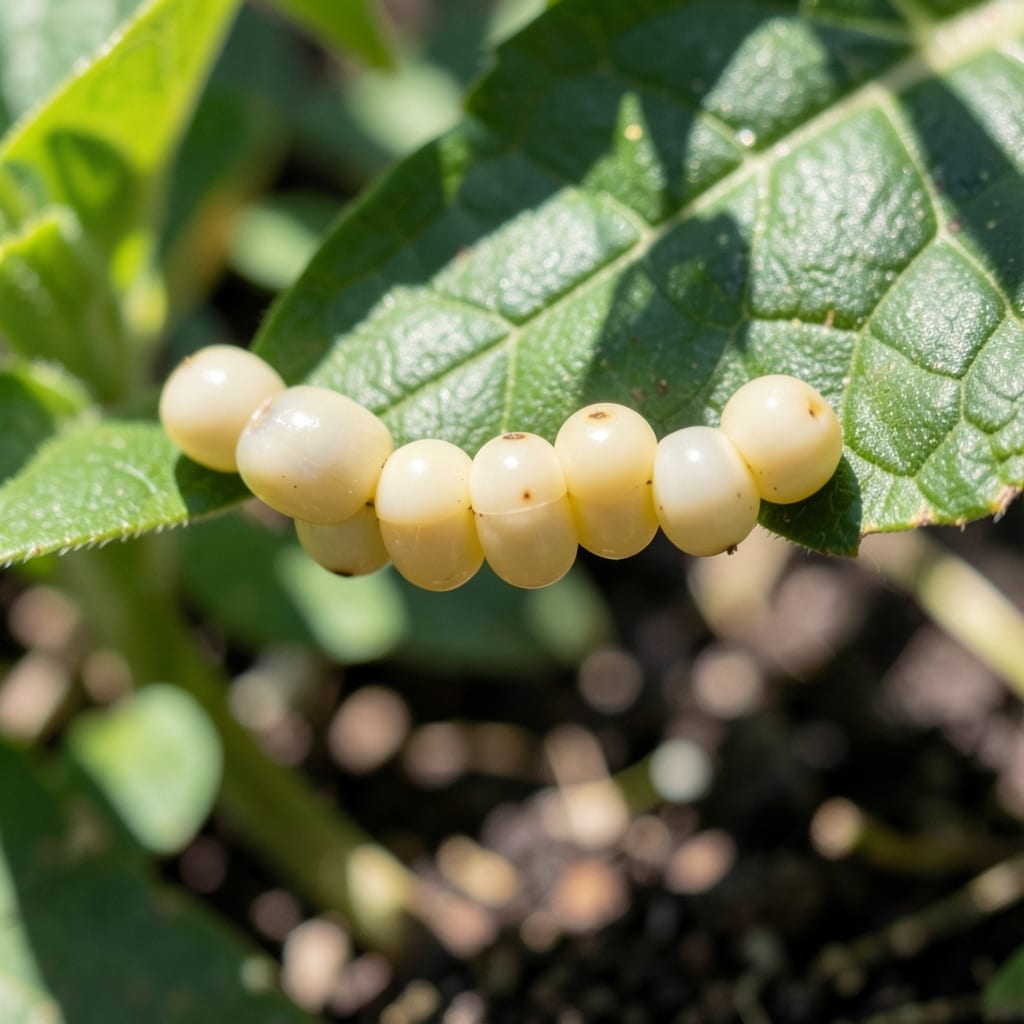
Tiny barrel-shaped clusters on your plant leaves? That might be stink bug eggs. I’ve spotted these on my tomato plants and immediately knew trouble was coming.
They’re usually light green or white, arranged in neat rows of 20-30 eggs. Left unchecked, they’ll hatch into nymphs that feed on your garden’s juices.
Early detection is key. Once you recognize the pattern, you can remove egg masses before they cause damage.
This identification guide helps you spot them before they become a full infestation.
Understanding why stink bugs lay eggs in your garden starts with recognizing the conditions that favor their reproduction. These pests thrive in specific environments, and their egg-laying habits are closely tied to survival strategies. Below are the primary causes behind their proliferation.
Stink bugs, particularly species like the brown marmorated stink bug, seek out plants that provide both food and shelter for their offspring. They prefer laying eggs on the undersides of leaves in crops such as tomatoes, peppers, soybeans, and corn. These plants offer abundant sap and fruits for nymphs to feed on immediately after hatching. Gardens with dense, healthy foliage are prime targets, as they provide protection from predators and harsh weather.
Temperature plays a critical role in stink bug reproduction. Females lay eggs in late spring to early summer when temperatures consistently range between 70–85°F (21–29°C). This warmth accelerates egg development, with hatch times as short as 4–5 days in optimal conditions. Cooler climates may delay egg-laying until mid-summer, but once the mercury rises, infestations can explode rapidly.
Stink bugs are strategic about egg placement to maximize survival rates. They favor hidden, undisturbed spots, such as the undersides of leaves, stems, or even inside seed pods. These locations shield eggs from rain, wind, and natural predators like birds or parasitic wasps. Gardens with thick mulch, overgrown weeds, or clutter (e.g., old pots, debris) create ideal microhabitats for egg clusters to thrive unnoticed.
A steady food source is a major driver of egg-laying activity. Stink bugs are piercing-sucking insects, feeding on plant juices, fruits, and seeds. When food is plentiful—such as in over-fertilized gardens or monoculture crops—females lay more eggs to capitalize on the available resources. This is why commercial farms and home gardens with high-yield plants often see heavier infestations.
Dealing with stink bug eggs in your garden or home can be frustrating, but these practical solutions will help you tackle the problem effectively. Below are targeted fixes for common scenarios, along with prevention tips to keep them from returning.
If you’ve spotted stink bug eggs pictures on leaves or stems, act quickly. Use a soft cloth or sponge dipped in soapy water to gently wipe them off. Avoid crushing them, as this can release their foul odor. For larger infestations, prune affected plant parts and dispose of them in a sealed bag.
Stink bugs may lay eggs indoors, especially near windows or cracks. Vacuum them up using a handheld vacuum with a disposable bag, then seal and discard the bag immediately. For hard-to-reach areas, use a damp paper towel to lift eggs and flush them down the toilet.
Prevention tip: Seal entry points with caulk and install fine mesh screens on windows and vents. 💡
For widespread egg clusters, introduce natural predators like ladybugs, parasitic wasps, or birds to your garden. These creatures feed on stink bug eggs and nymphs. Alternatively, apply neem oil or insecticidal soap to affected plants, following label instructions carefully.
Prevention tip: Remove garden debris and weeds where stink bugs hide. Keep your garden clean and well-maintained to discourage egg-laying. ✨
Regularly inspect plants, especially the undersides of leaves, for early signs of eggs. Use yellow sticky traps near entry points to catch adult stink bugs before they lay eggs. If you’re storing firewood or outdoor items near your home, keep them elevated and covered to reduce hiding spots.
They appear as tiny, barrel-shaped clusters, usually light green or white. Each mass contains 20-30 eggs arranged in neat rows on leaf undersides. Look for these on tomatoes, peppers, and soybeans.
Eggs typically hatch in 4–5 days at optimal temperatures of 70–85°F (21–29°C). In cooler conditions, this may take up to 2 weeks. Check plants daily in warm weather.
Yes! Nymphs feed on plant juices, causing wilting, discoloration, and reduced yields. Removing egg masses early prevents damage. Use soapy water or prune affected areas.
Rarely, but possible near windows or cracks. Vacuum them immediately with a disposable bag. Seal entry points with caulk to prevent future infestations.