
Beautiful Plants For Your Interior
Beautiful Plants For Your Interior
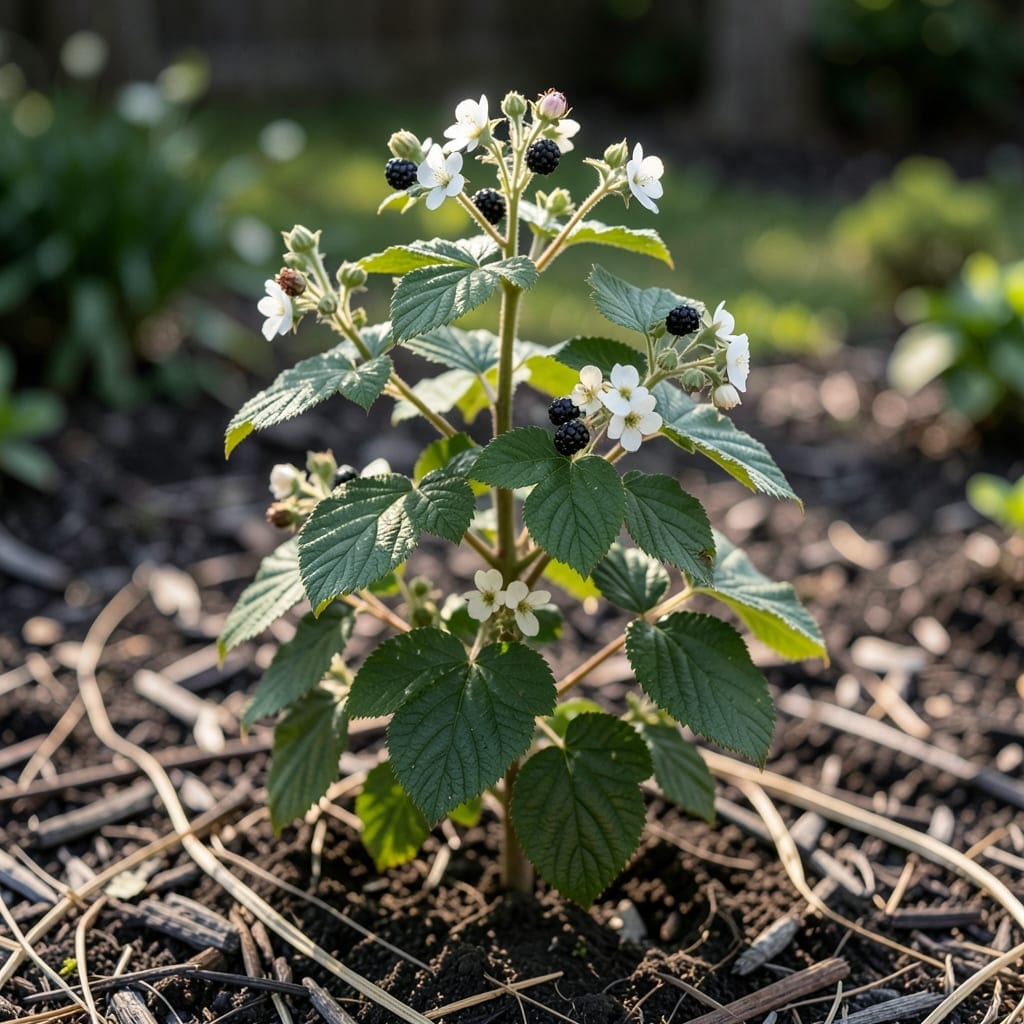
I stumbled onto Snowbank white blackberries after years of battling thorns. This variety changed everything—sweet fruit without the scratches.
Plant in full sun with well-draining soil, and you’ll get thornless canes loaded with pale berries. The harvest is foolproof, and the plants are surprisingly low-maintenance for such impressive results.
📚 In This Guide
Here’s the straightforward method I use to cultivate these productive, thornless canes with minimal fuss.
Choose a location with full sun exposure—at least 6-8 hours of direct light daily. Snowbank white blackberries tolerate partial shade but produce significantly fewer fruits. Ensure the soil is well-draining with a pH between 5.5 and 6.5; these plants dislike soggy roots.
I always test drainage by digging a 1-foot-deep hole and filling it with water. If it drains within 1-2 hours, you’re good. Work in 2-3 inches of compost to improve fertility and structure. Remove all weeds and grass in a 3-foot radius to reduce competition for water and nutrients.
For bare-root plants, soak the roots in lukewarm water for 1-2 hours before planting to rehydrate them. Dig a hole large enough to spread the roots naturally, about 18-24 inches wide and 12 inches deep. Position the crown (where roots meet stems) 1-2 inches above soil level—it will settle as you water.
Space plants 4-5 feet apart in rows that are 8-10 feet apart. Backfill with native soil, tampering gently to eliminate air pockets. Water thoroughly with 1-2 gallons per plant to settle the soil. I mulch immediately with 2-3 inches of straw to retain moisture and suppress weeds.
Snowbank blackberries are semi-erect, so they need support. Install a trellis or wire system at planting—4-5 feet tall works well. I use a T-post and wire setup with wires spaced 18-24 inches apart. As canes grow, gently tie them to the wires with soft twine or plant clips.
During the first year, focus on establishing strong canes. Remove any flowers that appear to direct energy into root and cane development. You’ll sacrifice the first year’s fruit, but the plants will reward you with larger harvests in subsequent years. Prune only to remove dead or damaged wood.
Keep the soil consistently moist but not waterlogged, especially during the first growing season. I water deeply once or twice weekly, depending on rainfall, providing 1-1.5 inches per week. Drip irrigation is ideal—it delivers water directly to the roots and keeps foliage dry, reducing disease risk.
Fertilize in early spring with a balanced 10-10-10 fertilizer, applying 1 pound per 100 square feet or according to package instructions. Repeat after harvest. Avoid high-nitrogen fertilizers late in the season—they promote leafy growth at the expense of fruit production. Yellowing leaves often signal a nitrogen deficiency.
Prune in late winter to remove old, fruiting canes (floricanes) that produced berries the previous year—cut them back to the ground. Thin new canes (primocanes) to 4-6 strong canes per plant to improve air circulation and fruit quality. Remove any canes that are weak, diseased, or growing outside the designated area.
Harvest when berries turn from green to a creamy white and come off the plant with a gentle tug. Snowbank blackberries ripen over 4-6 weeks, so check plants every 2-3 days during peak season. Pick in the morning when temperatures are cool to preserve freshness. Expect 4-6 pounds of fruit per plant at maturity.
Small details make a big difference when establishing these productive canes.
Site Selection: Don’t compromise on the 6-8 hours of full sun daily mentioned in Step 1. Partial shade will give you foliage but disappointing yields. I learned this the hard way after planting a row in what I thought was “mostly sunny” only to get a handful of berries.
The Drainage Test: That 1-2 hour drainage test in Step 1 isn’t optional. If your hole doesn’t drain in that timeframe, consider raised beds. Snowbank roots will rot in soggy soil faster than you can say “thornless.”
Planting Depth: When planting bare-root canes in Step 2, resist the urge to bury them deeper for stability. That 1-2 inches above soil level crown positioning is critical—the plant will settle as you water, and burying it too deep can suffocate the crown.
First Year Patience: It’s tempting to let those first-year flowers develop in Step 3, but removing them really does pay off. The energy redirected to cane development results in significantly larger harvests in year two. Trust me, the 4-6 pounds per plant mentioned in Step 5 is worth the wait.
Yes! Snowbank is bred to resist common diseases like anthracnose and rust, but it’s not immune. Proper care (good drainage, spacing) boosts its defenses.
Early spring or fall is ideal, avoiding extreme heat or frost. This gives roots time to establish before active growth or dormancy.
Yes! Try Natchez or Apache blackberries for thornless, high-yielding options. Both are disease-resistant and great for easy harvesting.
Check sunlight (6+ hours/day), soil fertility, and pruning. Over-fertilizing or poor pollination can also reduce fruit. Test soil pH (5.5–6.5).
Yellow leaves often signal nutrient deficiencies (iron, nitrogen) or overwatering. Test soil, adjust watering, and apply balanced fertilizer. Avoid soggy roots!