
Beautiful Plants For Your Interior
Beautiful Plants For Your Interior
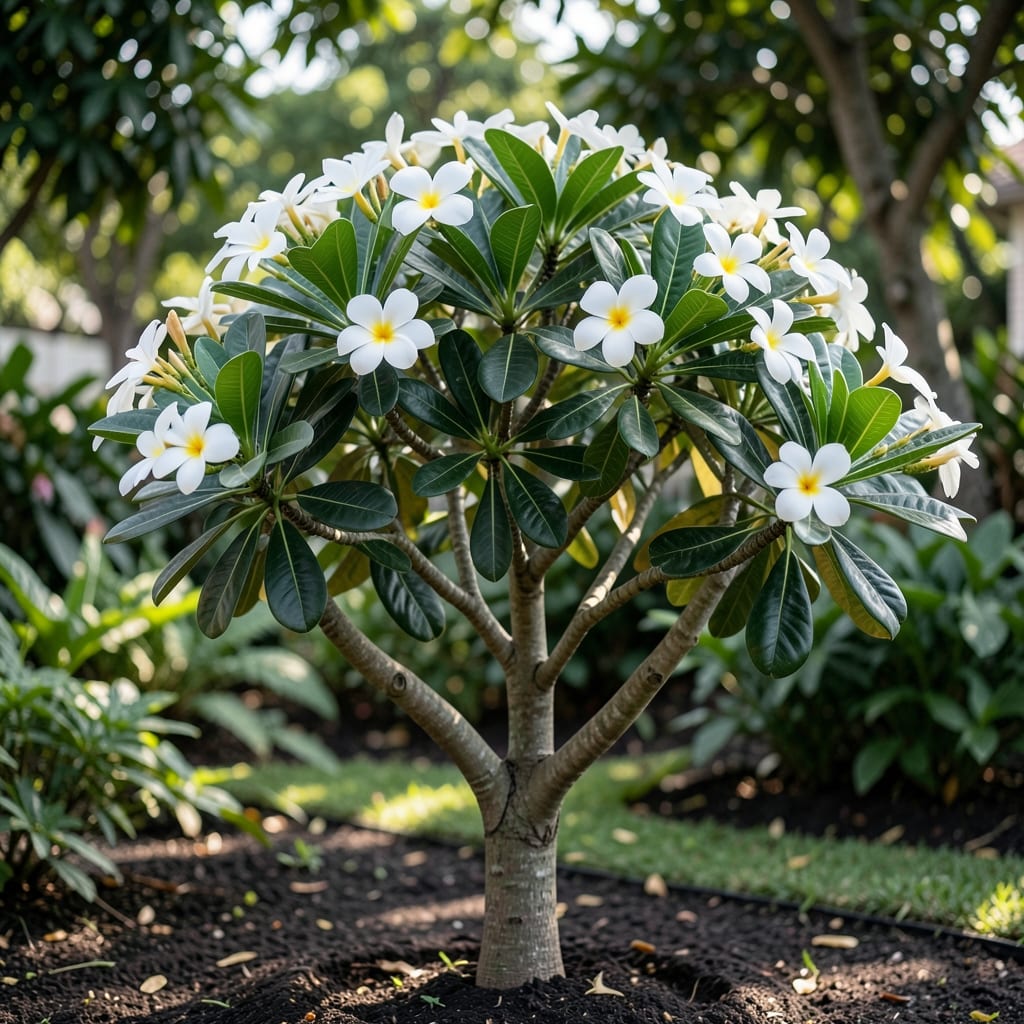
White blossoms with a fragrance that stops neighbors in their tracks. This tropical beauty thrives with minimal fuss, bringing resort-level scent to your backyard without the resort-level maintenance.
Full sun and well-draining soil are all it asks for. You’ll get abundant blooms from summer through fall, with flowers that intensify their perfume as the day heats up.
📚 In This Guide
This method keeps the process simple while ensuring lush growth and abundant blooms in your garden.
Choose a location with full sun exposure, as plumerias thrive in at least 6-8 hours of direct sunlight daily. The soil should be well-draining—these plants despise soggy roots. I always test drainage by digging a 1-foot-deep hole, filling it with water, and ensuring it drains within 1-2 hours.
Amend heavy or clay soil with organic matter like compost to improve drainage and fertility. A slightly acidic to neutral pH (6.0-7.0) is ideal. Avoid low-lying areas where water pools, as this leads to root rot and stunted growth.
Dig a hole that’s twice as wide and just as deep as the root ball of your Singapore White Plumeria. Gently remove the plant from its container, loosening any circling roots to encourage outward growth. Position the plant so the base of the trunk sits slightly above soil level to prevent waterlogging.
Backfill the hole with native soil, pressing lightly to eliminate air pockets. Water thoroughly after planting to settle the soil, but avoid waterlogging. I’ve found that a 2-3 inch layer of mulch around the base (keeping it away from the trunk) helps retain moisture without suffocating the roots.
Water newly planted plumerias deeply 2-3 times per week for the first 4-6 weeks, allowing the top 1-2 inches of soil to dry out between waterings. Once established, reduce frequency to once weekly unless you experience extreme heat or drought. Overwatering is a common mistake—these plants are drought-tolerant once mature.
Begin fertilizing in early spring with a high-phosphorus fertilizer (10-30-10 or similar) to encourage blooming. Apply every 2-3 weeks during the growing season, but stop fertilizing by late summer to allow the plant to harden off before dormancy. Yellowing leaves often signal overwatering or nutrient deficiencies.
Prune plumerias in late winter or early spring to remove dead, diseased, or crossing branches. Use clean, sharp pruners to make cuts at a 45-degree angle just above a leaf node. This promotes new growth and better air circulation, reducing the risk of fungal issues.
Singapore White Plumerias bloom on new wood, so pruning encourages more flowers. After pruning, monitor for pests like spider mites or mealybugs, which are attracted to stressed plants. A strong blast of water or insecticidal soap usually keeps minor infestations in check.
Plumerias are tropical and cannot tolerate temperatures below 32°F. In colder climates, grow them in containers and bring them indoors before the first frost. Place them in a cool, dark spot (around 50-55°F) and reduce watering significantly to mimic their natural dormancy period.
In spring, move them back outside once temperatures consistently stay above 50°F at night. Resume regular watering and fertilizing as new growth appears. This dormancy period is crucial for the plant to reset and produce vibrant blooms the following season.
This method keeps the process simple while ensuring lush growth and abundant blooms in your garden.
Sunlight Essentials: That 6-8 hours of direct sunlight daily is non-negotiable for vibrant blooms. I learned this the hard way when my first plumeria struggled in partial shade. If your garden doesn’t get full sun, consider container planting so you can move it to sunnier spots as the light changes throughout the day.
Drainage Test: The 1-foot-deep hole test for drainage is your best insurance against root rot. If water doesn’t drain within 1-2 hours, amend the soil with more compost or consider raised beds. Confession: I skipped this step once and lost a beautiful plant to soggy roots within weeks.
Planting Depth: Positioning the trunk slightly above soil level in Step 2 might feel counterintuitive, but it prevents water from pooling at the base. I’ve seen too many plumerias suffer from trunk rot because they were planted too deep. Press the soil gently—air pockets can cause the roots to dry out.
Fertilizing Wisdom: That high-phosphorus fertilizer every 2-3 weeks during growing season is key for blooms, but timing matters. Stopping by late summer lets the plant prepare for dormancy. I once fertilized too late and my plumeria kept pushing new growth right into fall, which made it vulnerable to cold damage.
Water moderately, allowing soil to dry between waterings. Place in full sun (6+ hours daily) and use well-draining soil. Fertilize with high-phosphorus fertilizer every 2-3 weeks during growing season.
Expect blooms from late spring to fall, typically May through October. Warm climates may see year-round flowers. Proper sunlight and fertilization encourage more blooms.
Yes, but it needs bright indirect light (south-facing window ideal). Rotate the plant for even growth. Move outdoors in summer for better flowering.
Common causes: insufficient light, overwatering, or lack of nutrients. Check for cold damage (below 50°F/10°C) or pests. Adjust care and be patient—new plants may take 1-2 years to bloom.
Try other plumeria varieties like ‘Celadine’ (yellow) or ‘Pink Puffin’. For similar fragrance, consider jasmine or frangipani (same family). All thrive in warm climates.